
Playground care guide
How Weather and Outdoor Conditions Affect Playground Equipment Cleaning
Published September 17, 2026
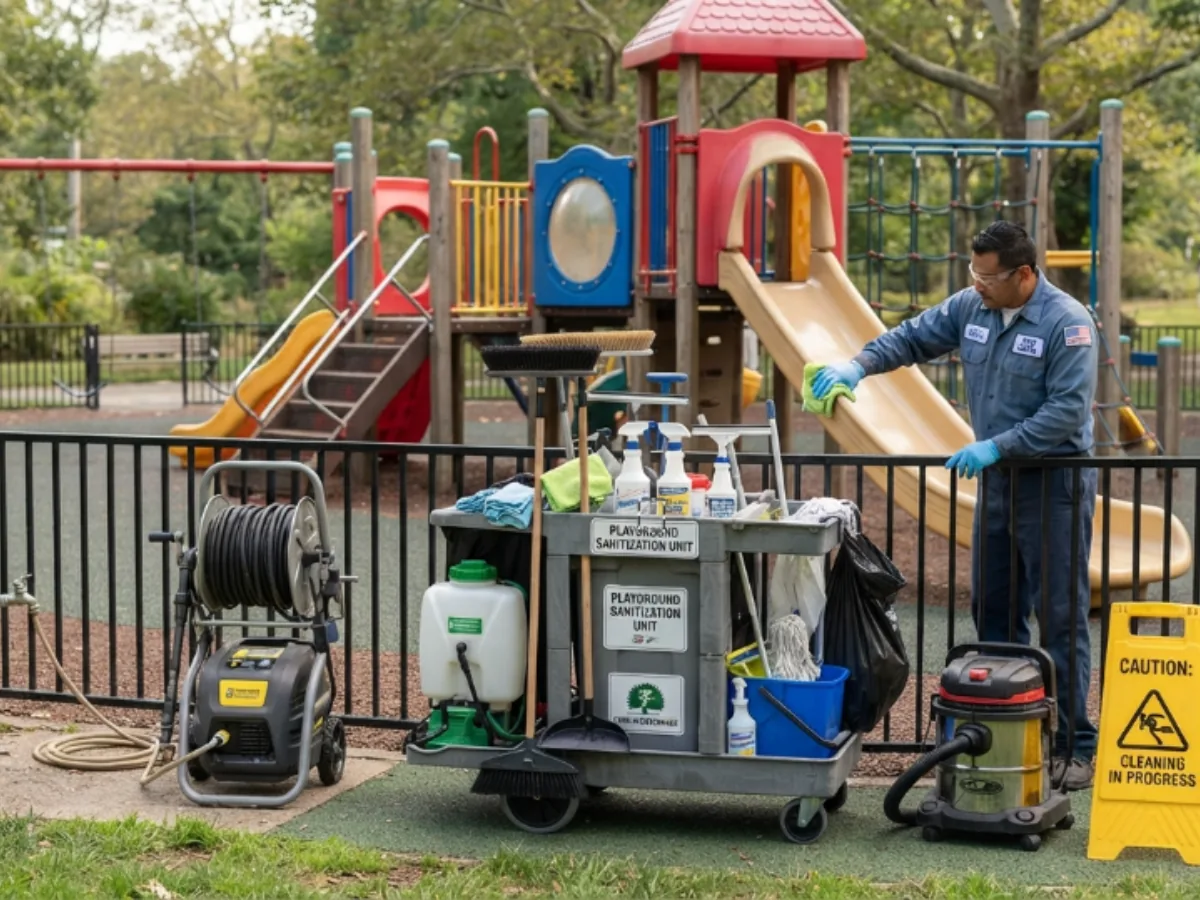
Outdoor playground equipment is exposed to rain, sunlight, wind, humidity, dust, pollen, and seasonal debris. These conditions can affect how much dirt and debris collect on slides, swings, climbing structures, platforms, and other surfaces. For this reason, weather conditions should be considered when planning playground equipment cleaning.
Rain can leave mud and moisture on equipment, while dry and windy conditions can increase dust and loose debris. Playgrounds near trees may also collect more leaves and pollen, while shaded areas can take longer to dry after rainfall.
Exterior Prime LLC understands the importance of considering outdoor conditions when maintaining exterior surfaces. By accounting for weather, surrounding conditions, and the type of buildup present, we can determine when cleaning is needed and choose an appropriate cleaning approach.
How Weather Affects Playground Equipment Cleaning
Playground equipment cleaning needs can change based on the weather and conditions surrounding the play area. Outdoor equipment is exposed to rain, heat, humidity, wind, and other environmental factors that influence how much dirt and debris collect on its surfaces.
Rain can leave mud and wet organic material behind, while wind may carry dust, leaves, pollen, and grass onto equipment. Hot and dry conditions can increase dust accumulation, while humid environments may keep surfaces damp for longer periods.
The amount of playground use also matters. Equipment used frequently may become dirty more quickly because children regularly touch, climb, sit, and move across different surfaces.
Instead of following one rigid cleaning schedule, we can consider the actual condition of the playground. Regular visual checks help us identify when weather has created additional cleaning needs.
How Rain and Moisture Affect Playground Equipment
Rain can leave mud, dirt, leaves, and other debris on playground equipment. Moisture can also increase drying time, particularly in shaded areas with limited sunlight and airflow.
Rain Can Leave Mud and Soil Behind
Rain can make nearby soil and unpaved areas muddy. Children may track this mud onto platforms, steps, ramps, and other equipment.
If mud dries on a surface, it can become harder to remove. Checking equipment after rainfall helps us identify and remove visible dirt before it accumulates.
Moisture Can Extend Drying Time
Rain leaves playground surfaces wet, and shaded areas may take longer to dry. When scheduling cleaning, we should consider current and expected weather conditions.
Allowing cleaned surfaces to dry properly helps prepare the equipment for normal use.
Wet Leaves and Organic Debris
Rain can make leaves, grass, twigs, and other debris wet and more likely to remain on playground surfaces. This is common in areas near trees and landscaping.
Removing wet debris regularly helps prevent buildup and keeps playground equipment cleaner.
How Sunlight and Heat Affect Playground Equipment
Sunlight and heat can affect playground cleaning conditions, especially during hot and dry weather. Dry conditions can increase dust, while direct sunlight can make equipment surfaces hot.
Dry Weather Can Increase Dust
Dry soil can become airborne and settle on slides, platforms, seats, and climbing structures. Playgrounds near dirt paths, unpaved areas, or exposed soil may collect dust more quickly.
Regular checks help us identify dust buildup and determine when cleaning is needed.
Sun Exposure Can Affect Cleaning Conditions
Direct sunlight can make playground surfaces hot. When cleaning, we should consider surface temperature and follow the instructions for any cleaning products used.
Different materials, including plastic, metal, rubber, wood, and coated surfaces, may require different cleaning methods. Following manufacturer recommendations helps us select appropriate care methods.
How Wind Brings Dirt and Debris Onto Playgrounds
Wind can quickly change the condition of an outdoor playground. Even after equipment has been cleaned, strong winds can carry new debris onto the property.
Dust, leaves, pollen, grass clippings, small twigs, and other lightweight materials can settle on slides, platforms, seats, railings, and climbing structures.
The surrounding property can influence how much debris reaches the playground. Areas near large trees, open fields, construction activity, roads, or unpaved surfaces may experience greater exposure to airborne dirt.
After strong winds, we can perform a quick visual check of the equipment and surrounding area. Removing loose debris early is usually simpler than allowing it to accumulate over several days.
Keeping nearby walkways and landscaping areas reasonably clear can also help reduce the amount of debris that is carried back onto the equipment.
How Humidity Affects Playground Equipment
Humidity is another important environmental condition to consider. In humid areas, outdoor surfaces may remain damp for longer periods, particularly when there is limited airflow or direct sunlight.
Extended dampness can contribute to the accumulation of organic residue on suitable surfaces. Areas that remain shaded or receive frequent moisture may require closer attention than exposed areas that dry quickly.
When we notice algae, mildew, or similar organic buildup, we should select a cleaning method that is suitable for the affected surface. The goal should be to remove the buildup without unnecessarily affecting the equipment's finish or material.
Humidity can also influence how quickly cleaned surfaces dry. For that reason, weather conditions should be considered when planning cleaning work, particularly for larger playgrounds where many surfaces need to dry before normal use resumes.
How Pollen and Seasonal Debris Affect Playground Cleaning
Seasonal changes can introduce different types of debris to outdoor playgrounds. Pollen is often more noticeable during certain times of the year, while falling leaves can become a major source of buildup in other seasons.
Pollen can settle on slides, seats, platforms, railings, and other exposed surfaces. Wind can spread it across the playground, making regular surface cleaning necessary when accumulation becomes noticeable.
Leaves create a different concern because they can collect in corners, beneath structures, and around supports. When wet, they may remain on surfaces longer and become more difficult to remove.
We can adjust cleaning frequency based on these seasonal patterns. A playground surrounded by mature trees may require more frequent debris removal than one located in an open area.
How Different Playground Surfaces Respond to Outdoor Conditions
Playground equipment can contain several different materials, and each may respond differently to weather and cleaning.
Plastic components may collect dust, pollen, and general outdoor residue. Metal components may have painted or coated finishes that require appropriate care. Rubber surfaces may have different cleaning requirements from smooth plastic or metal.
Wood surfaces also require attention to their particular finish and maintenance recommendations.
Because outdoor conditions affect these materials differently, we should avoid using one cleaning method for every component without first considering the surface.
Manufacturer instructions can provide useful guidance about suitable cleaning products, water pressure, and maintenance procedures. When this information is available, following it helps us care for the equipment appropriately.
Choosing the Right Cleaning Method After Different Weather Conditions
The type of weather a playground has recently experienced can help determine what cleaning approach is appropriate.
After rain, we may need to address mud, wet soil, leaves, and other moisture-related debris. After strong winds, loose leaves, dust, pollen, and small organic materials may be more prominent.
Following a dry period, dust and fine soil may be the main concern. In humid conditions, damp areas and organic buildup may require closer attention.
Water pressure should also be selected carefully. Excessive pressure may affect certain coatings, finishes, seals, or delicate components.
Cleaning products should be compatible with the surfaces being treated and used according to their instructions. A stronger product is not automatically a better choice for outdoor playground equipment.
When Should We Clean Playground Equipment?
Cleaning frequency depends on weather and visible dirt or debris. Rain, wind, dry conditions, pollen, and falling leaves can increase cleaning needs.
We should check playground equipment after heavy rain, strong winds, or extended dry periods. If dirt, dust, leaves, or other debris are visible, cleaning should be scheduled as needed.
Regular checks help us keep playground equipment clean as outdoor conditions change.
When Professional Cleaning May Be Helpful
Professional cleaning may be useful when playground equipment has significant dirt, dust, leaves, or organic buildup that routine maintenance cannot easily remove.
The cleaning method should match the equipment's surface and the type of buildup. Weather conditions should also be considered to ensure the equipment can be cleaned and dried properly.
Creating a Weather-Aware Cleaning Routine
A practical cleaning routine should account for the weather and conditions around the playground. Rain, wind, dry periods, humidity, pollen, and falling leaves can all affect how often equipment needs cleaning.
Regular visual checks help us identify dirt and debris before buildup becomes excessive. After heavy rain, strong winds, or seasonal changes, we can check the equipment and clean it when needed.
Adjusting the schedule based on actual weather conditions helps us maintain cleaner playground equipment throughout the year.
Maintaining Cleaner Playground Equipment
Weather and outdoor conditions can affect how quickly playground equipment collects dirt, dust, moisture, pollen, leaves, and other debris. Rain can leave mud and wet debris, while wind and dry conditions can increase dust and loose particles. Humidity can also slow drying in damp or shaded areas.
A consistent playground equipment cleaning routine should account for these changing conditions. Exterior Prime LLC can support exterior cleaning needs with methods suited to the equipment and type of buildup.
Ready to keep your playground equipment cleaner? Get a free quote today and discuss your exterior cleaning needs.
Call (209) 821-1212