Field note 01
Pre-event versus post-event, and why they are different jobs
A pre-event wash is about presentation and dry-by time; a post-event wash is about grease, gum, spills and stains that get harder every hour they sit.
Pre-event work is scheduled to finish with a drying margin before setup crews arrive, because wet plaza concrete and a rental company rolling staging in do not mix. The scope is elevations, glass-adjacent walkways, entry paths and seating.
Post-event is triage on organic staining. Spilled drinks, food grease around the vendor line, gum along the queue path and dropping-heavy overflow areas all set into concrete quickly, especially with a hot Mountain House afternoon on top of them.
The two are usually quoted together for recurring venues. A clubhouse that hosts weekend events every month does better on a standing before-and-after cycle than on emergency calls.
Field note 02
Working overnight on a Mountain House venue site
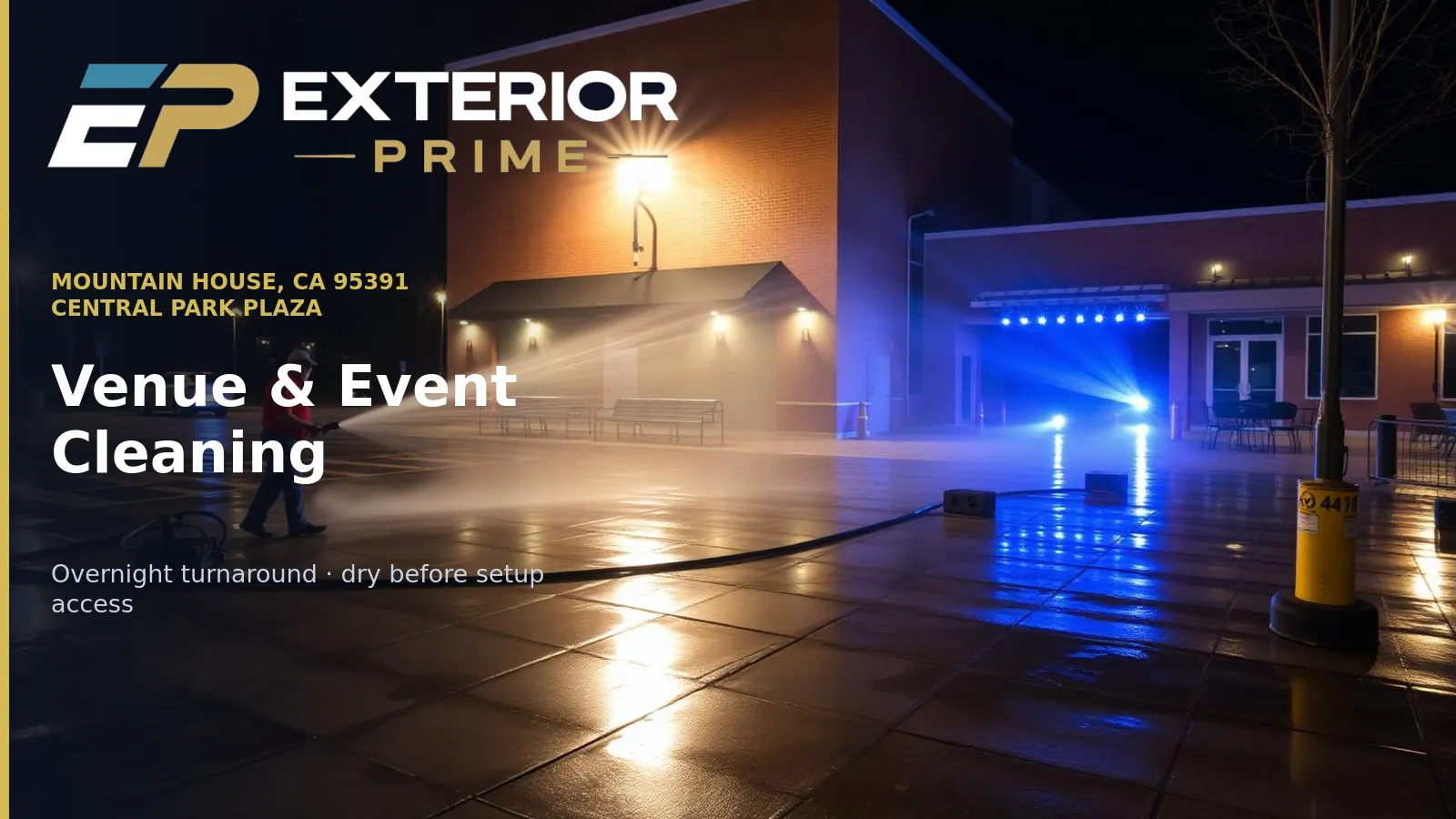
Overnight scheduling is normal for venue work here — it removes the public from the site, keeps parking clear, and gives concrete the whole night to dry.
Night work needs its own planning: portable lighting, water source confirmation, noise-aware equipment placement away from the nearest residential setback, and site security coordination for gate access.
Mountain House venues sit close to housing in every village, so the equipment gets staged away from the nearest bedroom windows and the loudest phases are front-loaded before the small hours.
Drying time is the actual reason for the schedule. Concrete washed at 11pm is dry and ready for setup at 7am; the same work at 6am is not.
Field note 03
The surfaces that decide how a venue looks on the day
Guests judge four things: the entry walkway, the seating area concrete, the glass at the doors, and the trash zone they walk past.
Entry walkways carry traffic film in a dark path down the middle, which reads immediately in morning light. A surface cleaner keeps the pressure even so there are no stripes crossing the guest path.
Seating area concrete holds the previous event — drink rings, grease shadows under where a food line stood. Those are treated as stains rather than as general dirt, which is a different chemistry and dwell approach.
Trash and recycling zones are the smell problem. Enclosure walls, pads and the surrounding concrete get washed and sanitized, because that is what a guest notices without being able to say why.
Field note 04
How venue scopes are quoted and scheduled in 95391
The bid is built from measured plaza and walkway area, elevation count, seating and trash zones, and the event calendar — and the schedule is written into the scope, not agreed by text later.
There is no published commercial area rate for this work; the published rate card is residential. What is published is the $297 standalone minimum and how the bid is assembled.
Recurring venues get a calendar-based scope: the standing pre-event wash, the standing post-event wash, and a rate for called-in additions when an unplanned event lands.
Completion photos are handed over before the space is released. On a venue with a hard doors-open time, documentation is what stops a dispute about whether something was in scope.