Field note 01
Where the wash water goes is the first question
Commercial flatwork drains to storm inlets, so wash water is contained, recovered or diverted to landscape and sanitary discharge rather than being sent down the nearest grate.
Dumpster pads and loading zones are the sensitive zones because the runoff carries grease and organic load. Those get containment and recovery, not a hose and a hope.
General lot and sidewalk rinsing with no detergent load is handled by berming and directing flow to landscape where the site allows, which is decided on the walk by looking at the actual grades and inlet locations.
This is not paperwork theater. It is the difference between a contractor a Mountain House property manager can keep using and one who creates a problem on their site.
Field note 02
Zones, and why the entry driveway is priced first
Every customer forms an impression at the entry driveway apron and the path from their car, so those two zones get done first even when the budget only covers part of the lot.
Entry aprons collect tire-tracked grime and a dark traffic sheen right where a car slows down. It is a small area with disproportionate visual weight.
The pedestrian path from parking to door is second. That concrete carries foot traffic film and gum, and it is walked slowly, which is when people look down.
Drive aisles and outer parking are the largest area and the least noticed, which is exactly why phasing a Mountain House lot by zone works — the visible 20 percent can be done now and the rest next cycle.
Field note 03
Even pressure, and the stains that need their own step
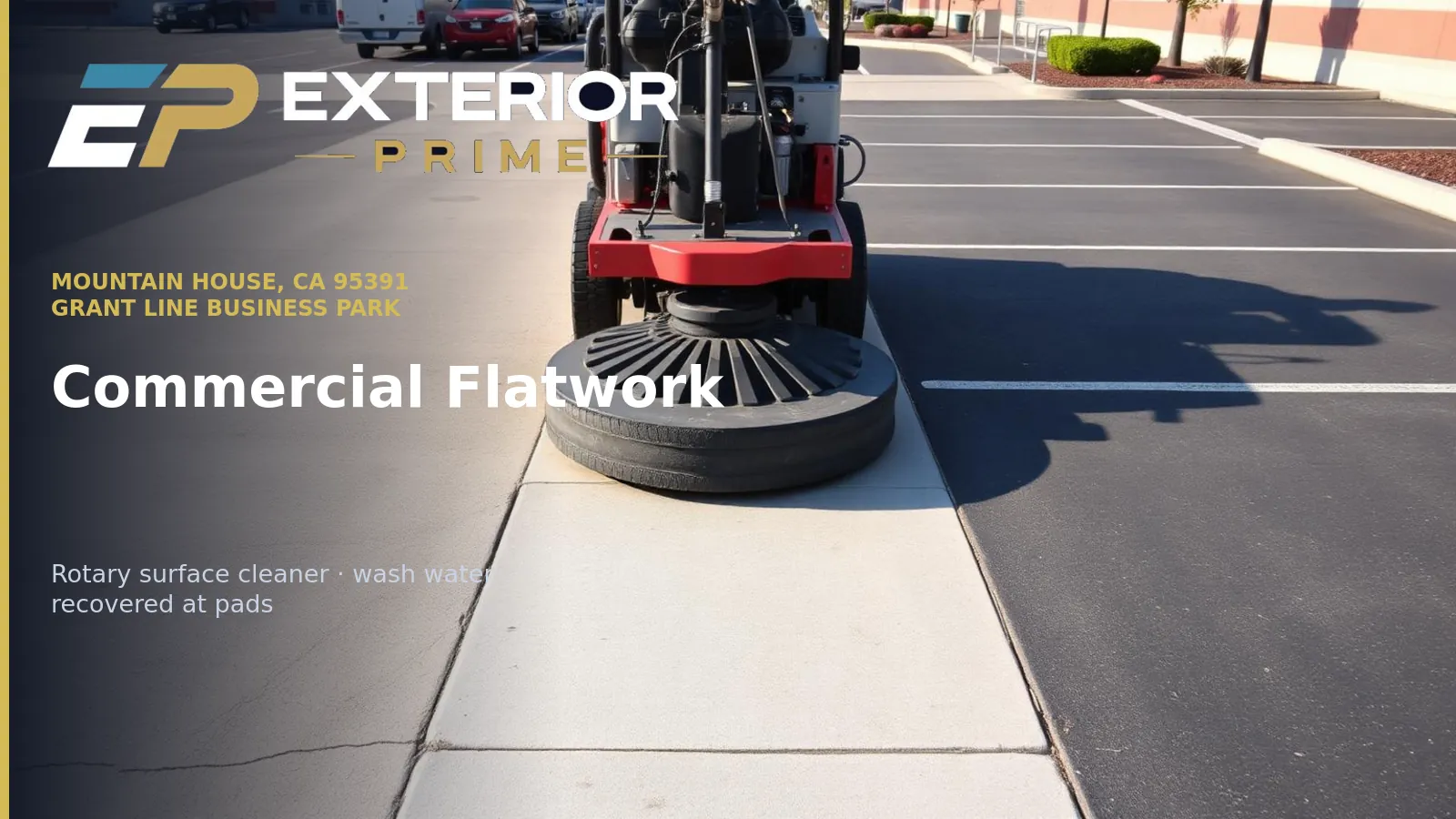
Flatwork is cleaned with rotary surface cleaners so pressure lands evenly with no wand striping, and oil, rust and gum are pre-treated as separate steps.
Striping is the giveaway of a rushed commercial job. On a large lot, wand marks read as a series of arcs in raking morning light and they cannot be fixed except by redoing the panel.
Oil drips in parking stalls need a degreaser with dwell time before the surface cleaner arrives; blasting them just spreads a lighter shadow over a wider area.
Rust from irrigation and metal furniture, and gum along the pedestrian path, each need a dedicated pass. They are line items on the bid rather than assumptions.
Field note 04
Scheduling around a working Mountain House property
Lots are cleaned in phases outside business hours, with one zone closed at a time and cones and signage set so traffic flow and ADA access are never blocked.
Overnight or early-morning phasing is standard. A retail or clubhouse lot cannot lose its drive aisle mid-afternoon, and a residential-adjacent site cannot take equipment noise at 2am next to bedrooms either — so the schedule is written with both constraints.
Accessible stalls and the accessible path of travel get their own phase so they are never the closed zone without a signed alternative.
The scope names which zone happens on which night. That is what lets a manager notify tenants once rather than fielding questions all week.