Field note 01
The joints are the structure, not a detail
Paver joints transfer load between units, so a Mountain House walkway with washed-out joints starts rocking, spreading and settling long before any individual paver fails.
You can see it early. Individual units that move slightly underfoot, a widening gap at the border course, a low spot forming where the base has begun to migrate. All of that starts with sand leaving the joints.
In 95391 the sand leaves two ways: wind lifts dry surface sand all spring, and irrigation plus rain floats it out of the top of the joint. Aggressive pressure washing removes what is left in minutes, which is exactly how a cleaning turns into a repair.
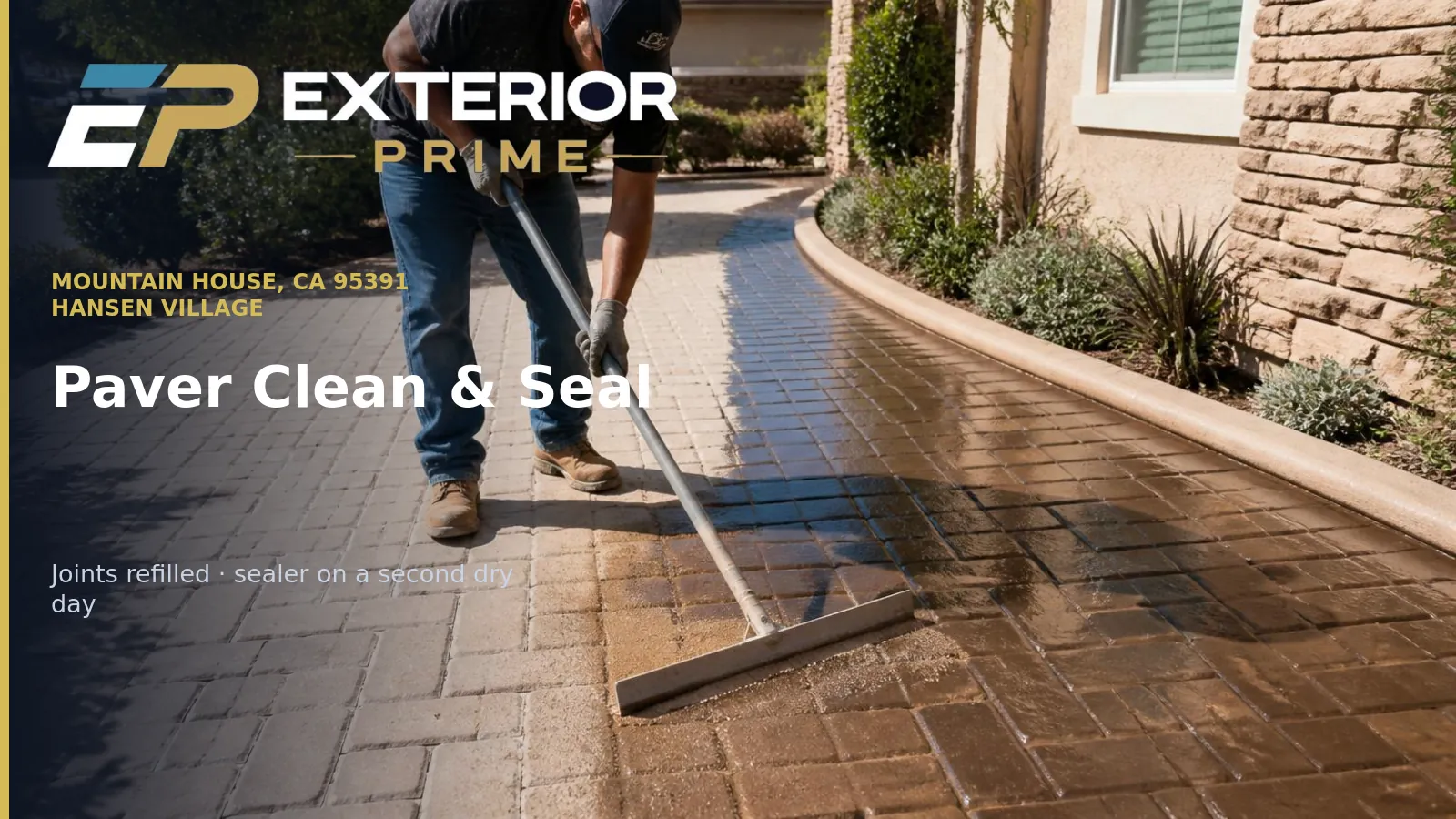
That is why our professionals clean pavers at controlled pressure with the joint in mind, then refill deliberately. Cleaning is the easy half; restoring the joint is what keeps the installation working.
Field note 02
Weeds, ants and the reason both keep returning
Weeds in Mountain House paver joints are growing in accumulated organic debris at the top of the joint, and ants are nesting in loose dry sand — both are symptoms of an unsealed, under-filled joint.
Pulling weeds and spraying them treats the visible growth and leaves the seedbed intact. Clearing the joint down to sound sand, refilling with polymeric sand and letting it set removes the habitat, which is a structural fix rather than a maintenance chore.
Ant activity works the same way. Loose sand is easy to tunnel; polymeric sand that has been properly activated with water is not. Homeowners who have been dosing joint lines with insecticide every spring are usually treating a sand problem.
Polymeric sand has to be installed correctly to do any of this. Dry-swept fully into the joint, surface fully cleared before activation, then a light misting sequence rather than a flood. Done wrong it hazes the paver faces, and that haze is difficult to reverse.
Field note 03
Penetrating versus wet-look sealer on 95391 pavers
A penetrating sealer keeps the pavers looking natural and repels stains from within; a wet-look film sealer deepens color and adds gloss but shows wear and can trap moisture if applied wrong.
Most Mountain House front walkways and driveways do better with a penetrating sealer. It resists oil and mineral staining, it does not change the look, and when it wears there is no peeling film to strip — you simply reapply.
Wet-look is a legitimate choice for a back patio or an entry feature where you want the color saturated. The trade-offs are real though: it can get slick when wet, it shows traffic patterns, and it must go onto genuinely dry pavers or you will lock moisture under the film and get cloudiness.
Either way, sealer is a separate day. The pavers need to be fully dry after cleaning and the joint sand must be set, which in Mountain House means a settled dry stretch — not the afternoon after a wash and not the week after a storm.
Field note 04
How Mountain House homeowners schedule and pay for it
Cleaning plus re-sanding is one visit at flatwork rates from $297, and sealing is quoted after inspection because it depends on square footage, sealer type and drying conditions.
A typical village paver entry and walkway is a straightforward standalone visit. A paver driveway plus rear patio is bigger, priced by measured area, and normally scheduled alongside a house wash so the whole exterior finishes together.
Interval in 95391 is roughly annual for cleaning and re-sanding on wind-exposed and irrigated installations, with sealer every two to four years depending on the product and traffic. Sealed joints hold up noticeably longer.
Order of operations never changes: clean, clear joints, refill and activate sand, allow full dry, then seal. Any company willing to seal on the same day as the wash is trapping moisture in your joints, and that shows up as haze you get to live with.