How black streaks form on Ripon shingle roofs
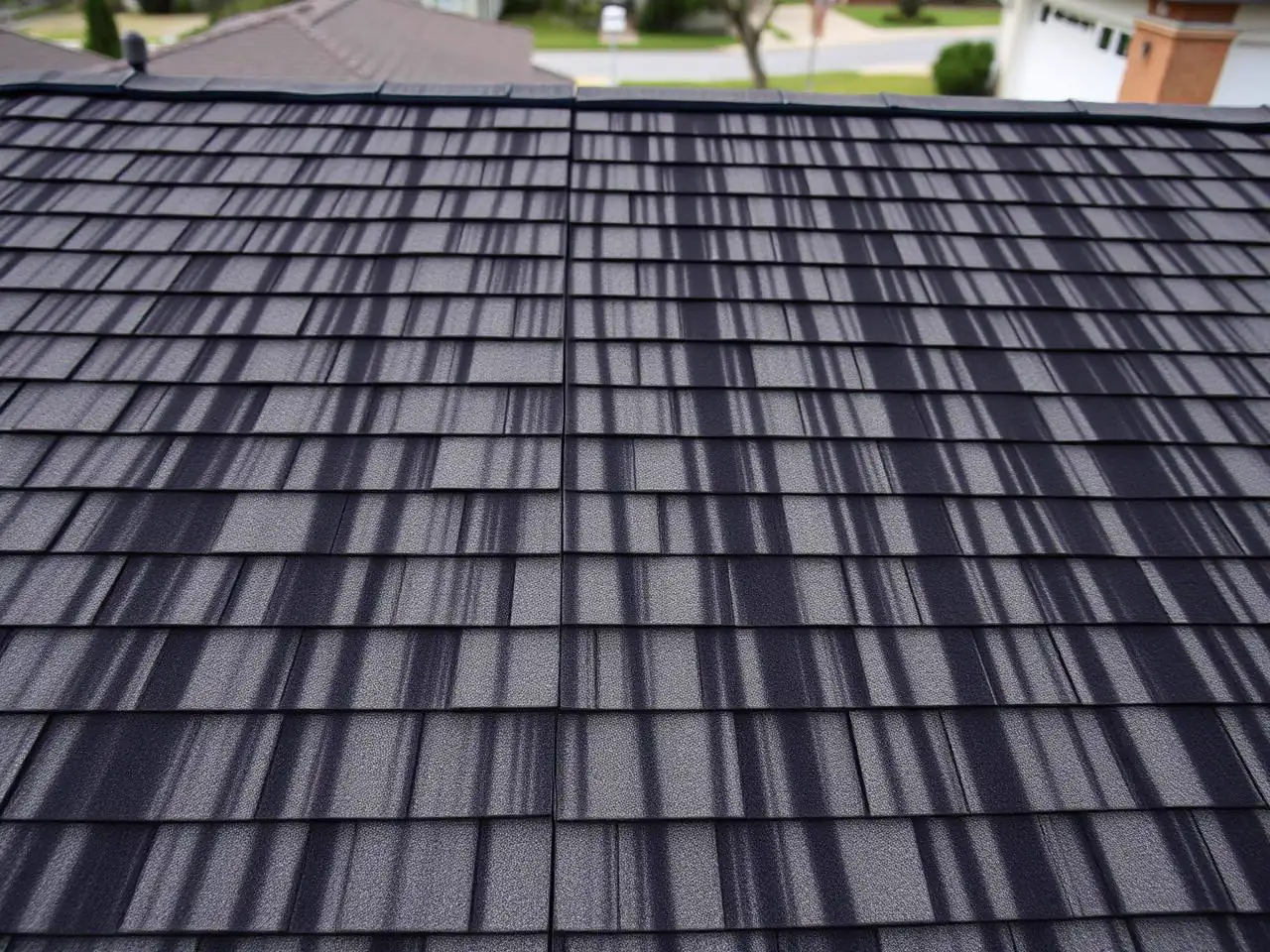
Black streaking on Ripon shingle roofs comes from Gloeocapsa magma algae feeding on limestone filler in the shingle itself.
This algae is airborne and spreads roof to roof, which is why entire streets in Spring Creek or Colony Oak often show similar streak patterns within a year or two of each other. It thrives in humidity, so a roof shaded by mature trees or facing away from direct afternoon sun holds streaking longest.
Once established, the algae colony continues feeding on the shingle's limestone filler, which means the streaking gets darker and wider over time rather than staying static. Left untreated for five or more years, the algae can start contributing to premature granule loss on top of the cosmetic issue.
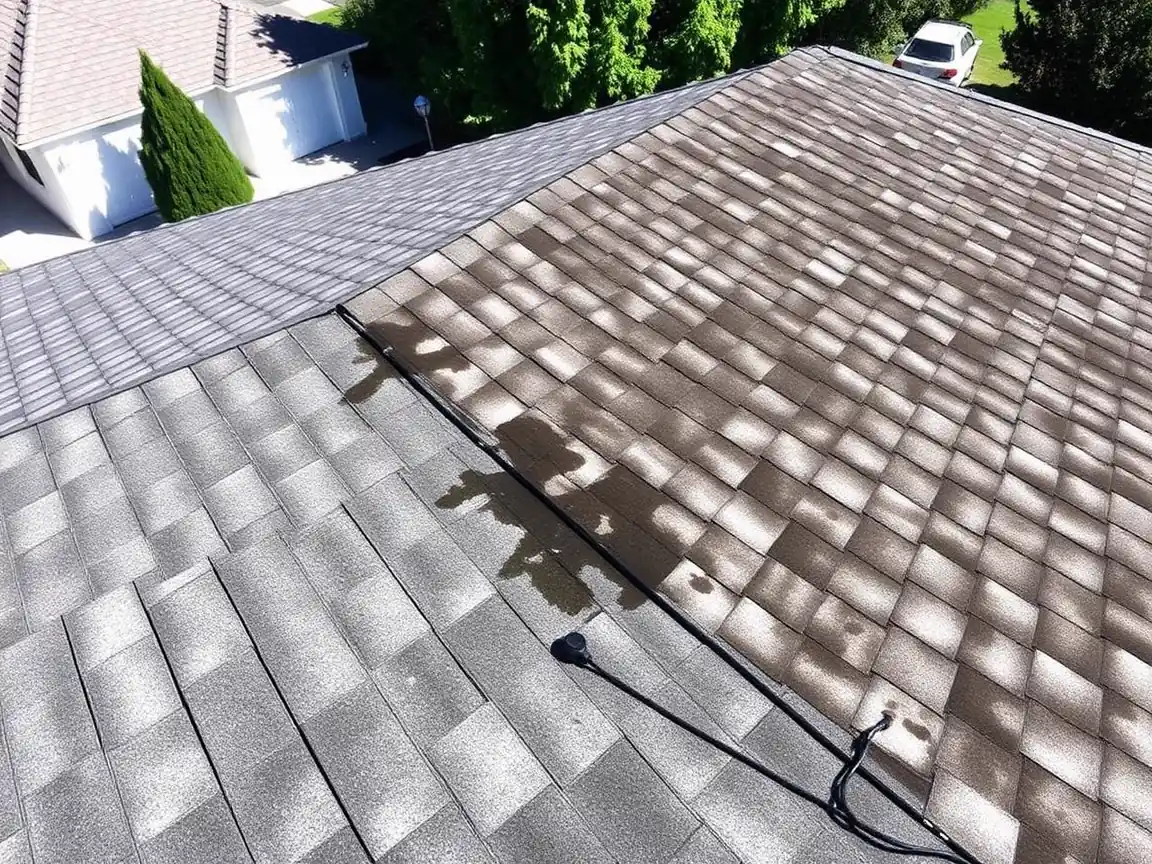
Because the spread is biological, not just surface dirt, a plain rinse with a garden hose or even a pressure washer without the right chemical treatment removes visible streaks for only a few weeks before regrowth on a Ripon roof.
Protecting granules during a Ripon shingle cleaning visit
Granule loss shortens a shingle roof's life, so pressure stays under 100 PSI throughout every step of a Ripon shingle cleaning job.
The mineral granules embedded in asphalt shingle block UV radiation from breaking down the asphalt layer underneath; once granules are stripped, that shingle section ages measurably faster and can start curling within a couple of years. High-pressure cleaning is the single most common cause of premature granule loss we see reported on Ripon roofs.
Exterior Prime professionals rely on the biocide solution and dwell time to do the cleaning work chemically, then rinse at low pressure just to carry the dissolved residue away. On a 20-year composition shingle roof off Austin Road, that distinction is the difference between a five-year cosmetic refresh and cutting the roof's remaining lifespan short.
We also avoid walking heavily on hot shingle during summer visits, since softened asphalt above 100°F bruises more easily underfoot, which is another reason spring and fall scheduling is preferred for Ripon shingle work.
What to expect from a Ripon, CA shingle roof cleaning visit
A typical 1,800-square-foot Ripon shingle roof cleaning finishes in about two and a half hours from setup to final rinse.
The visit starts with covering nearby landscaping and confirming exact roof measurements, followed by the soft-wash application, a 15–20 minute dwell, and a controlled rinse that flushes into the gutters. Photos are taken of both the streaked before condition and the finished result.
Most Ripon homeowners see results holding for 24 to 36 months, though homes closer to the Stanislaus River corridor with heavier shade sometimes see algae regrowth closer to the 24-month mark and benefit from scheduling on that shorter cycle.
Why do shingle roofs near Jack Tone and Mistlin stain differently than Downtown Ripon homes?
Sun exposure and shade patterns across Ripon's Central Valley neighborhoods change how fast black streaking and moss establish on identical shingle.
A newer tract home near the Jack Tone corridor with wide, open lot spacing gets more direct San Joaquin sun on its shingle field, which favors black streak algae feeding on limestone filler rather than shaded moss growth. By contrast, older lots near Mistlin and the tree-lined blocks of Downtown Ripon hold shade most of the day, so those same shingle roofs tend to develop moss and green film first, especially through the Tule fog months of winter.
Almond-orchard dust drifting in off Highway 99 settles evenly across both neighborhoods, but it shows up faster as visible grime on shaded Downtown Ripon roofs simply because those surfaces stay damp longer and hold particulate rather than shedding it in direct sun. Exterior Prime professionals note orientation and shade before quoting, since it changes which biological growth, algae or moss, is the dominant issue on a given Ripon shingle roof.