What are those black streaks on Escalon shingle roofs?
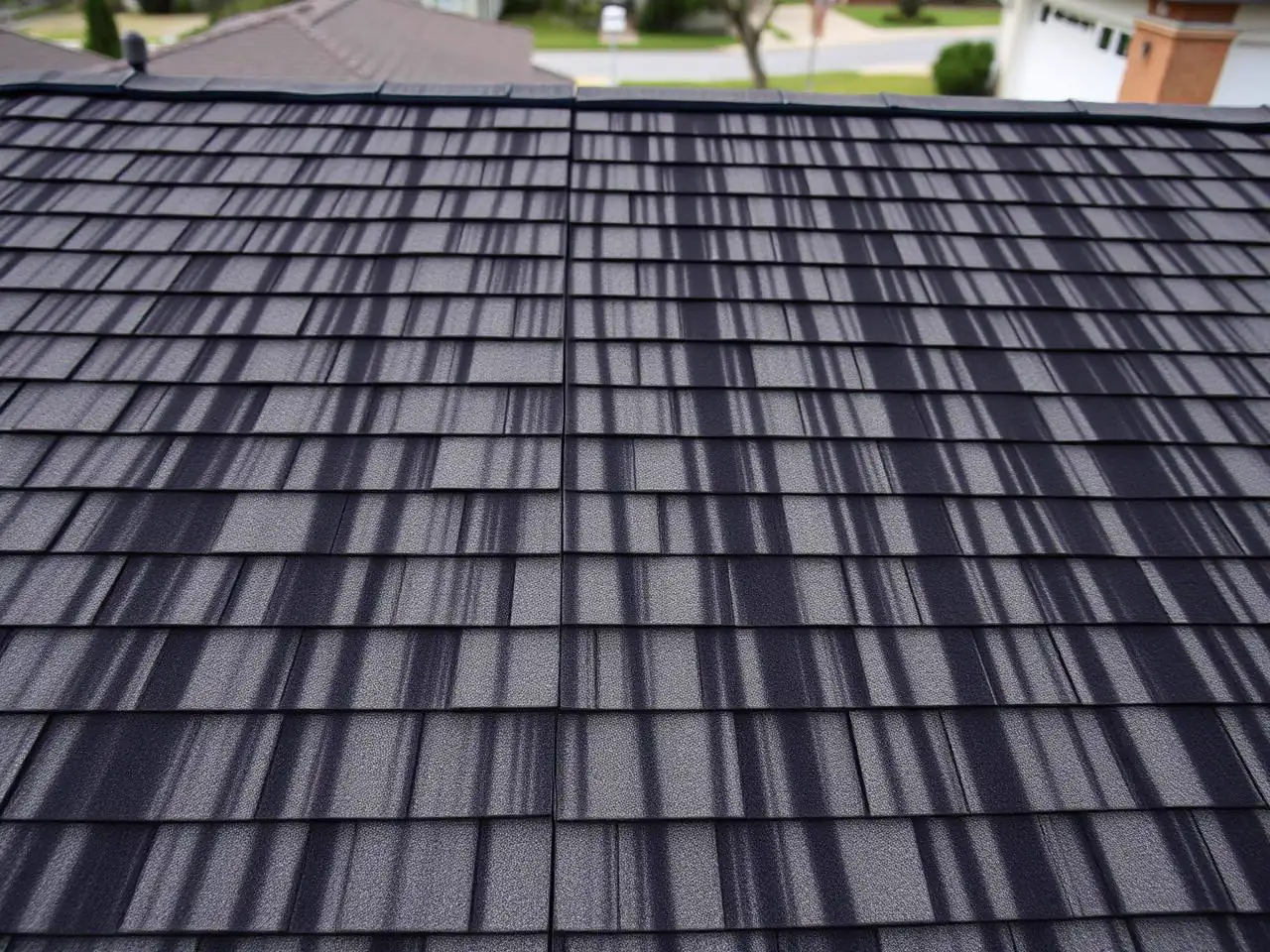
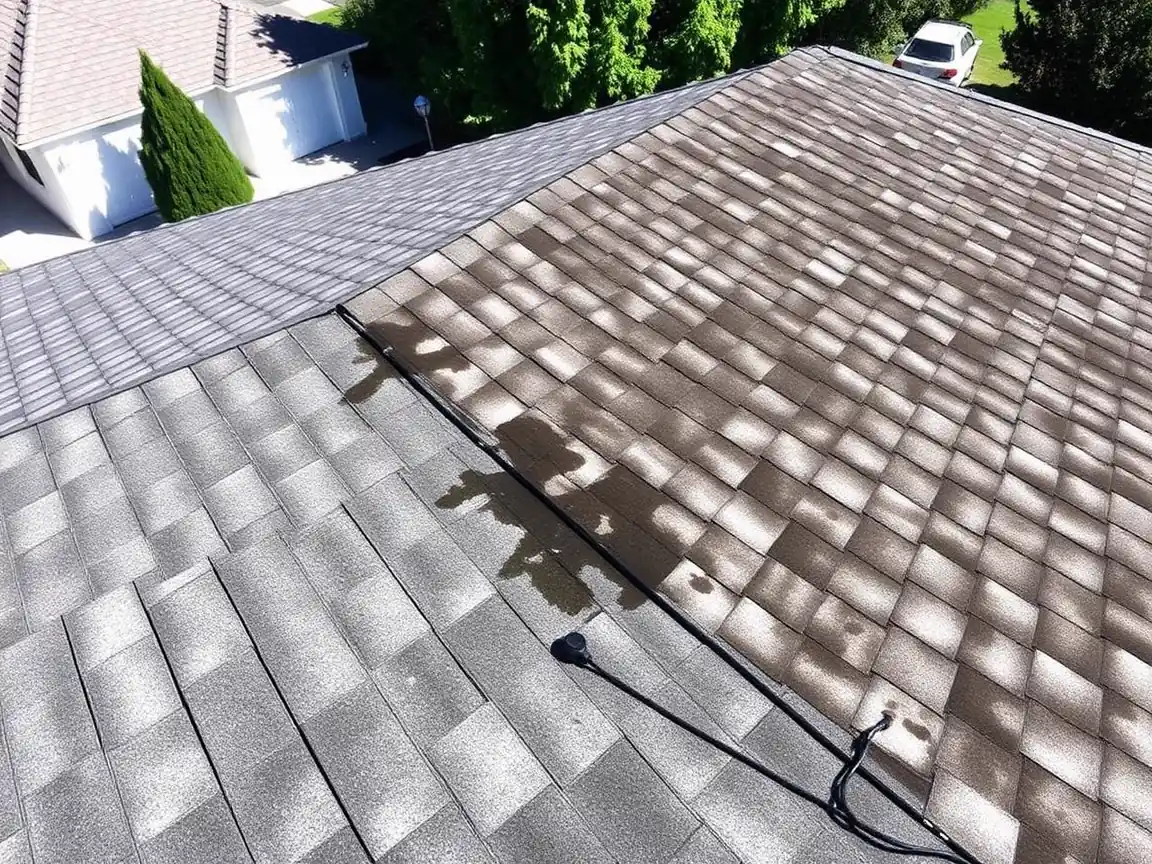
Black streaking is gloeocapsa magma algae feeding on the limestone filler in asphalt shingle granules, not simple dirt.
That dark discoloration isn't soot or dust settling on the roof, though Escalon does get plenty of both from summer ag operations. It's a living algae colony feeding specifically on the limestone-based filler material baked into modern asphalt shingle granules, and it spreads by airborne spore just like mold does on a damp wall.
Once established, the colony darkens and expands each rainy season, since moisture is what lets it multiply. A roof that shows a faint gray shadow one winter often shows a clearly visible black band running the length of the north slope by the following winter if nothing is done in between.
Homes in older sections of Escalon built before roofing manufacturers started adding algae-resistant copper granules to their shingle lines tend to show streaking earlier and more severely than newer construction near Silverwood, where those algae-resistant shingles are more common. Exterior Prime professionals see the same pattern repeat near Jones Road, Dent and the ZIP 95320 tract off Escalon-Bellota, where 20-plus-year-old shingle, tile and even a few metal roofs all show streaking at the ridge, valley, flashing, eave, soffit, fascia and downspout line before it ever reaches the field of the roof, and Exterior Prime professionals note the granule and underlayment condition at each of those points during the same visit.
Does Escalon's climate make shingle roofs age faster?
Summer heat above 100°F bakes shingles hard, while winter fog keeps north slopes damp, and that combination accelerates both granule loss and algae growth.
Escalon regularly sits above 100°F for stretches of July and August, and that heat cycle expands and contracts the shingle mat daily, gradually loosening granules that would otherwise stay locked in place for the shingle's full rated lifespan.
Then winter arrives with Tule fog that can blanket the area through much of December and January, keeping shaded roof slopes damp for hours after sunrise even on days without measurable rainfall. That extended dampness is exactly the condition algae needs to establish and spread.
Combined, that heat-then-fog cycle means an Escalon shingle roof often shows visible algae streaking two to three years earlier in its life than the same shingle would in a drier, more consistent climate without the fog exposure.
Can shingle roof cleaning in Escalon extend a roof's lifespan?
Regular cleaning doesn't add years to the shingle material itself, but it does prevent the accelerated granule loss algae growth causes.
Algae colonies hold moisture directly against the shingle surface, and that constant dampness gradually breaks down the asphalt binder holding granules in place. Left unchecked for many years, that process measurably shortens a roof's useful life compared to a roof cleaned on a regular interval.
Cleaning doesn't reverse granule loss that's already happened, but it stops the ongoing damage and restores the roof's ability to reflect heat properly, since a black-streaked roof absorbs noticeably more solar heat than a clean one, which matters through Escalon's long summer.
For homeowners planning to sell in Escalon's market, a visibly streak-free roof also reads as better-maintained to a buyer or inspector, even though the underlying shingle age hasn't changed at all.
What's the actual cleaning process for a shingle roof near Escalon?
A low-pressure algaecide application, a dwell period, then a gentle rinse — never a pressure washer anywhere near the shingle mat.
Exterior Prime professionals start by walking the roofline from the ground to check for existing damage, loose shingles or exposed nail heads, since those need to be noted before any liquid touches the surface.
The algaecide solution goes on at low pressure and sits against the black streaking for roughly ten to fifteen minutes, breaking down the algae's cell structure without any mechanical scrubbing or high-force water involved at any point.
A final gentle rinse from ridge to eave washes the dead algae away, and on a standard 1,400 to 1,800 square foot Escalon roof, the entire process from setup to final rinse typically wraps in about two hours.