Composition shingle staining patterns across Manteca neighborhoods
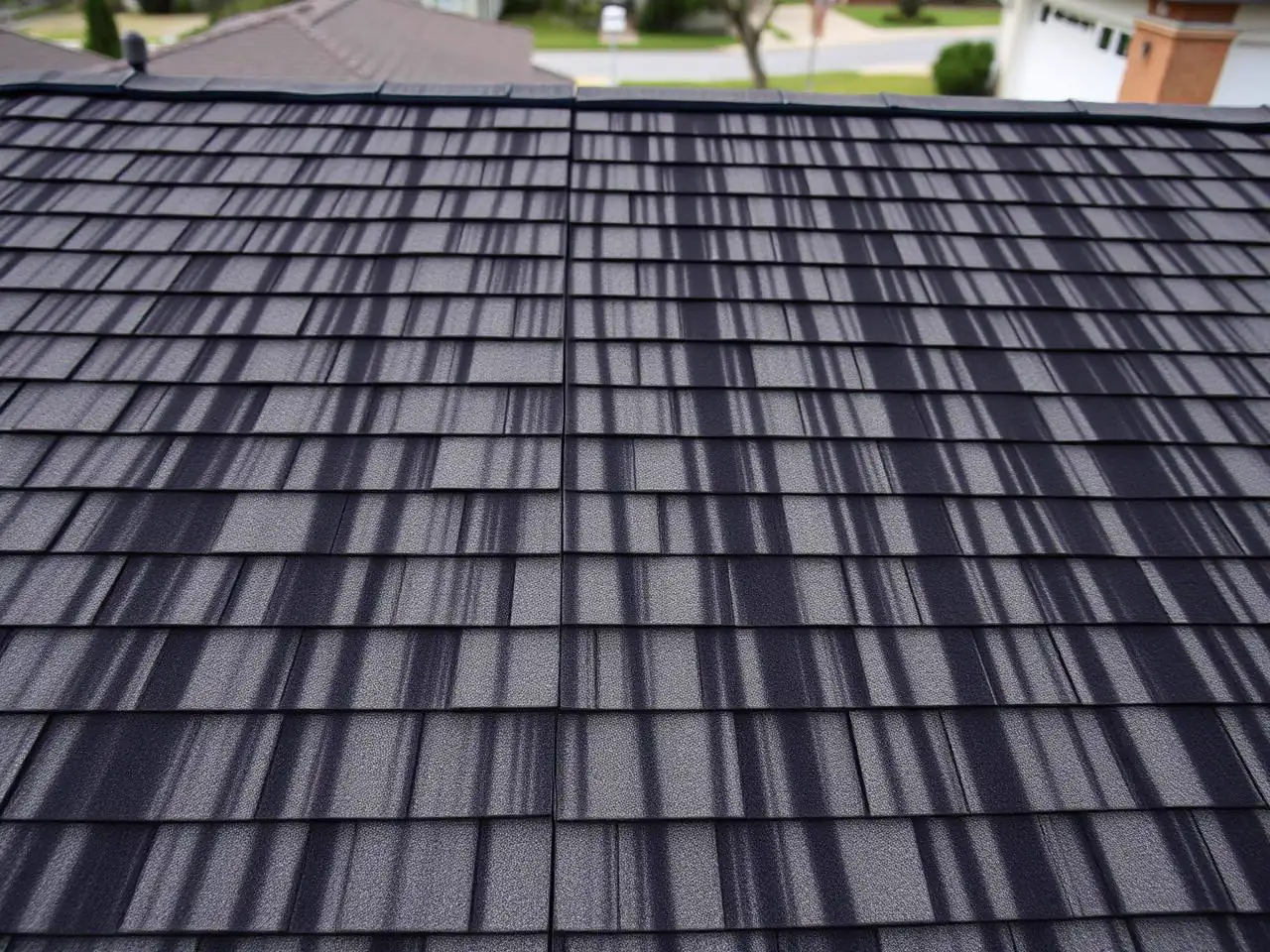
Older Powers Tract and Mayors Park shingle roofs show heavier black algae streaking than newer builds because decades of granule wear give algae more surface texture to grip.
Shingle roofs installed in the 1980s and 1990s across Powers Tract have lost enough surface granule over time that the exposed asphalt underneath provides a rougher, more porous surface for airborne algae spores to latch onto, which is why those neighborhoods tend to show the darkest streaking in town. Newer 2000s-era shingle near Union Ranch stays cleaner longer simply because the granule coat is more intact.
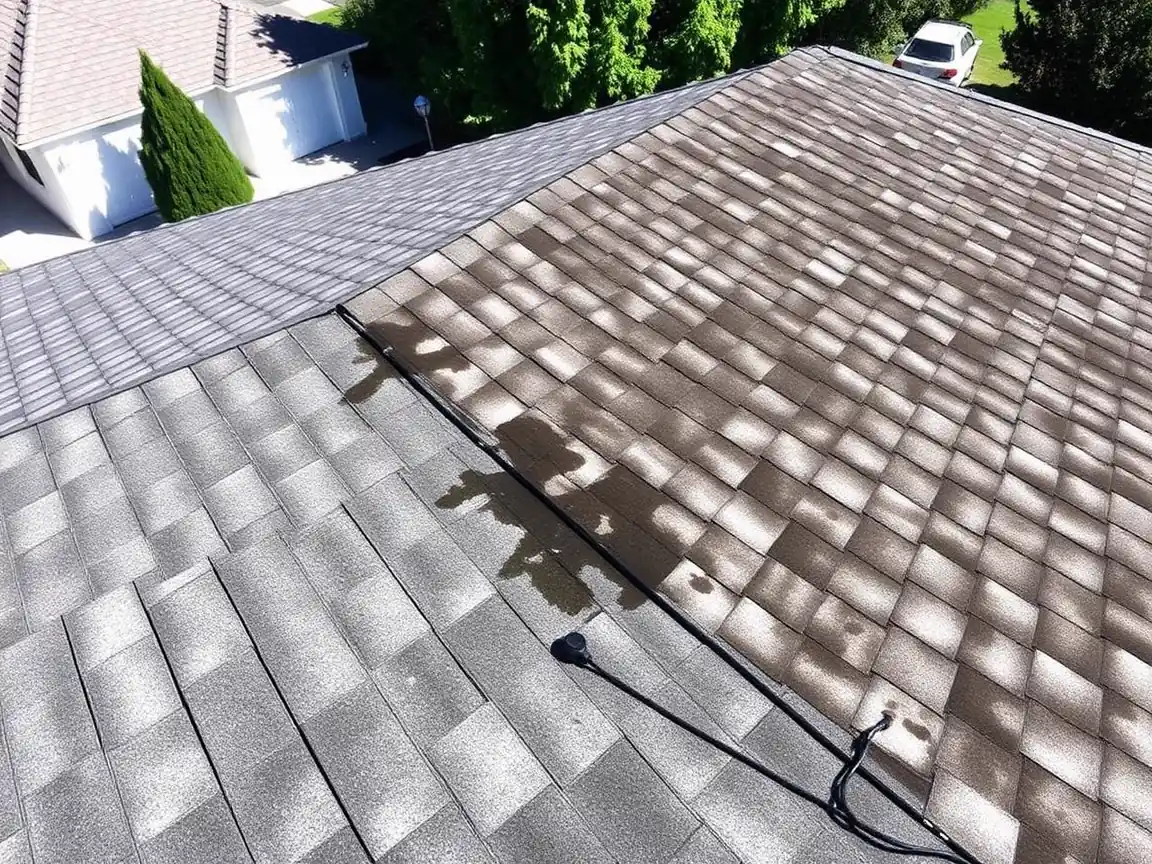
The streaking itself is a specific type of algae, Gloeocapsa magma, that spreads down-roof from the ridge in the classic dark streak pattern visible from the street, feeding on the limestone filler in the shingle rather than the asphalt itself. It thrives in the damp, low-light conditions Manteca's Tule fog mornings create on north- and east-facing pitches.
Because the streaking pattern follows water flow down the slope, a single algae colony near the ridge can visibly stain an entire pitch within two or three fog seasons if left untreated, which is faster than most homeowners expect from what looks like a slow-growing organism.
Why granule preservation matters for shingle roof cleaning in Manteca
Every granule stripped by high pressure is UV protection gone for good, and Manteca's summer sun exposure above 100°F accelerates the damage that follows.
The mineral granules embedded in composition shingle exist specifically to block UV rays from degrading the asphalt layer underneath, and they're bonded during manufacturing in a way that can't be replaced once knocked loose. A rented pressure washer set even moderately high strips visible granules within seconds, and homeowners often don't notice until they see granule grit collecting in the gutter afterward.
Once granules are gone, the exposed asphalt absorbs more heat and UV, accelerating brittleness in a roof that might otherwise have had another five to ten years of service life. In a Manteca summer, where roof surface temperatures can run well above the 100°F air temperature, that acceleration compounds fast.
Soft washing sidesteps the entire issue because the cleaning solution does the work of breaking down algae and moss at a molecular level, needing only a low-pressure rinse to carry the dissolved growth away rather than mechanical force to dislodge it.
Shingle roof cleaning cost breakdown for Manteca homes
At $0.50 per square foot, a 1,400 sq ft shingle roof — the most common single-story size in town — prices at $700 flat.
Roof square footage typically runs 20 to 40% larger than a Manteca home's floor plan once overhangs, dormers and multiple pitches are accounted for, so a 1,200 sq ft ranch home might carry a 1,500 to 1,700 sq ft roof. Exterior Prime professionals measure the actual roof area from satellite imagery or an on-site walk before quoting.
Heavy moss buildup, more common on shaded shingle near mature trees in older Mayors Park lots, adds $0.05 per square foot for the extra scrub and dwell time moss requires versus flat algae staining. Steep-pitch two-story homes near Woodward Park add $0.10 per square foot for the rigging that safe roof access demands.
A standalone shingle roof wash carries the $397 premium-service minimum, though bundling with a same-trip house wash under the Gutter Combo or Total Exterior packages brings the combined cost down from what booking each service separately would total.
Why do shingle roofs near Highway 99 stain faster than others in Manteca?
Roofs closer to Highway 99 and open farmland collect more airborne dust between rains, giving algae spores extra grit to grip onto as they spread down each pitch.
Traffic and ag dust carried off Central Valley fields settle onto shingle granules constantly, and unlike a smooth painted surface, granule texture holds onto that grit rather than letting rain sheet it away. Homes within a half mile of the Highway 99 corridor in Manteca's 95336 ZIP often show visible streaking a full season earlier than similar roofs set back in quieter Union Ranch cul-de-sacs.
That same dust layer traps moisture from Tule fog mornings against the granule surface longer than a clean roof would, which is exactly the damp window Gloeocapsa magma algae needs to establish a colony. It's a compounding effect: more dust holds more moisture, and more moisture spreads algae faster down the slope toward the eave.
Exterior Prime professionals factor that exposure into scheduling recommendations for Manteca addresses near open field edges, often suggesting a slightly shorter interval between cleanings than the standard 18 to 24 months quoted for shingle set farther from the corridor.