Why soft washing is the only method Exterior Prime uses on Manteca roofs
High pressure strips protective granules off shingles and can crack tile, while soft washing removes the same staining with a chemical dwell instead of force.
A 3,000 PSI wand aimed at composition shingle knocks loose the mineral granules that shield the asphalt layer from UV light, and once those granules are gone they don't grow back. Manteca gets enough sun exposure between May and September that a granule-stripped roof ages years faster than one cleaned properly, which is why Exterior Prime professionals never carry a pressure attachment onto a roof deck at all.
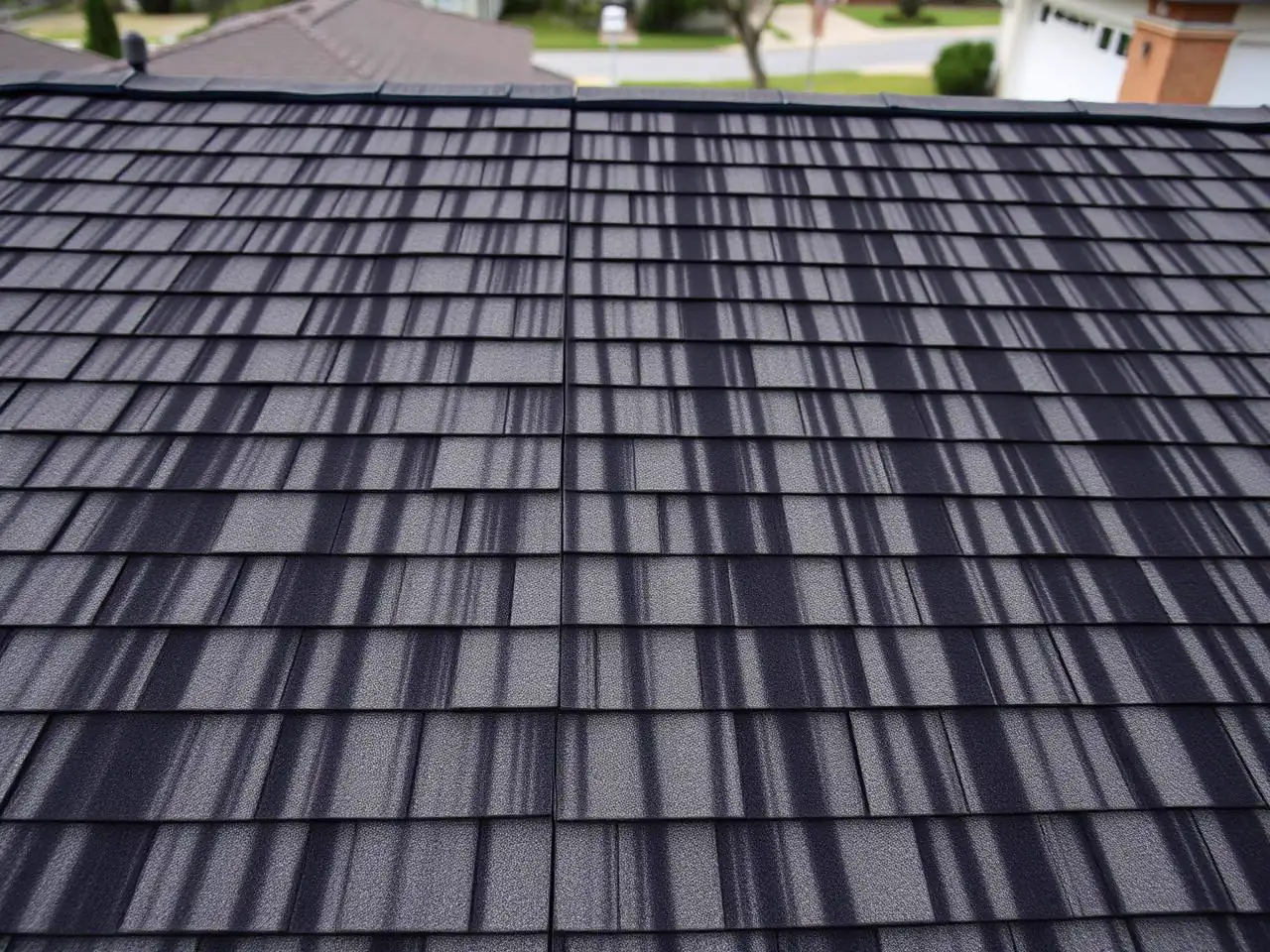
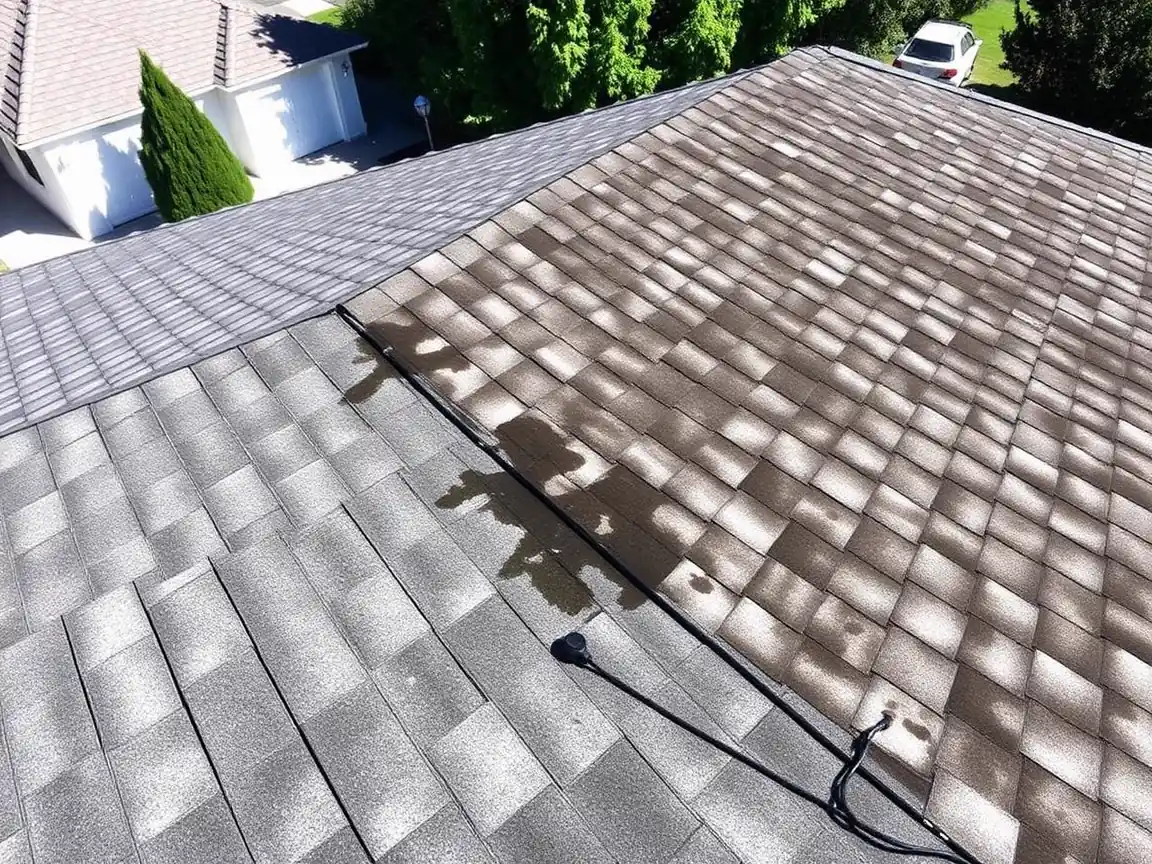
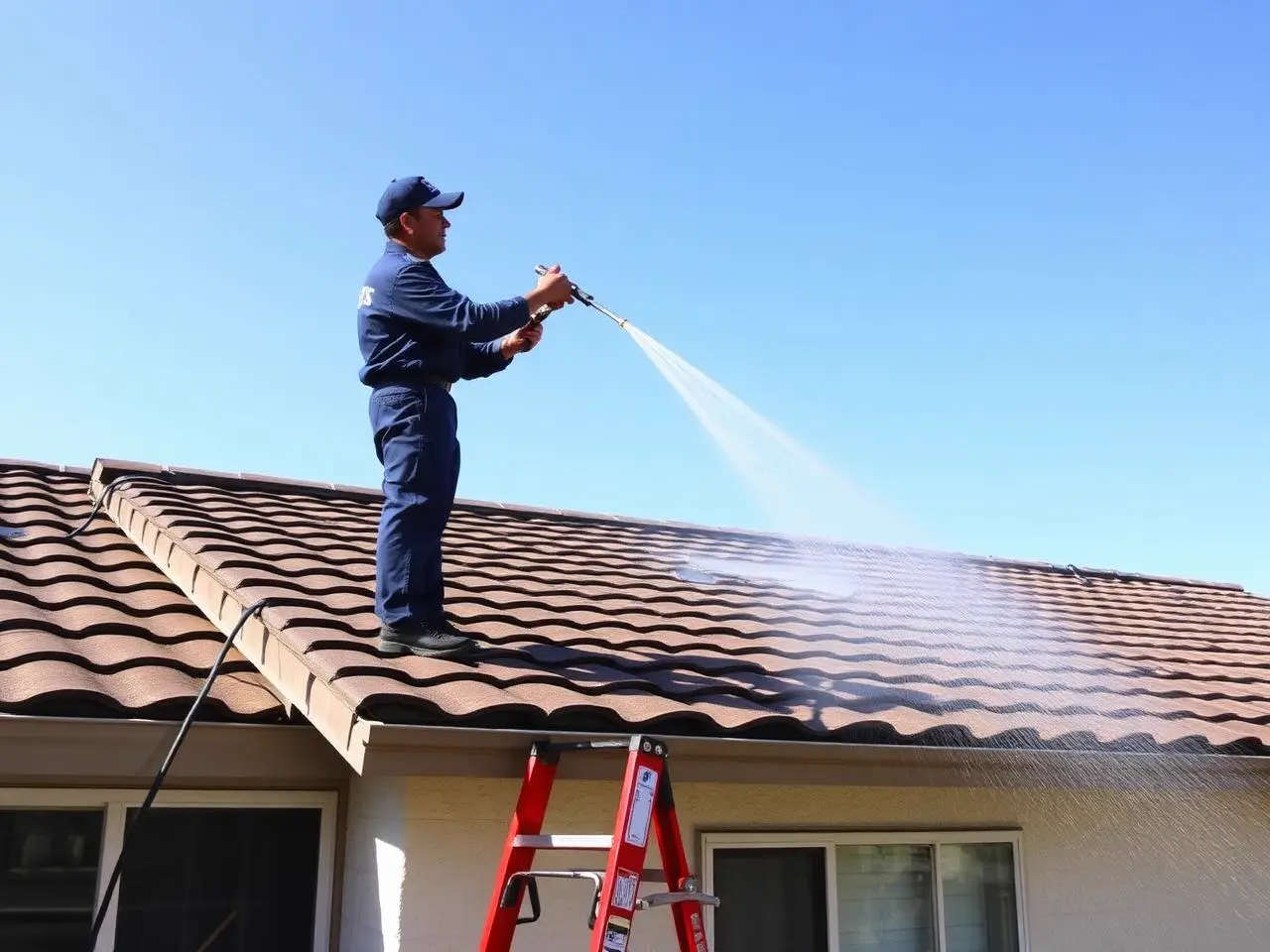
Soft washing instead relies on a solution formulated to break down algae, moss spores and lichen at the cellular level, applied through a low-pressure nozzle and given ten to fifteen minutes to work before a gentle rinse. On a typical Union Ranch or Powers Tract shingle roof, that dwell time is what actually kills the black streaking rather than just pushing it around.
Tile roofs common on newer Manteca construction near Del Webb at Woodbridge are even less pressure-tolerant — a cracked barrel tile means a roofer, not a washing contractor, has to come back out. Soft washing avoids that risk entirely because nothing but low-volume rinse water ever contacts the tile surface.
What Manteca's climate does to an unwashed roof
Tule fog mornings from November through February keep shaded roof pitches damp for hours, which is exactly the condition algae and moss need to establish.
Manteca's winter fog rolls in low and often doesn't burn off north-facing slopes until midday, so a roof pitch that faces away from the sun can stay wet for six or more hours at a stretch. That daily moisture cycle, repeated across a foggy January, is enough for algae spores drifting in on the wind to take hold and spread across an entire shingle field within a season.
Come summer, the same roofs bake under temperatures that regularly top 100°F, which does kill some surface growth but also bakes the algae residue into a permanent gray-black stain that no longer washes off with rain. By the time a homeowner notices streaking from the street, it's usually been building for a year or more.
Ag dust blowing in off the fields ringing Manteca adds a second layer, settling into the same damp, shaded areas where algae already grows and giving it something to root into. The combination is why roofs here often need attention every 18 to 24 months rather than the longer intervals seen in drier, dust-free regions.
Roof soft washing pricing and timeline for Manteca homes
Shingle soft washing runs $0.50 per square foot, with a 1,400 sq ft roof landing around $700 and most jobs wrapping in half a day.
Pricing is measured by roof square footage, not home square footage, since roof area including overhangs typically runs larger than the footprint below. A 1,000 sq ft shingle roof prices at $500, a 1,400 sq ft roof at $700, and a larger 2,000 sq ft roof at $1,000, each quoted flat before Exterior Prime professionals ever get on a ladder.
Steep-pitch roofs, common on two-story homes near Woodward Park, add $0.10 per square foot for the extra rigging and rope-and-harness time required to work safely. Heavy moss or lichen buildup, more typical on older Powers Tract homes with mature shade trees, adds $0.05 per square foot for the extra dwell and scrub time those growths need.
A standalone visit carries a $397 minimum given the specialized safety equipment roof work requires, and most single-story shingle roofs finish in three to four hours while steeper or larger tile roofs can run closer to five or six.
Does roof soft washing actually work on Manteca's toughest algae?
Yes — the solution's ten to fifteen minute dwell time kills algae, moss and lichen at the root across both 95336 and 95337, not just the visible streak.
Homeowners near the 95336 ZIP asking about soft washing usually want to know if a chemical process can really match what a pressure wand does visually, and the answer comes down to dwell time rather than force. Exterior Prime professionals let the solution sit on shingle, tile or metal for ten to fifteen minutes so it breaks down algae and moss at the cellular level before a single drop of rinse water hits the ridge, valley or eave line.
Across Manteca's flatter Central Valley terrain, roofs don't get the wind-driven drying that hillier regions see, so ag dust and Highway 99 corridor grime settle into granule texture and stay there through most of the dry season. That combination is exactly why a chemical dwell approach outperforms a quick rinse: it has time to reach into the granule surface rather than skating across it.
Exterior Prime keeps a standing route through 95337 as well, which means the same low-pressure method, always handled by Exterior Prime professionals rather than rotating outside labor, gets applied consistently whether the address sits near Union Ranch or out toward the edge of town, with pricing and process never changing based on which ZIP the job falls in.