What actually happens during a Tracy roof soft wash?
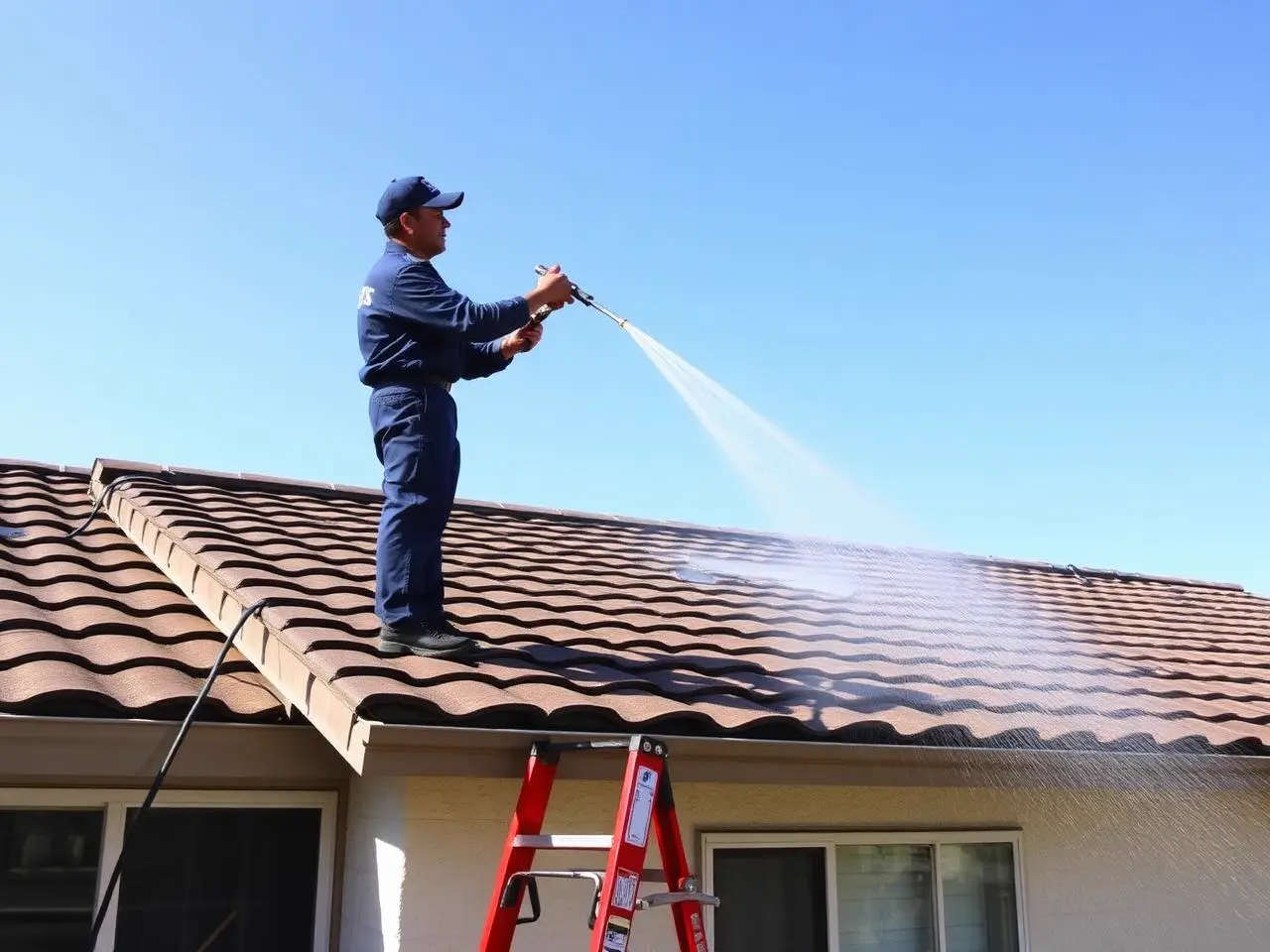
A soft wash is a chemical treatment that dissolves organic growth first and only rinses the roof afterward at hose-bib pressure.
Exterior Prime professionals mix a biodegradable solution formulated to break down the cell structure of algae, moss and lichen, then apply it evenly across the shingle, tile or metal field with a low-flow sprayer rather than a wand capable of stripping surface material.
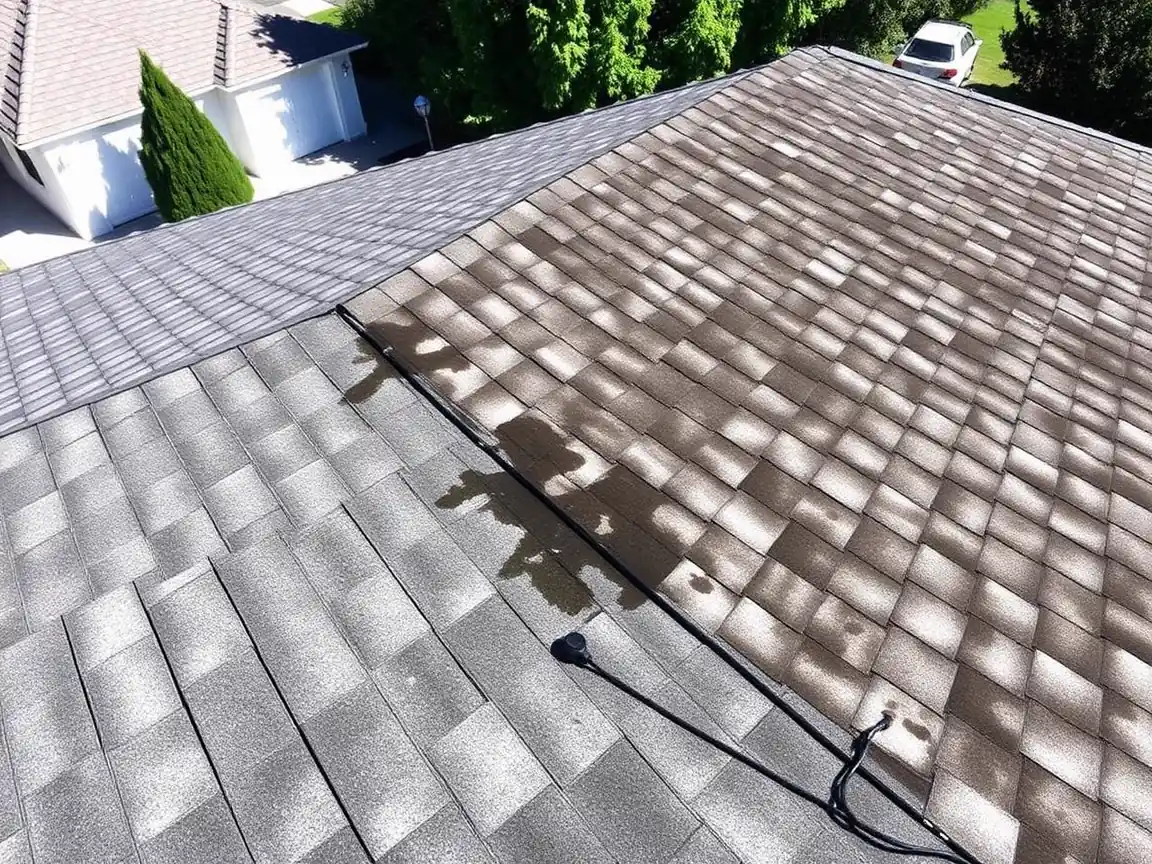
Once the chemical has had time to work through the growth layer, a rinse at the same pressure a garden hose produces carries the loosened residue down toward the downspout system instead of scattering it across neighboring sections of clean roof.
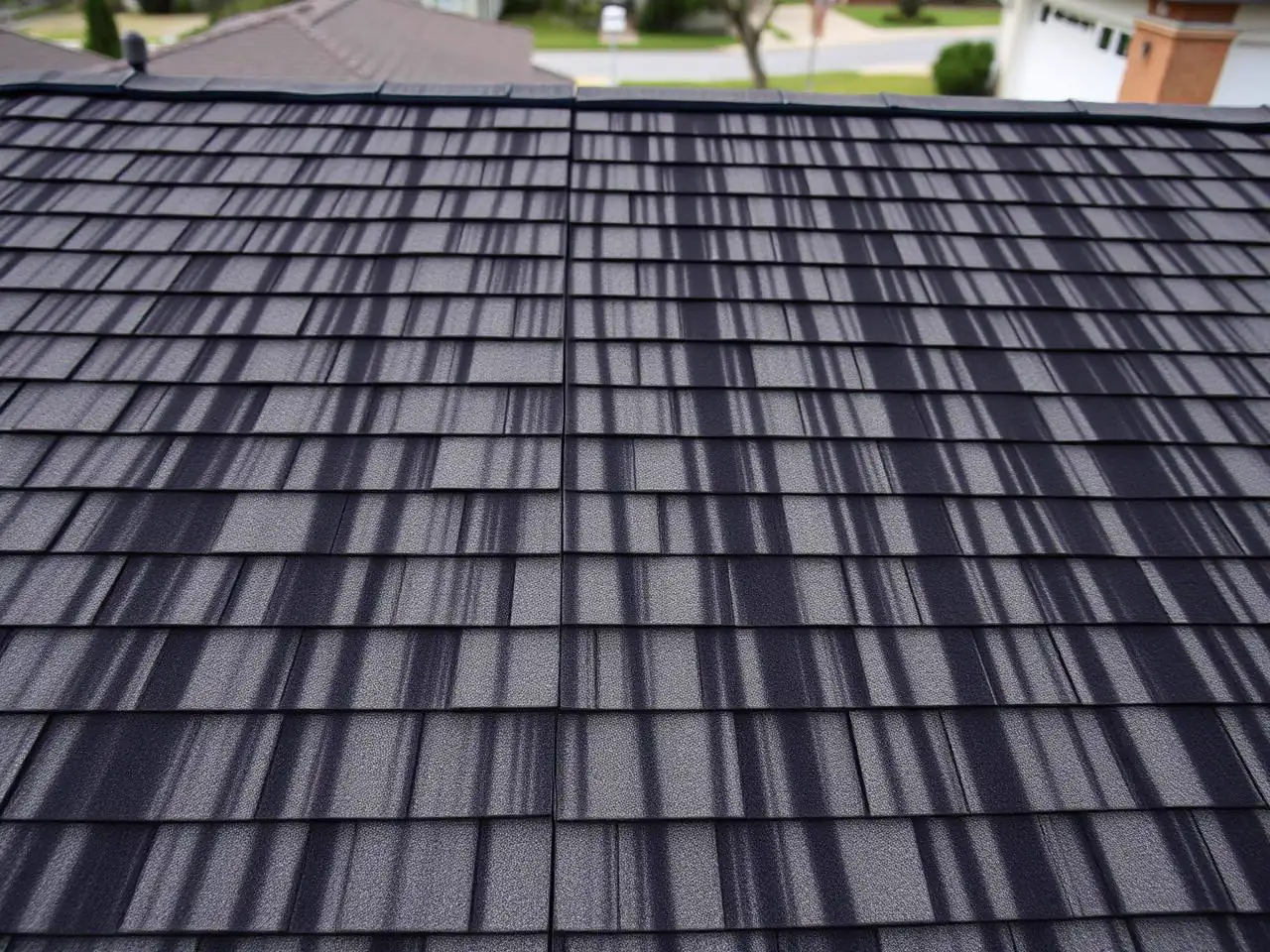
Composition shingle covers the majority of homes built between the 1990s and 2010s across Tracy, and every one of those shingles depends on a layer of mineral granules to block sun damage, which is exactly the layer a pressure washer would tear away in a single pass.
How long does a soft-wash visit take on a Tracy home?
A single-story Tracy roof typically finishes in about ninety minutes, while a two-story home near Redbridge can run closer to three hours.
Exterior Prime professionals begin by walking the roofline to note pitch, ridge condition, valley drainage and any vent or satellite mount that needs protecting from overspray before a drop of solution goes down.
Application moves from the ridge toward the eave in overlapping bands, which keeps runoff moving in one direction and prevents already-cleaned shingle from being re-soiled by debris sliding down from a higher section.
Two-story tract homes common across Edgewood and Kimball add setup time for harness anchoring on steep sections, and a shaded north slope in those neighborhoods often gets a longer dwell time since moss holds on there long after the south side has dried out.
What does roof soft washing cost around Tracy?
Shingle roofs price at $0.50 per square foot, so most Tracy homes land between $500 and $900 depending on total roof area.
A compact 1,000 sq ft roof common on older Downtown Tracy bungalows runs near $500, a mid-size 1,600 sq ft roof lands around $800, and a larger 2,400 sq ft roof typical of newer construction near Berg Ranch runs closer to $1,200 before any surcharge applies.
A steep-pitch surcharge of $0.10 per square foot covers roofs that require additional harnessing, and a $0.05 per square foot surcharge applies only when moss or lichen coverage across the surface is heavy enough to demand a second treatment pass along the ridge and valleys.
The $297 standalone visit minimum applies to any single roof-only appointment within the 95376, 95377, 95304 and 95378 ZIP codes, and that figure is confirmed in writing before a technician is dispatched.
Why does soft washing protect roofing warranties in Tracy?
Most shingle manufacturers void warranty coverage when a pressure washer touches the roof, making soft washing the only approved cleaning method.
Manufacturer installation guides for composition shingle explicitly list high-pressure cleaning as a condition that voids remaining warranty coverage, since granule loss accelerates UV damage and shortens the shingle's functional life far faster than normal weathering.
Because the soft-wash rinse never exceeds what a hose bib could produce on its own, granules stay bonded to the shingle mat, keeping any manufacturer coverage intact for a homeowner who later needs to file a claim.
Eave, soffit and fascia trim framing a Tracy roofline also benefit, since Exterior Prime professionals angle every rinse pass so water sheets toward the gutter rather than driving moisture sideways behind painted fascia boards or through vented soffit panels.
When should a Tracy homeowner schedule roof soft washing?
January through March, right after San Joaquin County's wettest stretch, is when algae and moss growth peaks and cleaning delivers the most visible change.
Tule fog and periodic rain from December through February keep roof surfaces damp for days at a stretch, and that sustained moisture is precisely the condition algae spores and moss need to establish before summer heat sets the growth permanently into the shingle surface.
Booking service before the triple-digit stretch that typically starts by June gives the roof time to dry completely and lets the treatment finish working without the Central Valley sun baking residue onto the surface prematurely.
Homes shaded by mature almond trees on older Tracy lots or positioned along the Delta-facing west side of town often show heavier growth than sun-exposed roofs elsewhere in town, so those addresses tend to benefit most from an early-year appointment.