Why does Tracy Hills tile need a different cleaning method than shingle?
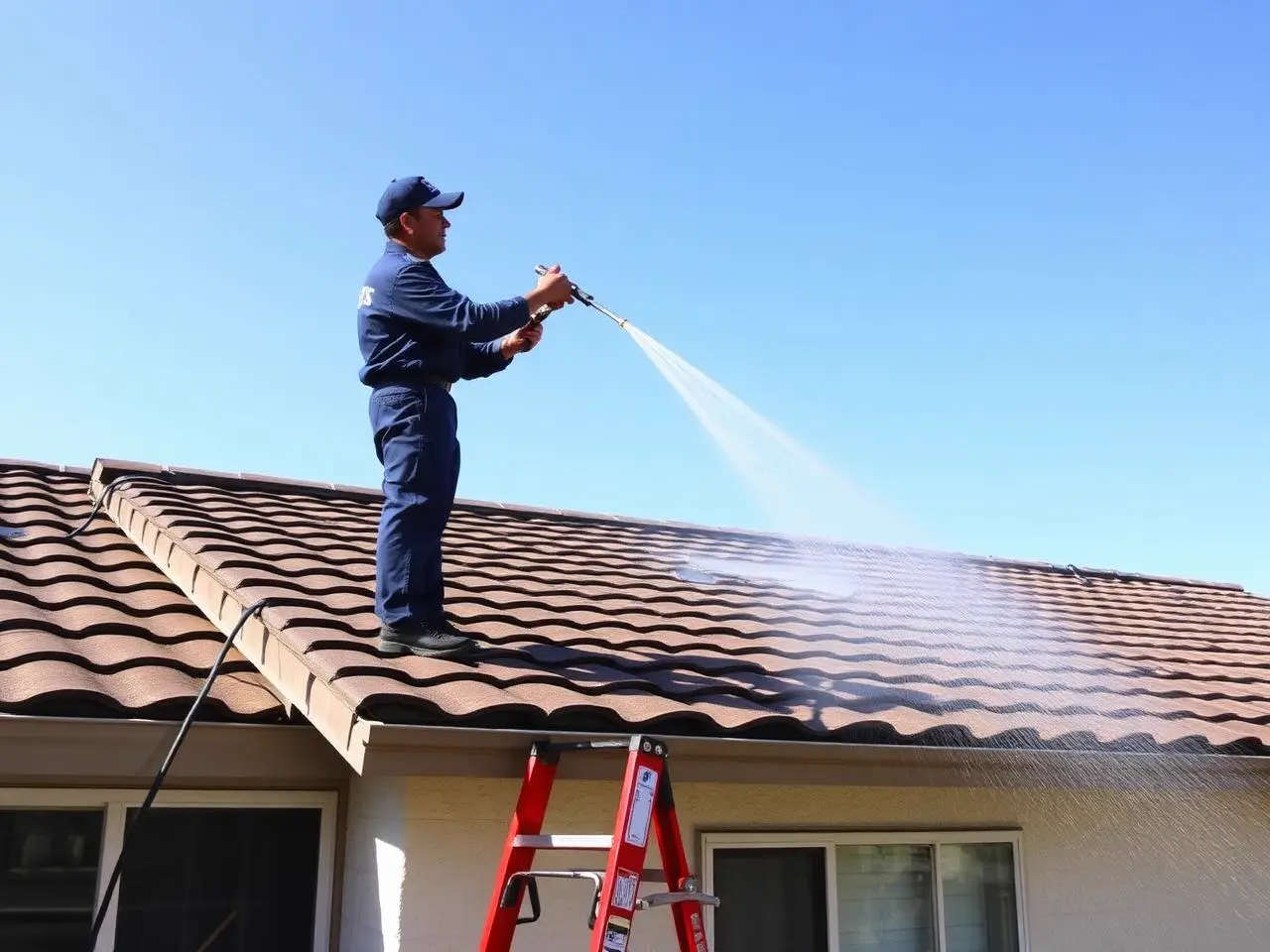
Tile is a porous material that absorbs organic growth into its surface, requiring longer chemical contact time than a flat shingle field.
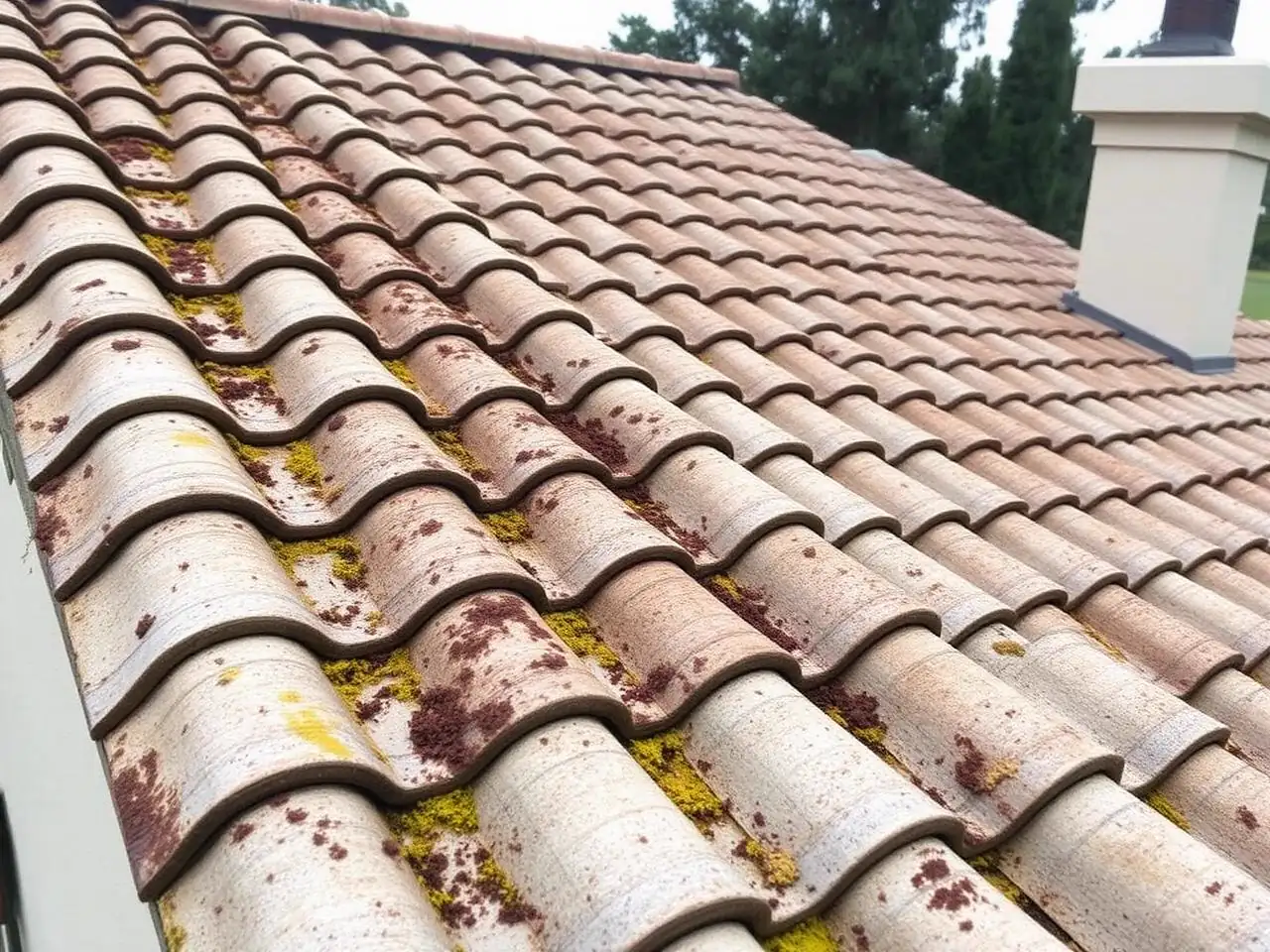
Concrete tile, standard across most newer Tracy Hills construction, has a rough, absorbent surface that holds moisture long after a rain, giving algae and lichen a foothold that grows into the material rather than resting on it the way growth does on smoother shingle.
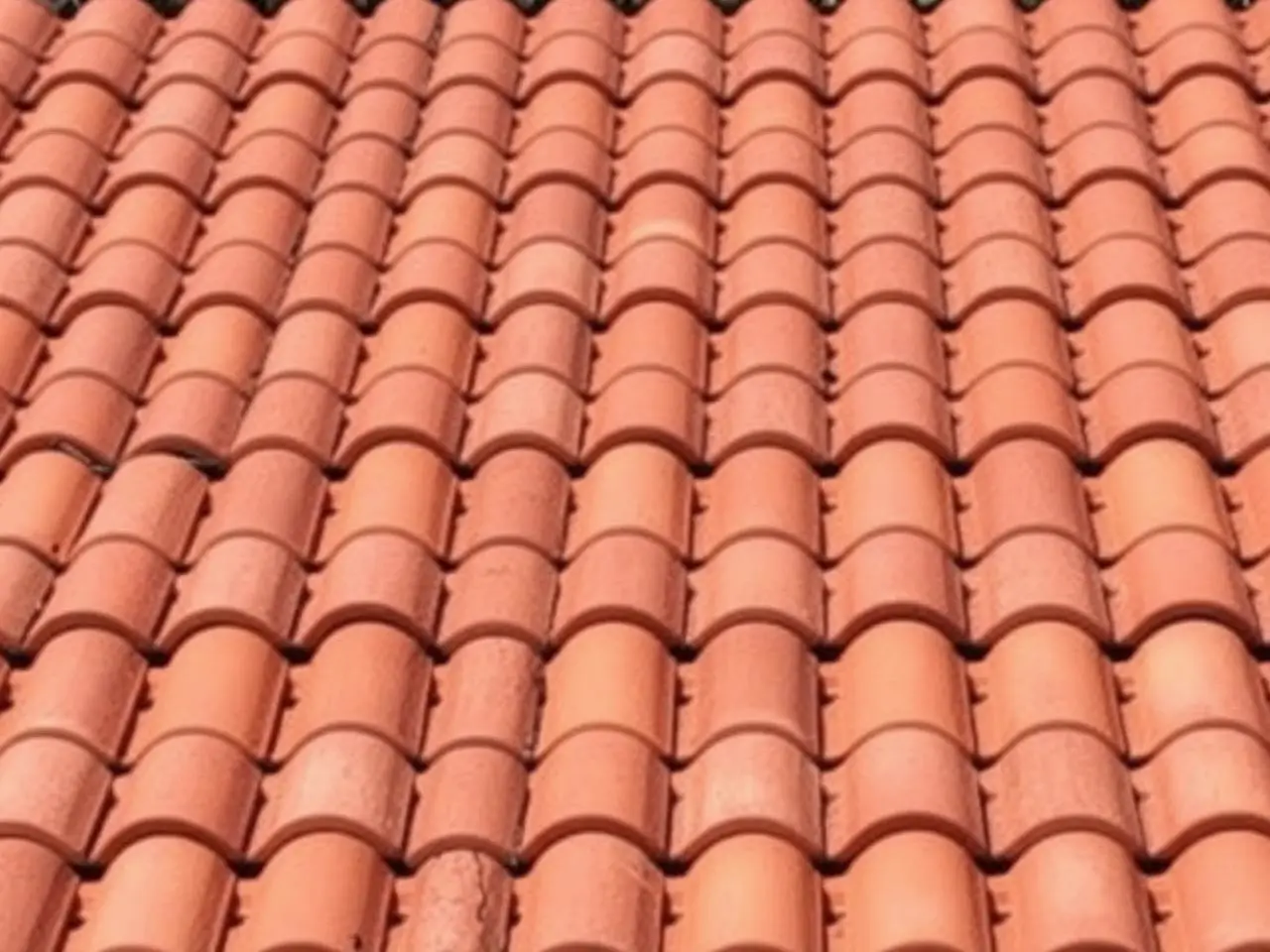
Clay tile, found on some older homes closer to Downtown Tracy and along 11th Street, is thinner and more brittle at the edges than concrete, which changes how a technician moves across the roof entirely, keeping weight distributed along the reinforced batten lines instead of the center of any single piece.
Grit carried in by Altamont Pass wind gathers in the raised channels between tile ridges on both types, and that trapped debris holds water against the surface for days after a storm, which is why Tracy's tile-roof service calls cluster heavily in late winter.
What does tile roof cleaning cost across Tracy?
Tile pricing runs $0.55 per square foot, a five-cent premium over shingle to account for the slower, more careful process tile demands.
A 1,000 sq ft tile roof, common on smaller lots near Plaza Park, runs about $550, a 1,600 sq ft roof typical of a Tracy Hills two-story runs near $880, and a larger 2,600 sq ft roof on some Berg Ranch estate lots runs closer to $1,430 before surcharges.
A steep-pitch surcharge of $0.10 per square foot applies to dormered or high-angle tile rooflines that require extra harness anchoring, common on two-story builds throughout Redbridge and Sunrise Park.
A heavy-lichen surcharge of $0.05 per square foot covers a second treatment pass on tile shaded heavily by mature landscaping, a condition seen frequently on streets bordering Lincoln Park.
How does hard water affect tile roofs in Tracy?
Mineral-rich irrigation overspray leaves a pale, chalky film on tile that looks like dirt but requires a different chemical approach than algae removal.
Several Tracy neighborhoods run sprinkler systems that occasionally overspray onto the lower roof edge, and the hard water common to the area's well-fed and municipal supply leaves mineral deposits that bond to porous tile rather than sitting loosely on the surface like dust.
Exterior Prime professionals identify hard-water staining separately from biological growth during the initial walk, since treating the two the same way either under-treats the mineral bond or over-treats the tile with unnecessary chemical strength.
Left untreated across several Tracy summers, that mineral film bonds more tightly into the tile's porous texture, so catching it during a scheduled cleaning keeps the roofline looking uniform instead of patchy near the eave.
What happens at the gutter and downspout line during tile cleaning?
Tile sheds water faster than shingle, so gutters and downspouts beneath a tile roof handle a noticeably higher runoff volume during the rinse.
Homes across Edgewood and Berg Ranch with tile roofs often push several extra gallons per minute toward the eave compared to a shingle roof of the same size, so Exterior Prime professionals check gutter capacity and downspout flow before starting to prevent overflow onto fascia trim below.
Underlayment beneath the tile field, typically a synthetic or felt membrane, only becomes exposed when a tile has slipped or cracked, and that gets checked visually along the eave since one or two loose tiles is common on tile roofs older than fifteen years near Downtown Tracy.
Metal drip-edge flashing at the eave gets a close look too, since ag dust drifting off surrounding row-crop and almond acreage can corrode a thin drip edge well before the tile itself shows any wear.
When is the right season to clean tile roofs in Tracy?
Scheduling between February and April catches the year's heaviest lichen growth before summer heat locks staining into the porous tile surface.
San Joaquin County's rainy stretch typically runs November through March, and tule fog mornings during that window keep tile surfaces damp long enough for lichen and moss spores to establish before dry season arrives.
Booking before triple-digit days start by June gives tile time to dry fully and lets the cleaning solution finish breaking down growth before Central Valley sun bakes the surface for months without relief.
Fall appointments are not wrong, but staining that has set through a full summer under direct sun near almond-orchard-adjacent streets on Tracy's edges typically needs a longer dwell time to lift than growth caught earlier in the year.