Why does moss take hold on Tracy roofs?
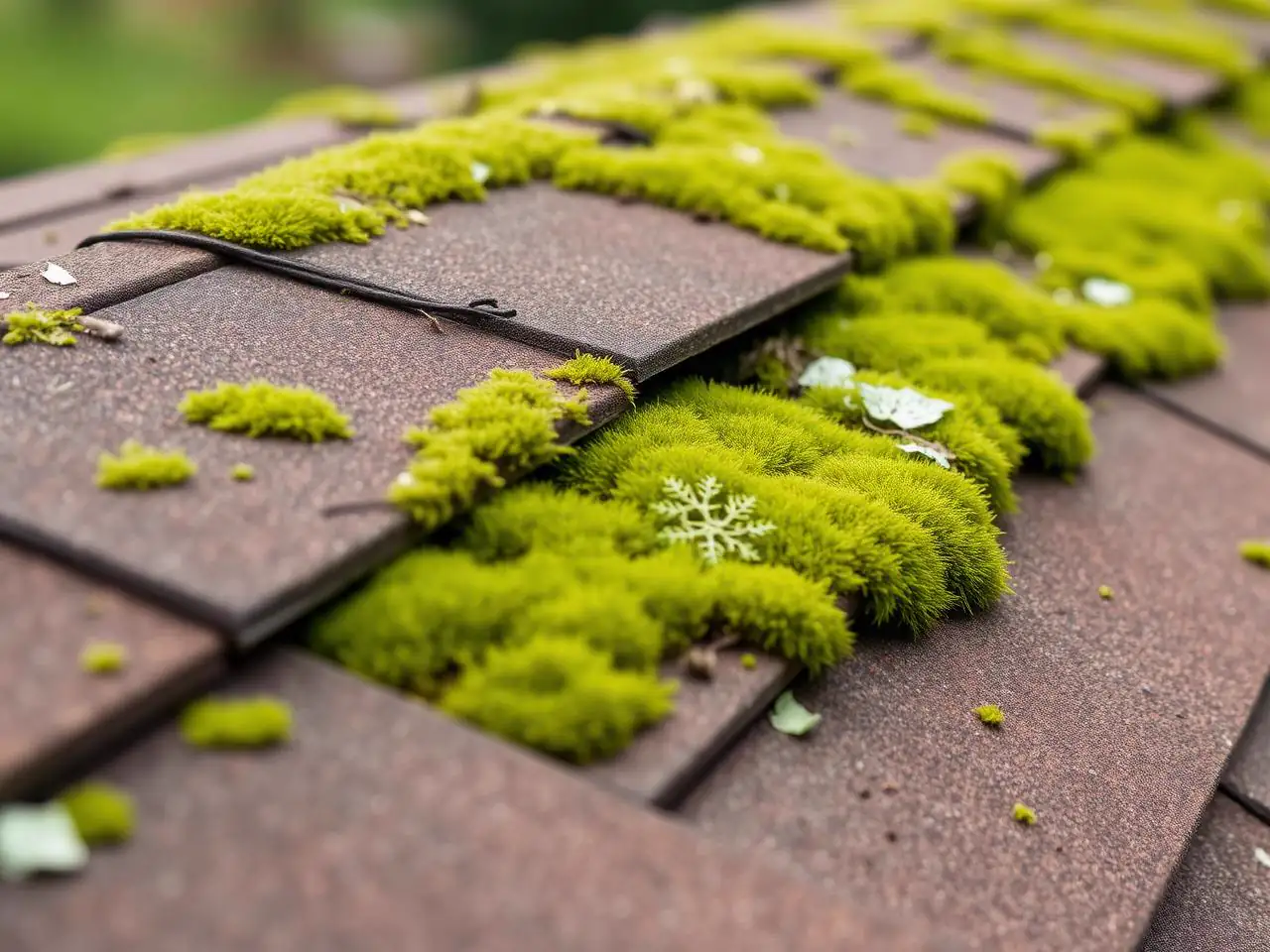
Moss needs sustained moisture and shade, conditions that Tracy's tule fog winters create on north-facing roof slopes for months at a stretch.
San Joaquin County's damp season, running roughly December through February, brings tule fog that settles overnight and burns off slowly, keeping shaded roof sections moist far longer than sun-exposed slopes ever stay wet.
Homes near Redbridge and Edgewood with mature trees overhead lose direct sun on part of the roofline for much of the year, and that shade combined with fog moisture is close to ideal moss habitat, especially in roof valleys where water naturally collects and drains slower.
Once moss establishes, it holds moisture directly against the shingle or tile surface even after the surrounding roof dries, which is why moss patches tend to grow faster year over year instead of drying out on their own during Tracy's long dry summer.
Why shouldn't moss be scraped off a Tracy roof?
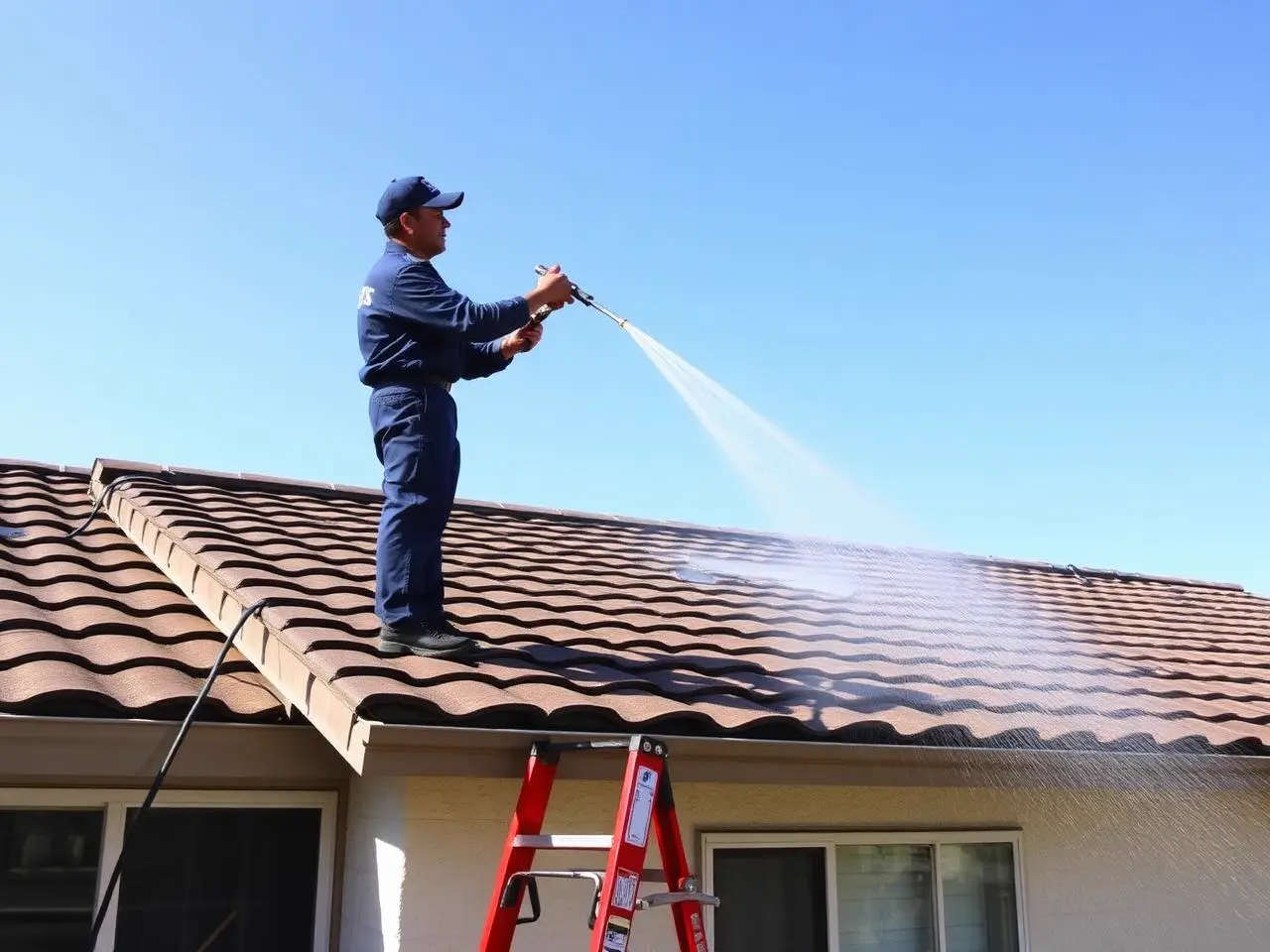
Scraping moss physically damages shingle granules and can crack tile, while soft washing kills the moss chemically without touching the surface.
A common DIY instinct is to scrape or brush visible moss off a roof, but moss root structures called rhizoids anchor into the shingle's granule layer or into a tile's porous surface, and pulling moss loose mechanically pulls granules or tile fragments with it.
Soft washing instead applies a solution that breaks down moss at the cellular level over several minutes of dwell time, which kills the plant without any scraping motion, so the moss simply rinses away dead rather than getting torn out while still alive and anchored.
This distinction matters most on older composition shingle around Downtown Tracy, where granule adhesion is already naturally weaker with age, and any mechanical scraping accelerates the exact granule loss that shortens a roof's remaining service life.
How much does roof moss removal cost in Tracy?
Moss removal on Tracy shingle runs about $0.50 per square foot, with tile priced slightly higher at $0.55 per square foot.
A 1,400 sq ft shingle roof with moderate moss coverage runs near $700, while the same size tile roof runs closer to $770, both using the standard base rate before any surcharge for unusually heavy growth.
When moss coverage is dense enough to need a second treatment pass, an additional $0.05 per square foot applies, which typically adds $50 to $100 to a mid-size Tracy roof depending on total square footage.
Every moss-removal visit across the 95377 and 95304 ZIP codes carries the same $297 standalone minimum that applies to any single roof-only service, with a written quote confirming final pricing after the roof walk.
Which parts of a roof does moss typically target first?
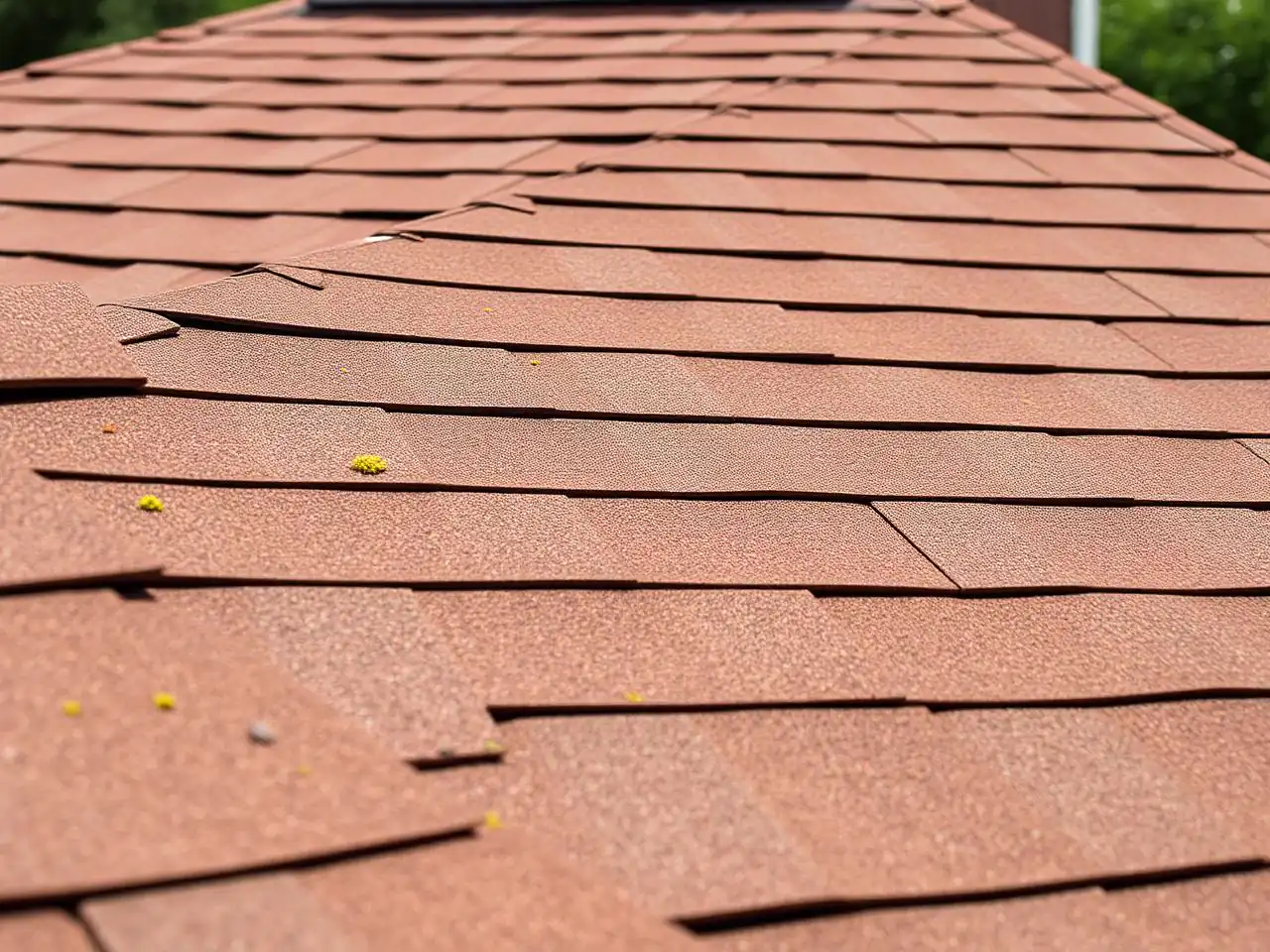
Moss almost always establishes first in shaded valleys, along the ridge line and around chimney flashing before spreading across open shingle field.
Roof valleys, where two slopes meet and water naturally channels toward the gutter, stay damp longer than flat shingle field even on sun-exposed roofs, making valleys the most common starting point for moss on nearly every Tracy home Exterior Prime professionals inspect.
Flashing around chimneys and vent penetrations creates small shaded pockets where debris collects, and that debris holds moisture against the metal-to-shingle transition, giving moss spores an early foothold before the growth spreads outward.
Once moss establishes at the ridge cap, spores travel downslope with every rain, which is why a small ridge patch left untreated for two or three Tracy winters can spread into a full valley colony by the time a homeowner notices it from the ground.
Soffit vents and fascia boards framing the eave also trap windblown ag dust carried in off surrounding Central Valley cropland, and that gritty film holds moisture against the roofline the same way a shaded valley does, giving moss one more foothold along a 40-foot eave run on a typical two-story Tracy home.
Can moss removal be paired with other Tracy exterior services?
Yes, moss removal pairs naturally with gutter cleaning since moss debris and granule buildup both collect in the same downspouts during the rinse.
Booking gutter cleaning alongside a moss-removal visit means Exterior Prime professionals are already positioned at the roofline, and the add-on gutter service starts at $149 rather than requiring a separate mobilization trip later.
Homes near Berg Ranch and Tracy Hills with solar panels also benefit from pairing moss removal with a solar panel cleaning, since panels installed near moss-prone valleys often pick up the same fog-driven grime that feeds moss growth on the surrounding shingle.
Scheduling both services on the same visit also means runoff planning happens once instead of twice, which keeps landscaping and hardscape protection consistent across the whole property during a single appointment window.
Stucco walls sitting directly beneath a moss-heavy eave sometimes pick up a thin mildew film from years of shaded runoff, and Exterior Prime professionals flag that separately since stucco and any adjacent concrete walkway need a milder dilution than the roof-grade solution used on shingle or tile overhead.