Why does moss grow so persistently on Salida roofs?
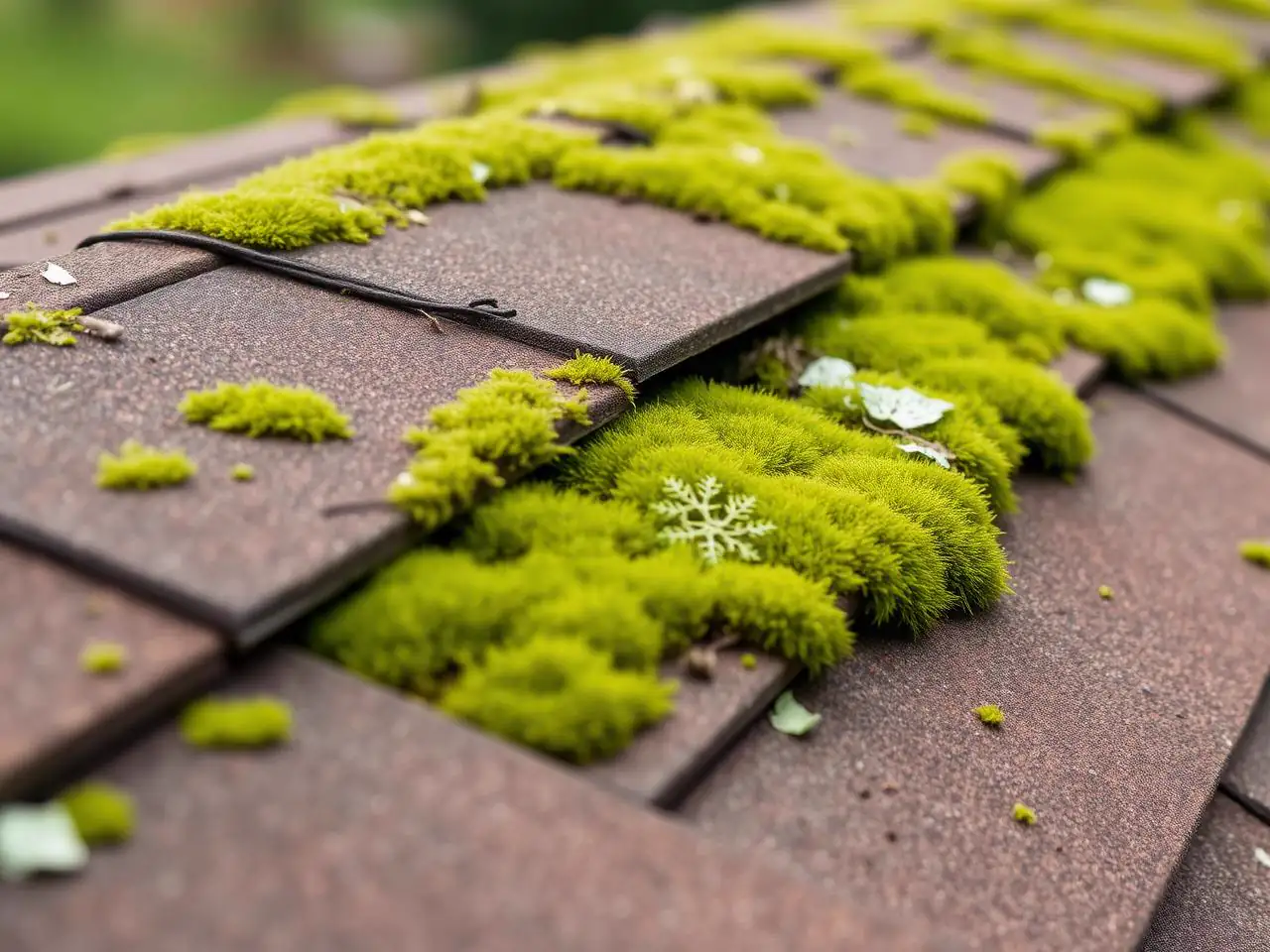
Moss needs consistent moisture, and Salida's Tule fog mornings feed shaded roof slopes with exactly that through the winter months.
Between November and February, Central Valley fog can settle over Salida rooftops overnight and linger into the morning, keeping shaded roof sections damp for hours after sun-exposed slopes have already dried. That extended moisture window is what lets moss spores establish and take hold.
Once moss gains a foothold, its root structure works into the gaps between shingle tabs or under tile edges, holding moisture against the roof deck long after the surrounding area has dried out, which is a slower but real contributor to underlying deck rot if left unaddressed for years.
Homes near mature trees in Broadway Colony or backed up against taller neighboring rooflines in Pirrone Estates see this pattern most consistently, since the extra shade extends that morning dampness even further into the day.
How is moss actually removed from a Salida roof?
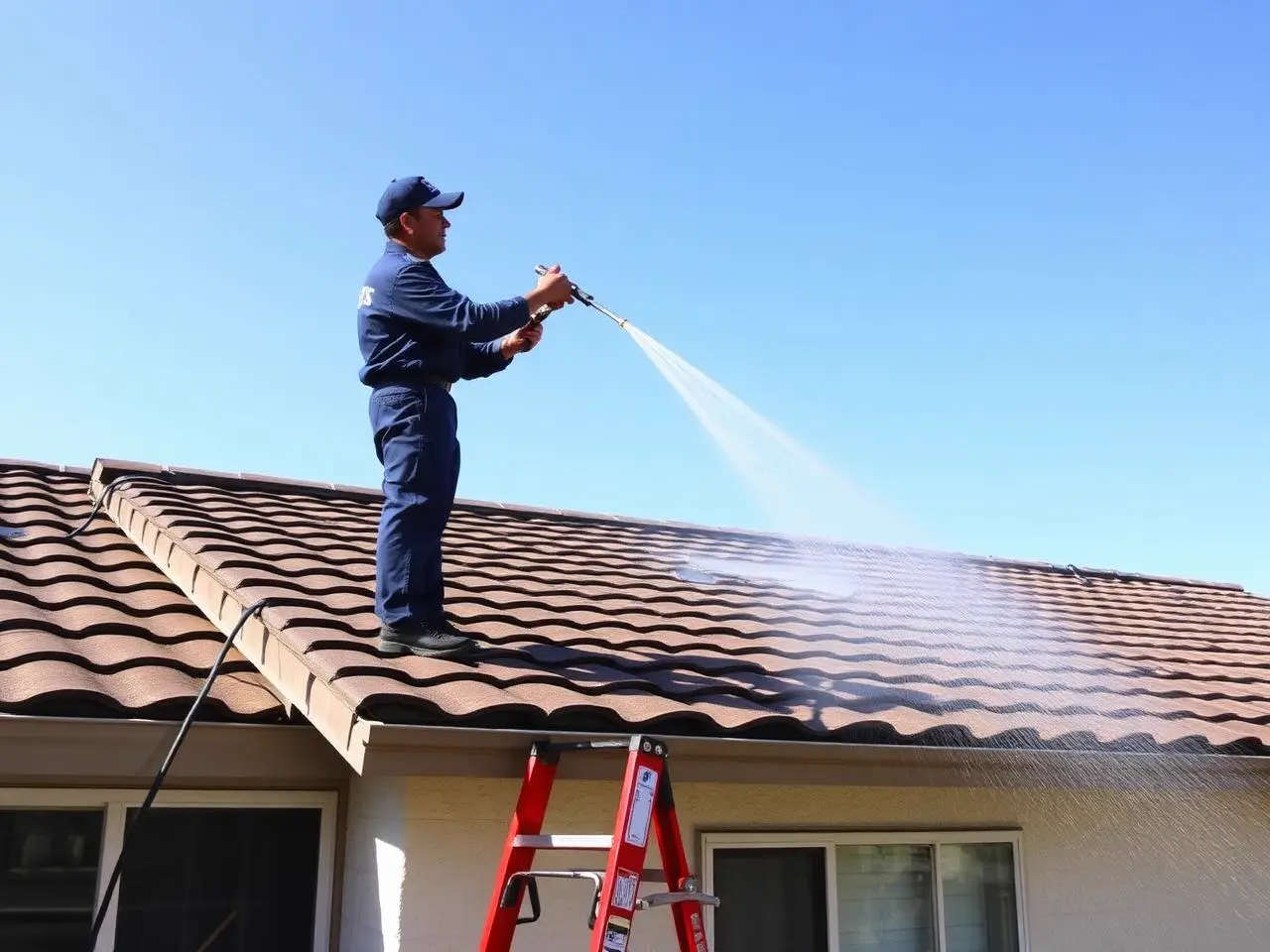
Moss is treated with a soft-wash solution that breaks down its root structure, never scraped or pressure-blasted off the shingle.
Physically scraping moss clumps off a roof is one of the most damaging mistakes a homeowner or an inexperienced service can make, since moss roots grip the shingle granule layer, and pulling clumps loose takes granules with it, leaving bare, exposed asphalt underneath.
Instead, the soft-wash solution is applied directly to moss clusters and allowed to dwell for an extended period, often 15 to 25 minutes on heavier growth, which is longer than the dwell time used for simple algae streaking, before a low-pressure rinse carries the dead moss away.
After the rinse, we check valley lines and gutter outlets specifically, since dislodged moss clumps are the most common cause of a clogged downspout following a moss-removal visit, and clearing that debris before leaving prevents a callback after the next rain.
What does moss removal cost for a Salida roof?
Moss removal follows the standard roof soft-wash rate, with a modest surcharge added only where growth is genuinely heavy.
A shingle roof with light-to-moderate moss prices at the base $0.50 per square foot rate, so a 1,400 sq ft Salida roof runs about $700, matching standard soft-wash pricing since moss treatment uses the same core process.
Heavy moss or lichen coverage, generally meaning more than a quarter of the roof surface shows visible growth, adds $0.05 per square foot for the additional treatment pass needed to fully clear it, bringing that same 1,400 sq ft roof to about $770.
The standalone minimum of $297 applies to any moss-removal visit booked on its own anywhere in Salida's 95368 ZIP, and bundling with a gutter cleaning is worth asking about since moss debris and gutter buildup often need addressing together anyway.
Which Salida streets see the heaviest roof moss growth?
Shaded, tree-lined stretches near Broadway Avenue and Sisk Road show the heaviest moss growth of any Salida neighborhood Exterior Prime services.
Homes along Broadway Avenue with mature street trees, and several lots near Sisk Road backed against taller neighboring rooflines, both see roof moss establish a full season earlier than more exposed Salida properties, since the extra shade keeps winter dampness on the shingle two or three hours longer each morning.
Properties closer to the Salida Union school area, where older shingle roofs sit under a denser tree canopy than newer subdivisions, also show up disproportionately often in our moss-removal call volume each February and March, right after the wettest stretch of the season.
Exterior Prime professionals track which streets call back for moss most often, and that pattern consistently favors shaded lots over sun-exposed ones regardless of which specific Salida subdivision the home sits in, whether that is 5, 10 or 20 years old.
Hammett Road properties on larger lots with fewer neighboring structures tend to see less shading and correspondingly lighter moss, which is a useful data point Exterior Prime uses when estimating dwell time sight-unseen from a homeowner's photos.