Why do Salida shingle roofs develop black streaking?
Black streaking on Salida shingle roofs is almost always Gloeocapsa magma algae, not dirt, and it needs chemical treatment to actually clear.
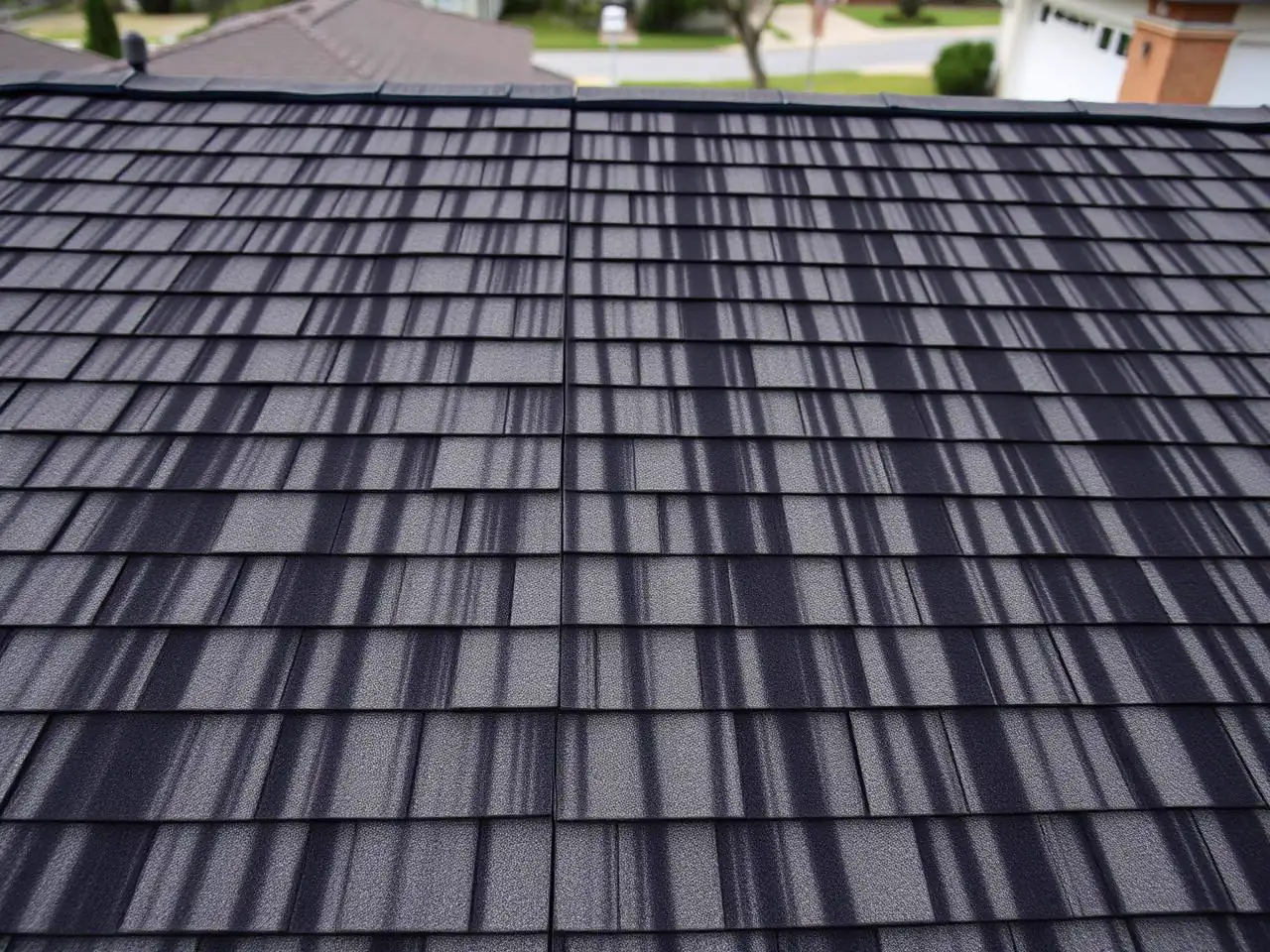
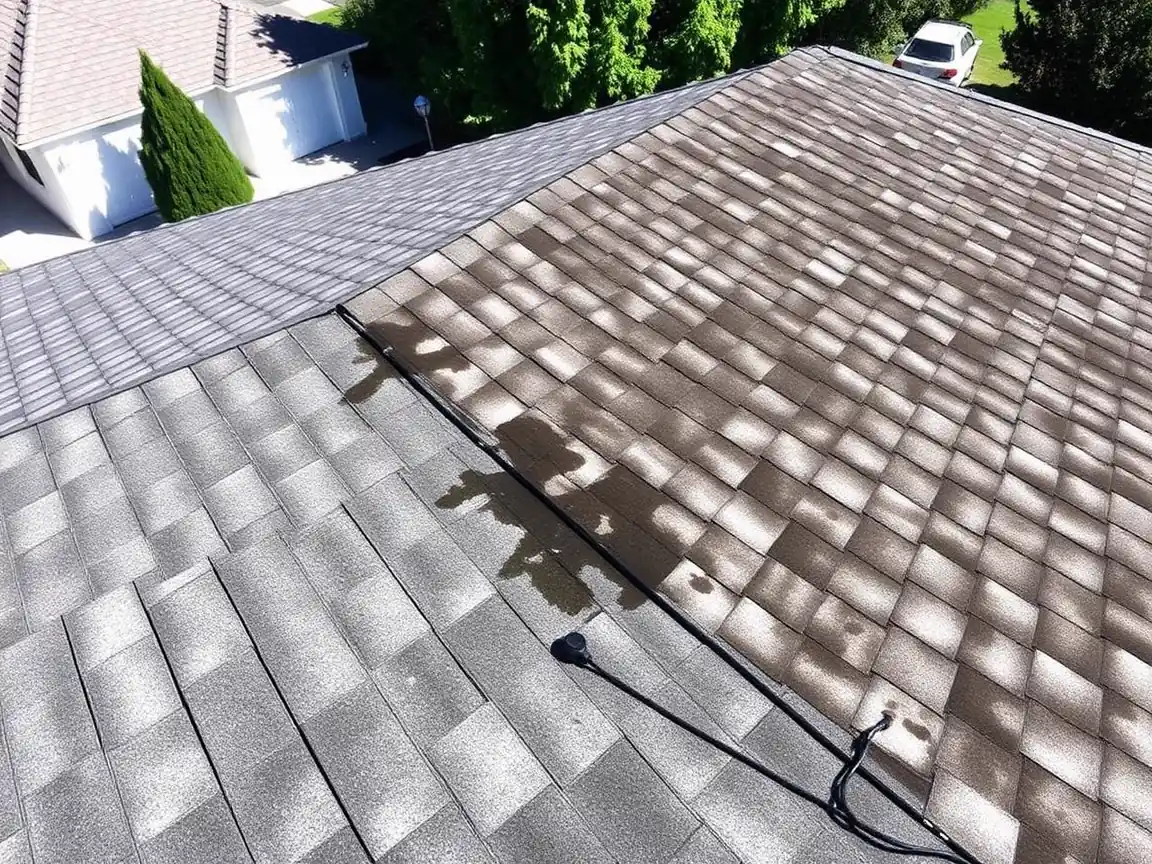
This particular algae species feeds on the limestone filler used in most asphalt shingle granules, and it spreads across a roof in dark streaks that follow water runoff patterns, typically starting near the ridge and working downward over a period of one to two years.
Salida's mix of humid winter mornings from Tule fog and long dry summers creates a cycle that actually favors this algae: enough winter moisture to let spores establish, followed by warm months that let colonies spread quickly across shaded sections of a shingle roof.
A pressure wash might temporarily blast visible streaking away, but it leaves algae spores embedded in the granule layer, which is why streaking often returns within months after a high-pressure clean rather than the year or more a proper soft wash achieves.
What is the shingle roof cleaning process for a Salida home?
The process starts with a solution applied at the ridge, given time to work, then a low-pressure rinse that carries dead algae away.
Exterior Prime professionals apply a biodegradable soft-wash blend designed to break down algae and moss cell structure without needing mechanical force to remove it, walking the roofline first to note valleys, vent stacks and any satellite dish mounts that need protection.
The solution typically dwells for 10 to 20 minutes depending on how established the algae growth is, and heavier streaking near the north-facing slope of a Prescott-area home often needs the longer end of that window before rinsing begins.
A final low-pressure rinse, roughly equivalent to garden hose pressure, clears the dead algae and moss debris into the gutter system, which is flushed afterward to prevent that debris from clogging downspouts during the next rain.
How much does shingle roof cleaning cost near Salida?
Shingle roof cleaning near Salida is priced at $0.50 per square foot, with common examples landing between $500 and $1,000.
A 1,000 sq ft shingle roof, typical of a smaller Salida ranch home, runs about $500. A mid-size 1,400 sq ft roof runs about $700, and a larger two-story roof around 2,000 sq ft runs about $1,000, all at the standard base rate.
Steep roof pitches, more common on some of the newer two-story builds near Sisk Road, add $0.10 per square foot for the additional safety equipment and time required to work the slope properly.
The standalone minimum for any roof-wash visit across the 95368 ZIP is $297, and pairing a shingle roof wash with a house wash or gutter cleaning on the same visit brings meaningful bundle savings compared to booking each service separately.
How do valleys, flashing and downspouts hold up on a Salida shingle roof?
Valley channels, flashing seams and downspouts see more concentrated runoff than any flat shingle field during a Salida cleaning visit.
Homes along Broadway Avenue and Hammett Road often have two or three roof valleys where separate rooflines meet, and those valleys carry noticeably more water volume during a rinse than the open shingle field, which is why Exterior Prime professionals give valley lines a longer, more deliberate pass rather than treating the whole roof as one uniform surface.
Flashing around chimneys, vent stacks and skylights sits right where shingle meets a different material, and over 10 to 15 years that seam can lift slightly; Exterior Prime professionals check every flashing point during the shingle cleaning visit and note any early separation before it becomes a leak, at no added charge for the inspection.
Downspouts near a Salida Union-area home fill quickly once dislodged algae and granule debris rinse off a shingle roof, so a final flush of two or three downspout runs is standard on every visit, preventing the kind of clog that shows up as an overflow during the next Central Valley storm.
Stanislaus County's dry summer stretch also means shingle granules that do wash loose can sit baked into a downspout elbow for months if not cleared right away, so this step matters more here than in a wetter climate that would naturally flush lighter debris on its own.