What makes tile roof cleaning different in Salida?
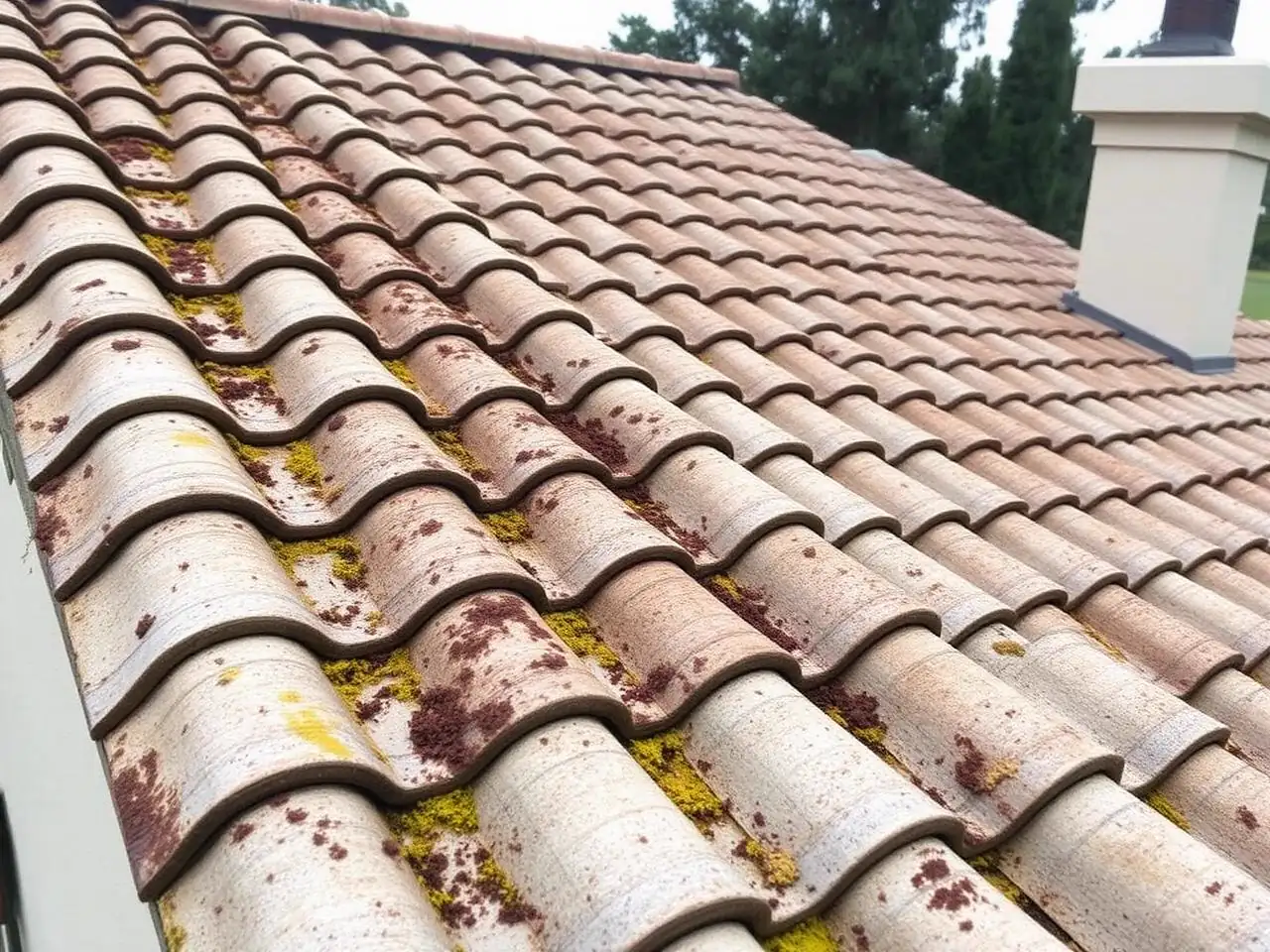
Concrete and clay tile are porous surfaces that trap lichen deep in the material, unlike the flatter surface of asphalt shingle.
Concrete tile especially absorbs moisture readily, and once algae or lichen establishes itself in that porous surface it grows roots into the material rather than sitting on top of it. A surface rinse alone will not remove it; the soft-wash solution needs enough dwell time to penetrate the same depth the growth has reached.
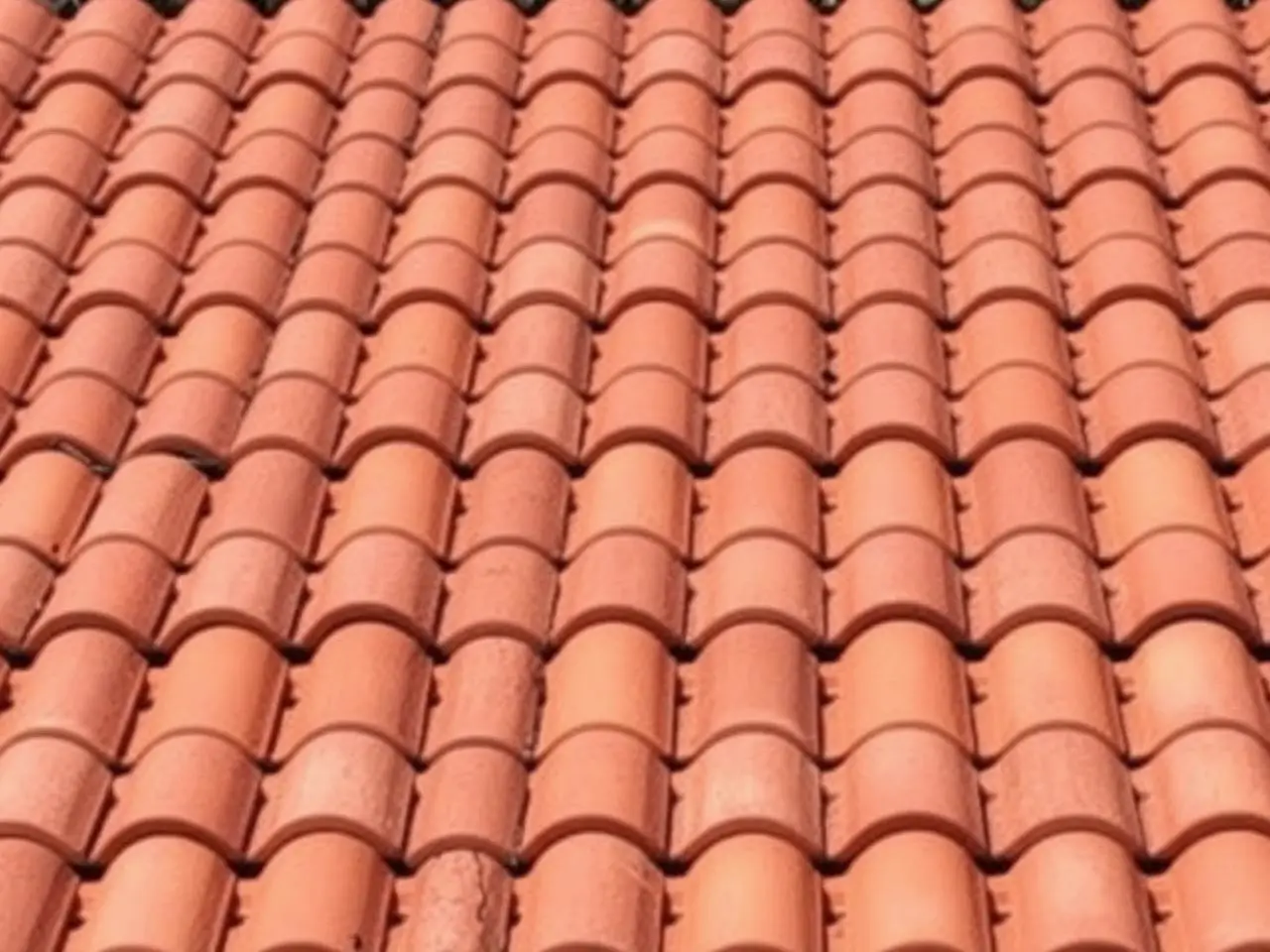
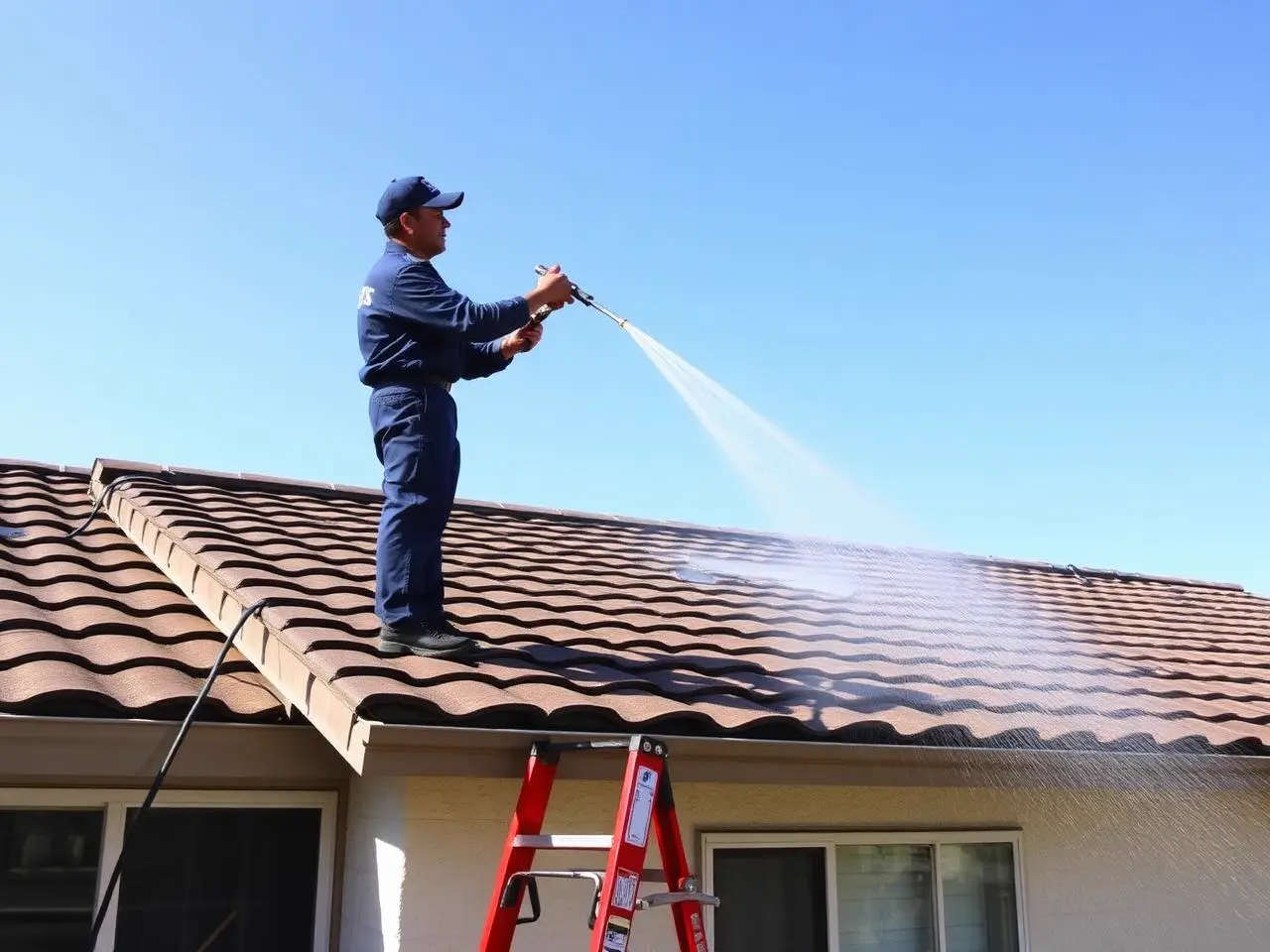
Clay tile, more common on some of Salida's older Spanish-style homes, is more brittle at the edges than concrete tile, so foot placement during cleaning matters. Exterior Prime professionals distribute weight along the tile's structural batten lines rather than walking across the center of individual pieces, which is where cracks typically start.
Both tile types also trap wind-blown debris from the surrounding ag fields between the raised profile ridges, and that debris holds moisture against the tile long after a rain, accelerating the exact staining that brings most Salida tile-roof calls in the first place.
How is tile roof cleaning priced for Salida homes?
Tile roof cleaning in Salida is priced at $0.55 per square foot, five cents higher than shingle due to the extra care tile requires.
A 1,000 sq ft tile roof runs near $550, a 1,400 sq ft roof runs near $770, and a larger 2,200 sq ft tile roof, common on some of the bigger Sisk Ranch lots, runs closer to $1,210 before any surcharge, a range that covers most single-family homes across Salida's 95368 ZIP.
Steep-pitch tile roofs, which are common on two-story Salida homes with dormered rooflines, add $0.10 per square foot for the additional harness time and careful foot placement steep tile demands.
Heavy lichen coverage, often seen on tile roofs shaded by mature trees along Broadway Colony streets, adds $0.05 per square foot for the second treatment pass needed to fully clear embedded growth.
When should a Salida homeowner schedule tile roof cleaning?
Late winter through early spring is the ideal Salida window, right after the wet season has fed the year's heaviest lichen growth.
Stanislaus County's rainy months typically run November through March, and that moisture is exactly what lichen and moss need to establish on tile before the dry season locks growth into place under summer heat.
Scheduling a cleaning in March or April, before 100°F days arrive, also means the tile has time to fully dry and any solution residue finishes working before the roof is baking under direct Central Valley sun for months at a stretch.
Waiting until fall is not wrong, but staining that has had a full summer to set into porous concrete tile can take a longer dwell time to lift than the same buildup caught earlier in the year.
What happens at the gutter, downspout and eave line on a tile roof?
Tile sheds water fast, so the gutter, downspout and eave line beneath it take on more runoff volume than a shingle roof produces.
Hammett-area and Salida Union-area homes with tile roofs often push several extra gallons of runoff per minute toward the eave during a rinse compared to shingle, so Exterior Prime professionals check gutter capacity and downspout flow before starting so nothing overflows onto fascia trim below.
Underlayment beneath the tile field, usually a synthetic or felt layer, only becomes exposed if a tile has cracked or slipped, and that is checked visually along the eave edge, since 1 or 2 loose tiles per roof is common on homes over 15 years old near Broadway Colony.
Metal drip-edge flashing at the eave also gets a close look, since Stanislaus County's ag-dust environment can corrode a thin drip edge faster than the tile itself ages, and catching that early avoids a bigger repair down the line.