How Lathrop shingle roofs get dirty
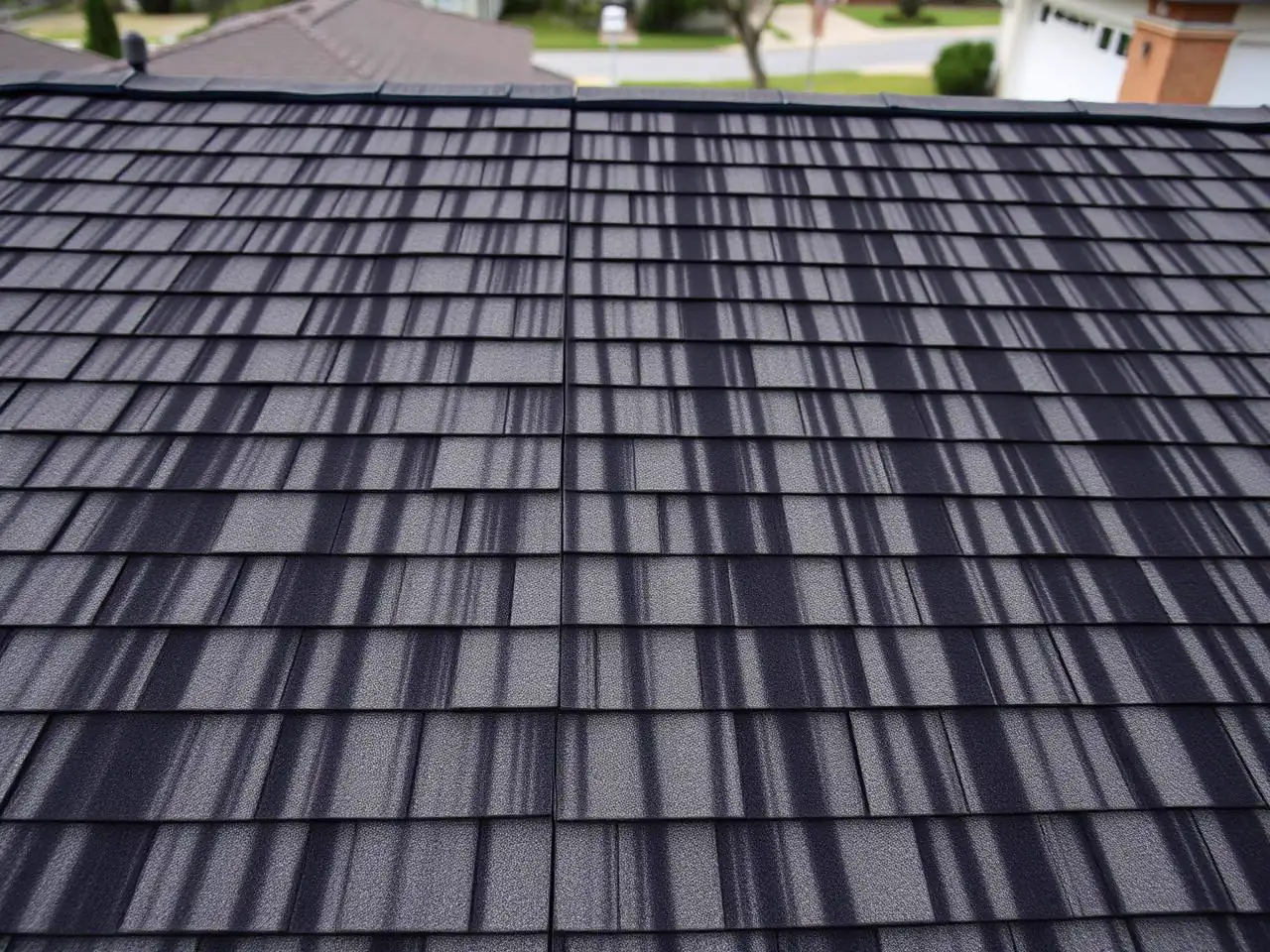
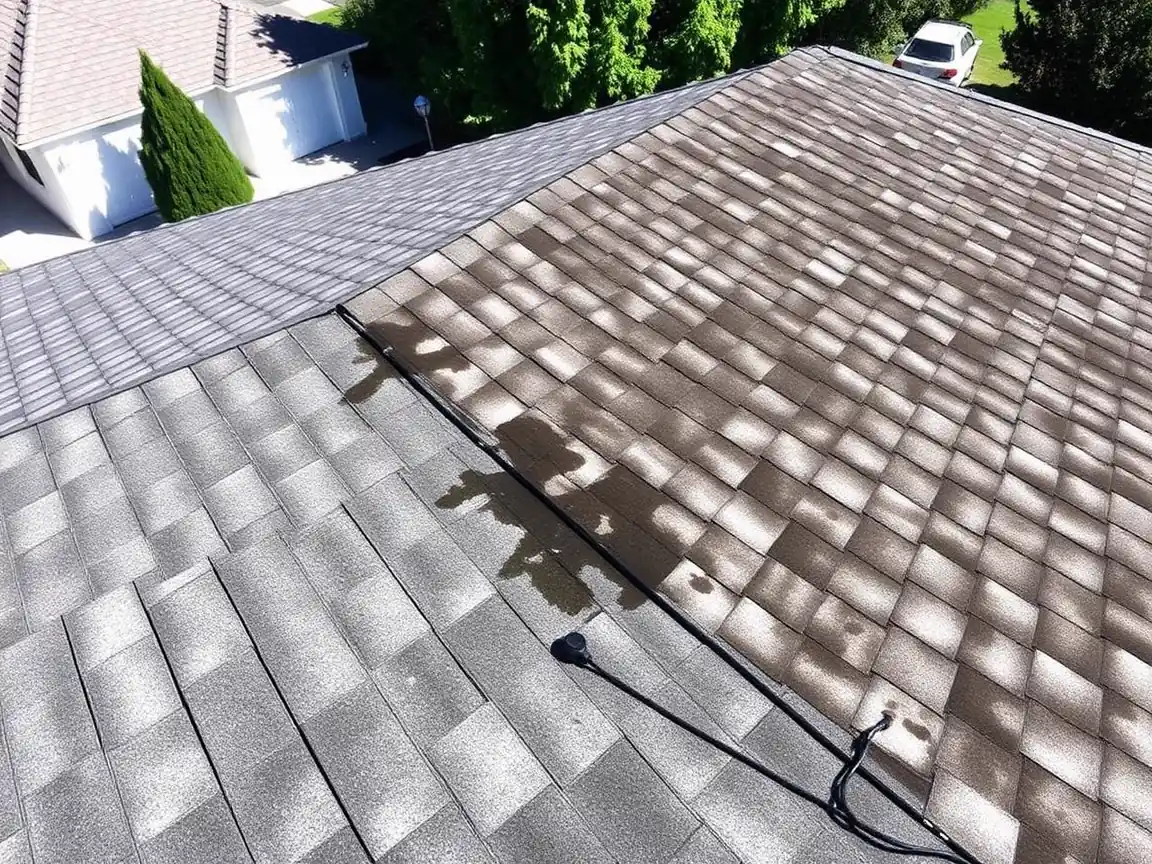
Black streaking on Lathrop shingles comes from a specific algae species that spreads by airborne spores across entire subdivisions within a few seasons.
Gloeocapsa magma, the algae responsible for the dark streaking seen on most Lathrop roofs, thrives in the moisture that winter Tule fog leaves behind on north-facing shingle planes. Because it spreads by spore, once one roof on a Stonebridge cul-de-sac shows streaking, neighboring roofs typically follow within a year or two.
River Islands' newer construction adds a second factor: many roofs there still carry a light dust film from ongoing nearby grading and home-building activity, which gives algae spores something to anchor into faster than a clean, weathered shingle surface would.
Left untreated, streaking spreads from a few dark patches to full roof-plane coverage within three to five years, at which point cleaning takes longer and the shingle has already lost some of its original color depth.
Soft washing shingle correctly in Lathrop
A shingle-safe wash in Lathrop never exceeds 100 PSI and always relies on a detergent dwell time to do the actual cleaning work.
Exterior Prime professionals apply a sodium hypochlorite-based detergent mix calibrated to Lathrop's shingle age and streak severity, letting it sit for 15 to 20 minutes so it can break down the algae colony at the surface rather than simply knocking loose material off the roof.
The rinse that follows moves from ridge to eave, low and slow, so the solution and dissolved debris flow naturally into the gutter system rather than being forced against the grain of the shingle tabs. This sequencing is what protects the granule coating that gives shingle its 20-to-30-year rated lifespan.
For homes with darker architectural shingle, common in newer Mossdale Landing construction, we also check for any color fading from the treatment on a small test patch before committing to the full roof.
Comparing shingle roof cleaning costs in Lathrop
A 1,600-square-foot Lathrop shingle roof typically costs less to clean than the same square footage of tile, since shingle needs a shorter detergent dwell and less careful foot placement.
The base shingle rate of $0.50 per square foot rises to $0.55 after the 10% Lathrop and River Islands territory adjustment, meaning a 1,000-square-foot roof runs about $550, a 1,400-square-foot roof about $770, and a larger 2,000-square-foot roof about $1,100.
Heavy moss or lichen growth, more common on shaded Woodfield lots backing onto mature trees, adds $0.05 per square foot to account for the extra dwell time and a second rinse pass in the worst-affected areas.
Why does San Joaquin County's climate favor shingle algae?
Central Valley humidity trapped by winter fog and dust from nearby almond orchards both give shingle algae an easy foothold in Lathrop.
Lathrop sits low in San Joaquin County on the Central Valley floor, and that flat geography traps ground-level moisture longer after a storm than a hillside town would, keeping north-facing shingle planes damp through much of the Tule fog season. ZIP 95330 rooftops closest to the delta breeze corridor tend to hold that moisture a little longer still.
Ag dust carried in from surrounding almond orchards along Highway 99 settles into the shingle's granule texture between storms, giving algae spores a rough surface to anchor into rather than a smooth, freshly rinsed one. Exterior Prime professionals see this pattern repeat across nearly every Lathrop subdivision each winter, which is part of why spring bookings across Lathrop stay so consistent year over year.