Why Lathrop roofs need soft washing instead of a pressure rinse
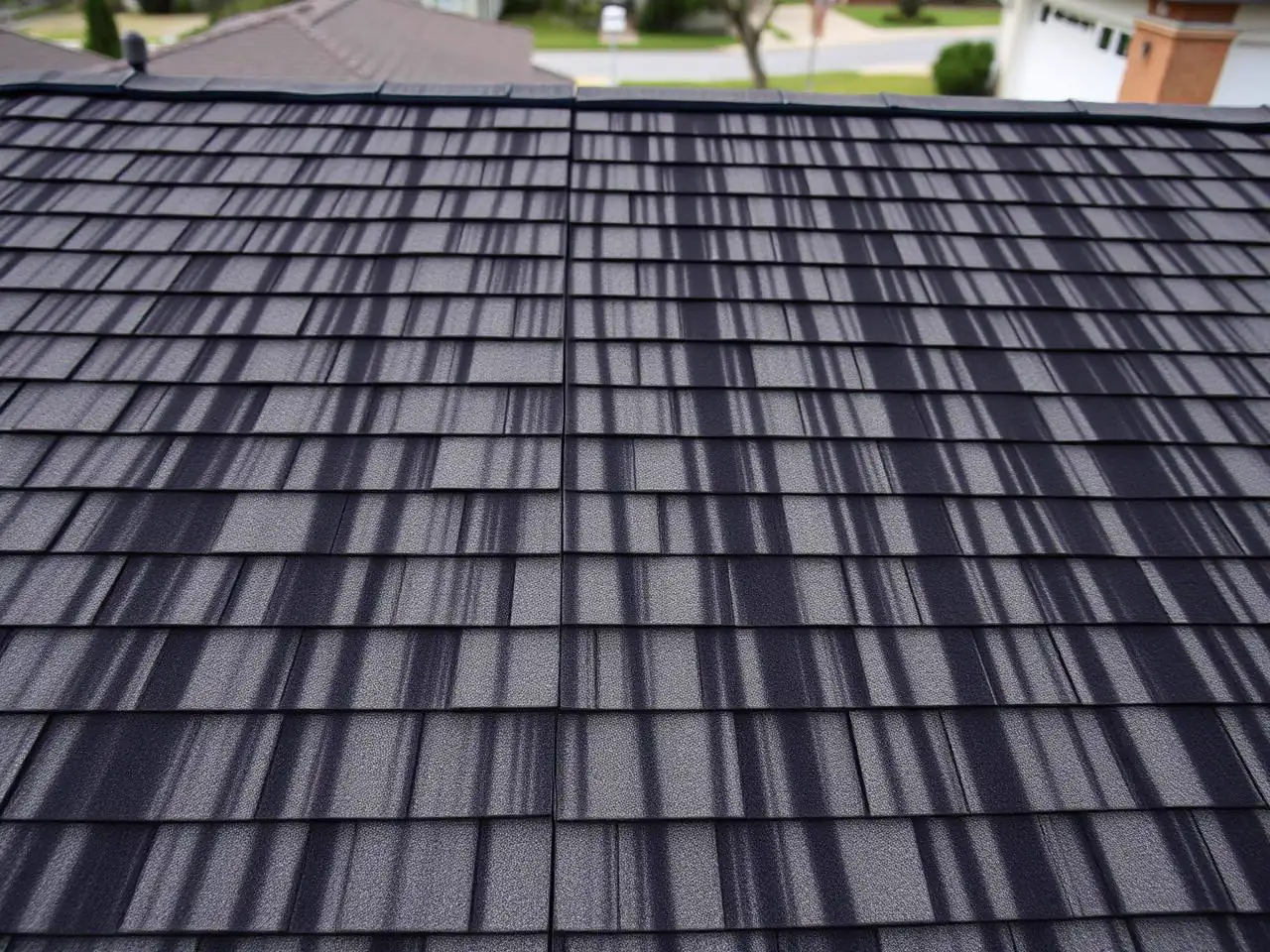
Shingle granules protect against UV and rain, and a high-pressure blast strips them permanently within seconds.
River Islands and Mossdale Landing homes were mostly built in the last fifteen years, so their roofs are still under manufacturer coverage — coverage that most shingle makers will void if a contractor points a pressure washer directly at the deck. Soft washing sidesteps that risk entirely by relying on chemistry, not force, to loosen algae colonies.
The method also protects flashing and vent boots. Direct pressure can drive water sideways under a shingle course or around a pipe boot, creating leaks that do not show up until the next Lathrop storm season. A soft-wash rinse moves downhill with gravity instead of being forced upward or sideways.
For a town where nearly every roof sits inside a 15-year architectural warranty period, avoiding a voided warranty is worth more than the few minutes a pressure rinse might save.
The Lathrop soft-wash process, step by step
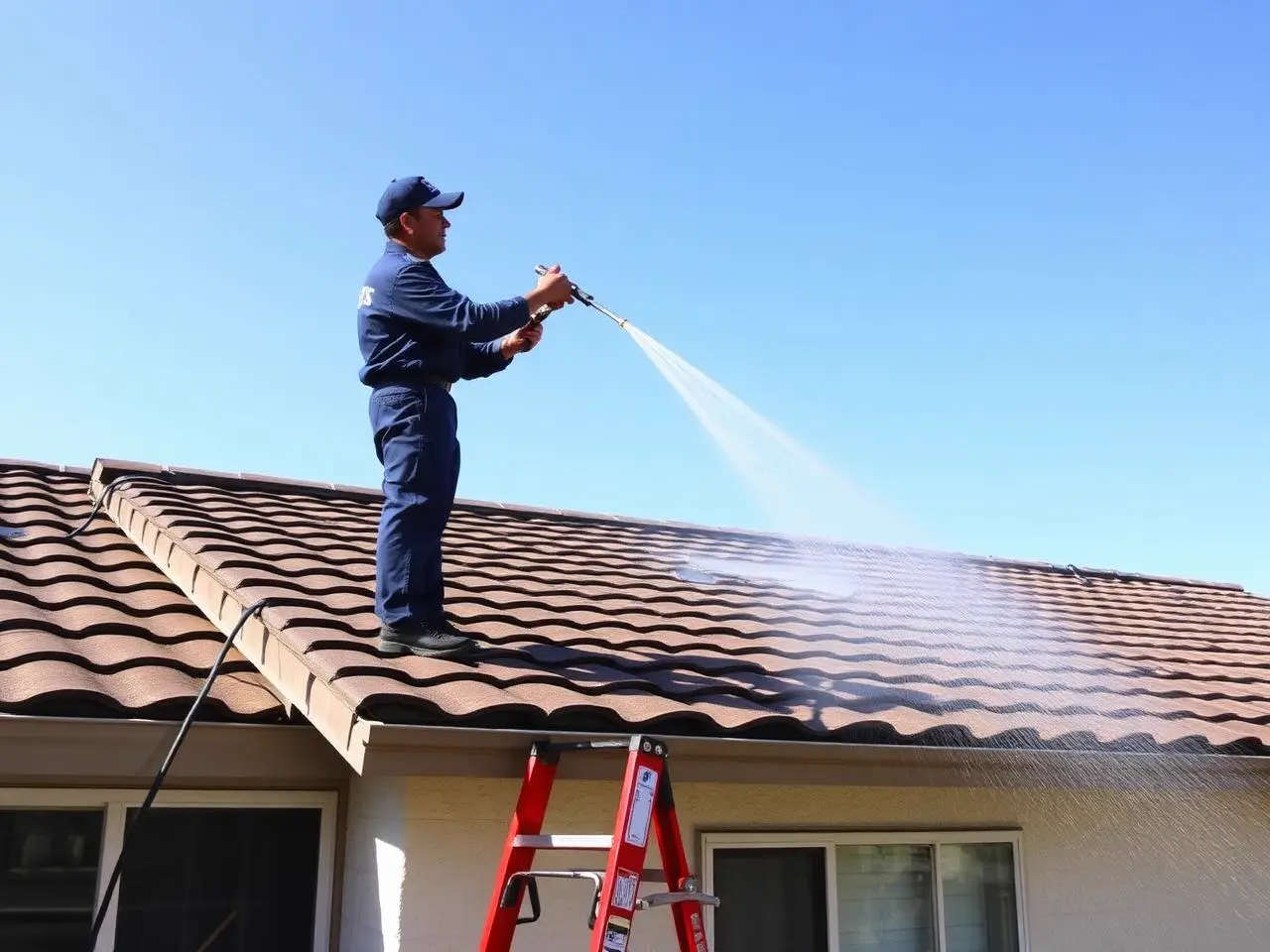
A full Lathrop roof soft wash moves from a ground-level inspection through detergent application to a controlled rinse in under three hours for most homes.
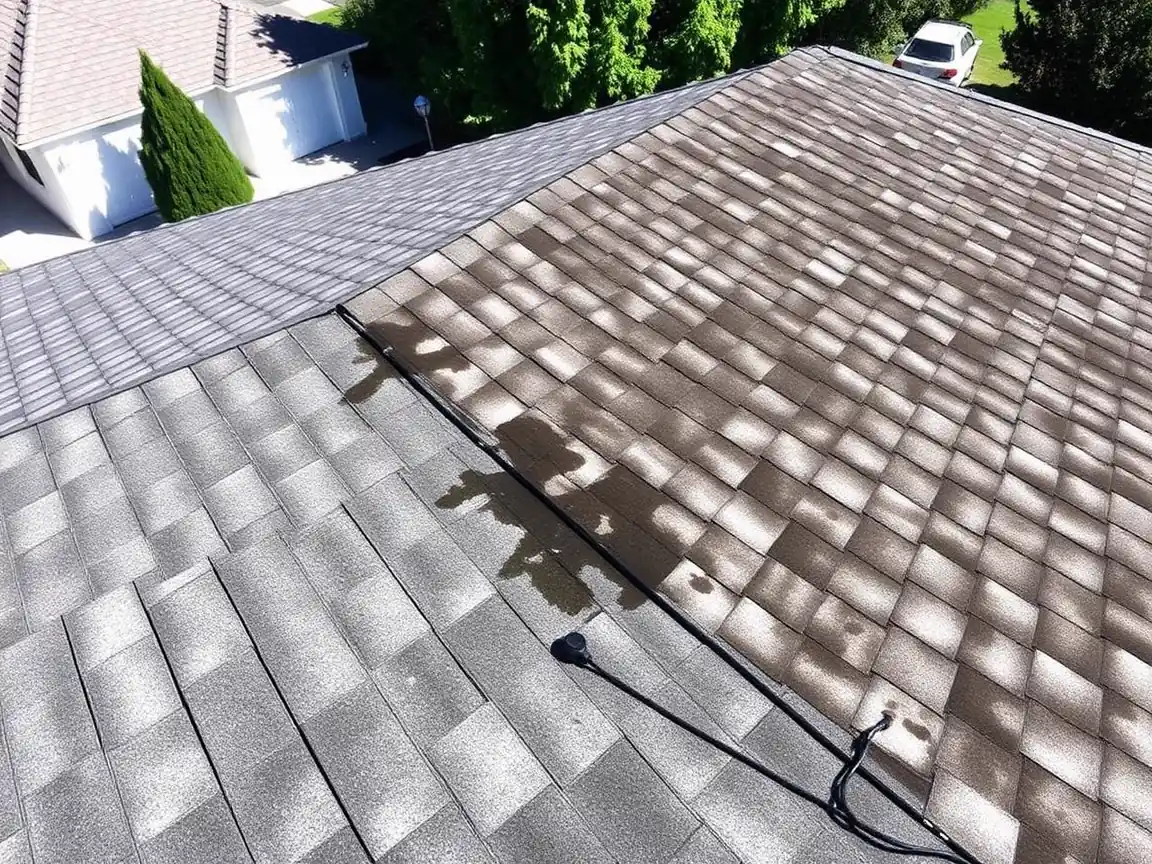
Exterior Prime professionals start by walking the property line to photograph each roof plane, noting moss concentration on north-facing slopes and any lifted shingle tabs that need a gentler touch. That inspection sets the detergent strength — heavier growth on a shaded Woodfield pitch needs a stronger mix than a sun-exposed Stonebridge roofline.
The cleaning solution is applied from the ridge down, given a 15 to 20 minute dwell time to break down algae and lichen at the root, then rinsed at low pressure so debris flows into gutters rather than pooling on the shingle mat. Landscaping below is pre-wet to protect River Islands' newer drought-tolerant beds from detergent runoff.
A final walk confirms every plane is clear, gutters are flushed of loosened debris, and photos are taken so the homeowner has a documented before-and-after record.
Timing a roof soft wash for Lathrop's climate
Spring, right after Tule fog season ends, is the window most Lathrop homeowners choose because algae growth is at its peak and visible.
Winter fog rolling off the San Joaquin River keeps north-facing Lathrop roof pitches damp for weeks at a stretch, and that moisture is exactly what black algae and green moss need to establish. By March, growth that started in December has usually spread enough to be visible from the street, which is why spring bookings dominate the Lathrop calendar.
Summer heat above 100°F dries roofs quickly, which slows new growth but does not remove what is already there, so a mid-summer wash still delivers results — it just will not need repeating as soon as a job done right before winter fog returns.
Does Lathrop's Central Valley location change soft-washing timing?
Lathrop's position in San Joaquin County brings hardpan soil, ag dust and a delta breeze that all affect when a soft wash performs best.
Homes throughout ZIP 95330 sit low on the Central Valley floor, where San Joaquin County's hardpan subsoil drains more slowly than the sandier ground found closer to the Highway 99 corridor, so a soft-washed shingle roof in Lathrop can stay damp an extra hour or two after a rinse. Exterior Prime professionals build that slower drying window into scheduling, particularly in the shoulder weeks between Tule fog season and full summer heat.
Ag dust drifting off almond orchards outside town and the delta breeze moving up from the Sacramento-San Joaquin Delta both settle on a Lathrop rooftop between visits, giving algae spores something to grip faster than they would on a drier inland roof. Exterior Prime tracks that pattern across every Lathrop soft-washing route and adjusts the detergent mix rather than applying one statewide default to every job.