How algae spreads across Lathrop rooflines
A single infected roof on a Stonebridge street can seed algae onto three or four neighboring rooflines within one wet season.
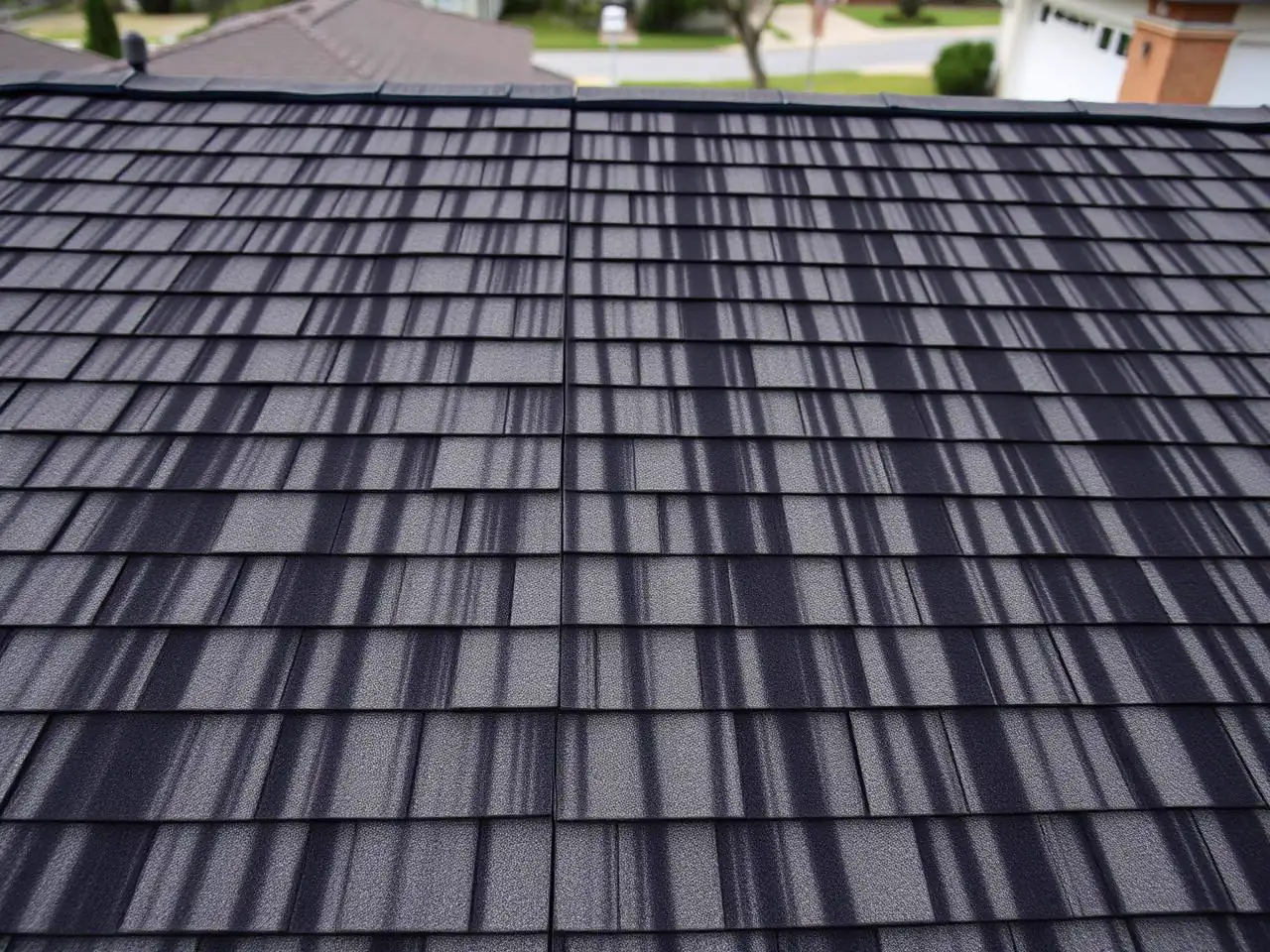
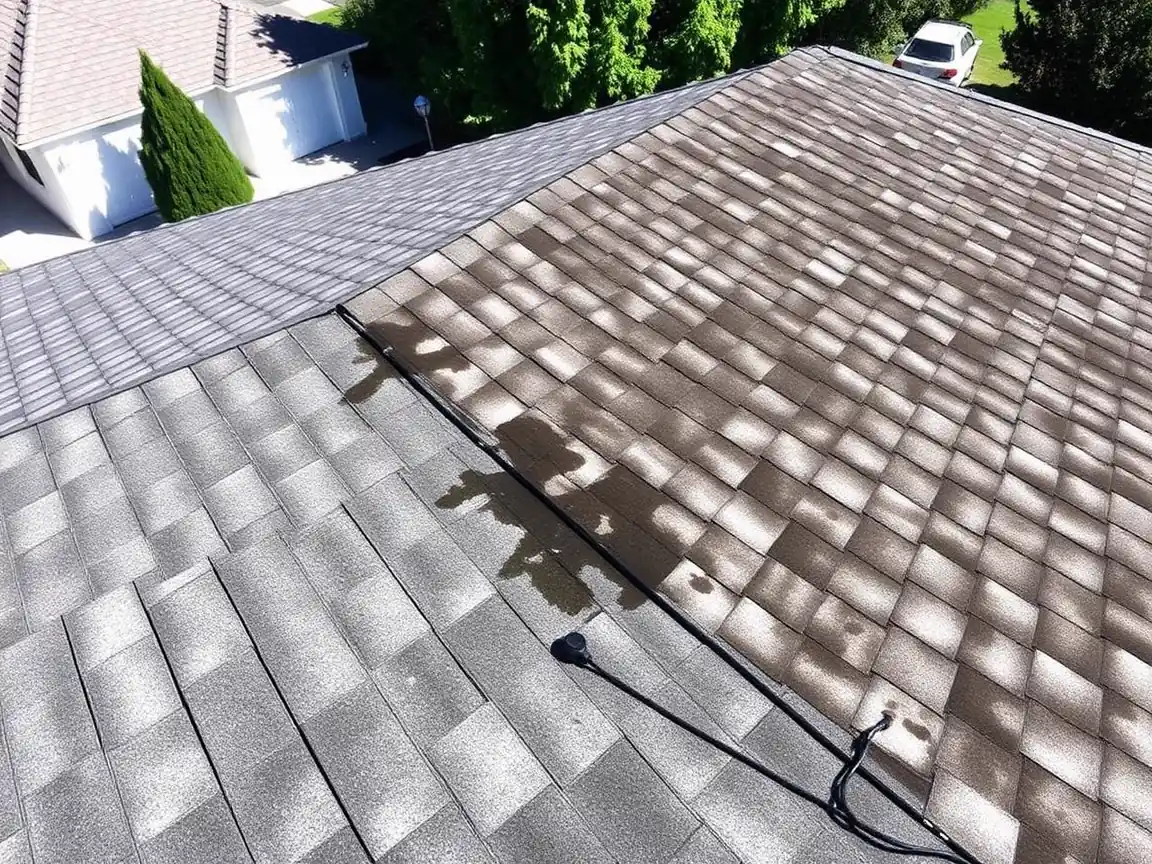
Gloeocapsa magma reproduces by airborne spore, and Lathrop's winter Tule fog provides exactly the sustained moisture those spores need to germinate on a north-facing shingle plane. Because subdivisions like Stonebridge and River Islands were built out in tight phases, entire blocks of roofs share nearly identical age, pitch and orientation — conditions the algae exploits uniformly across a neighborhood.
Homes closer to the San Joaquin River levee tend to show streaking earlier than interior Lathrop lots, since the extra humidity along the water keeps roof surfaces damp longer after each fog event clears from the rest of town.
By the time streaking is visible from the street, the colony has usually been established for six months or more, which is why algae removal in Lathrop is really about resetting the clock rather than catching a brand-new problem.
The chemistry behind Lathrop algae removal
The detergent used on Lathrop roofs targets the algae's cell structure directly rather than relying on abrasion to remove it.
A sodium hypochlorite solution, mixed to a concentration matched to the severity of staining on a given roof, breaks down the algae's outer membrane during the dwell period. This is why a 15 to 20 minute wait between application and rinsing matters more than water pressure in getting a clean result — rushing the rinse leaves algae partially alive and able to regrow within months instead of years.
Surfactants in the mix also help the solution cling to a sloped shingle surface for the full dwell time instead of running off immediately, which is especially useful on the steeper pitches common in newer River Islands construction.
Once the dwell period ends, a low-pressure rinse carries the dead algae and any loosened debris down into the gutter system, finishing the job without any mechanical scrubbing against the shingle surface.
Preventing repeat algae growth on Lathrop roofs
Homes that clean their roof on a consistent 24-month cycle in Lathrop see noticeably lighter regrowth than homes that wait until staining is severe.
Algae that gets a fresh start on a clean roof surface each cycle spreads more slowly than algae regrowing on a surface that already has residual spores embedded from a heavier prior infestation. This is part of why Lathrop homeowners who stay on a regular schedule often report the second and third cleanings taking noticeably less time than the first.
Trimming back vegetation that shades a roof plane, where practical, also reduces the moisture window algae needs each winter, though in a dense subdivision like River Islands that option is often limited by lot size and HOA landscaping rules.
Exterior Prime sees the same pattern repeat on Historic Lathrop and Woodfield rooflines too, where mature street trees hold shade over a roof plane for much of the day, and Exterior Prime professionals note those shaded planes on the initial walk so the homeowner knows which sections are likely to need attention again first.
Why does Central Valley humidity spread algae across Lathrop?
San Joaquin County's flat Central Valley terrain traps Tule fog moisture and delta breeze humidity long enough for algae spores to spread easily.
Lathrop's location on the Central Valley floor, inside San Joaquin County near the Highway 99 corridor, means fog and ground moisture linger longer after winter storms than they would in a hillier region. ZIP 95330 rooftops near the San Joaquin River levee catch an extra dose of that lingering humidity from the delta breeze moving up from the Sacramento-San Joaquin Delta most evenings.
Ag dust from almond orchards outside town also settles onto Lathrop shingle between rains, giving algae spores a rough anchor point, and Exterior Prime professionals plan spring routes around exactly this pattern, since it repeats with enough consistency to be one of the most predictable parts of the Lathrop soft-wash calendar.