Why moss is worse than algae for a Lathrop roof
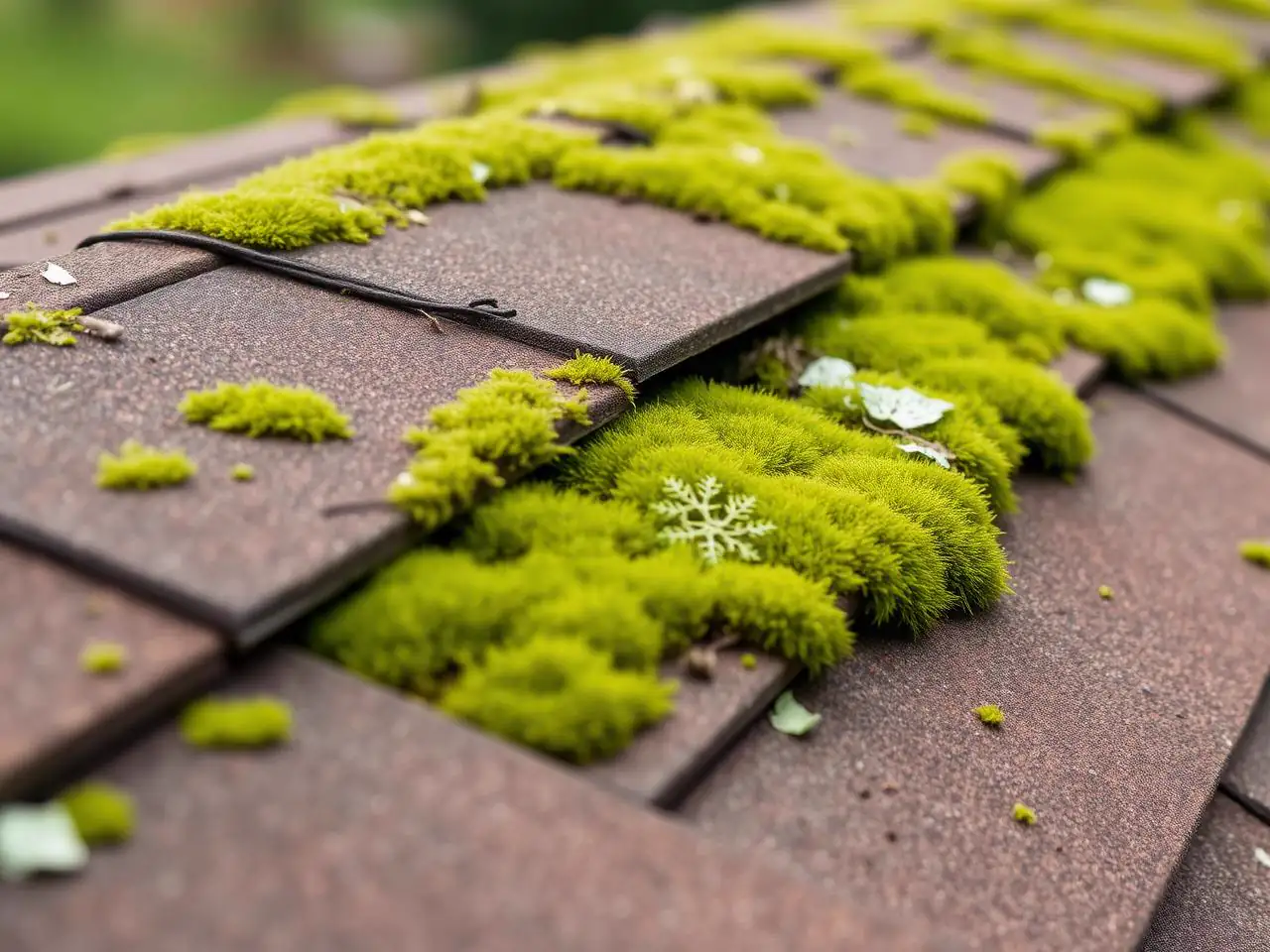
Moss physically lifts shingle tabs as it grows, creating small gaps where water can enter, unlike algae which stays flat on the surface.
A moss clump anchors its rhizoids into the seams between shingle tabs, and as it grows it pushes those tabs up slightly, breaking the seal that keeps wind-driven rain out. That is why a moss-covered section of roof, even one that looks only mildly overgrown, tends to develop soft spots on the deck below faster than an algae-streaked section that has gone the same amount of time untreated.
In Lathrop, this shows up most on Woodfield lots with mature shade trees planted along the original tract layout, and on a handful of Historic Lathrop homes where roof pitches sit lower and drain more slowly after a winter storm.
Because moss holds so much moisture, roofs with heavy growth also run a higher risk of wood rot at the decking level if the problem sits untreated for more than two or three years, which is a repair cost well beyond what a cleaning visit would have cost.
How Exterior Prime removes moss from Lathrop roofs safely
Moss removal in Lathrop never involves scraping; the detergent is left to dissolve the growth so it rinses free on its own.
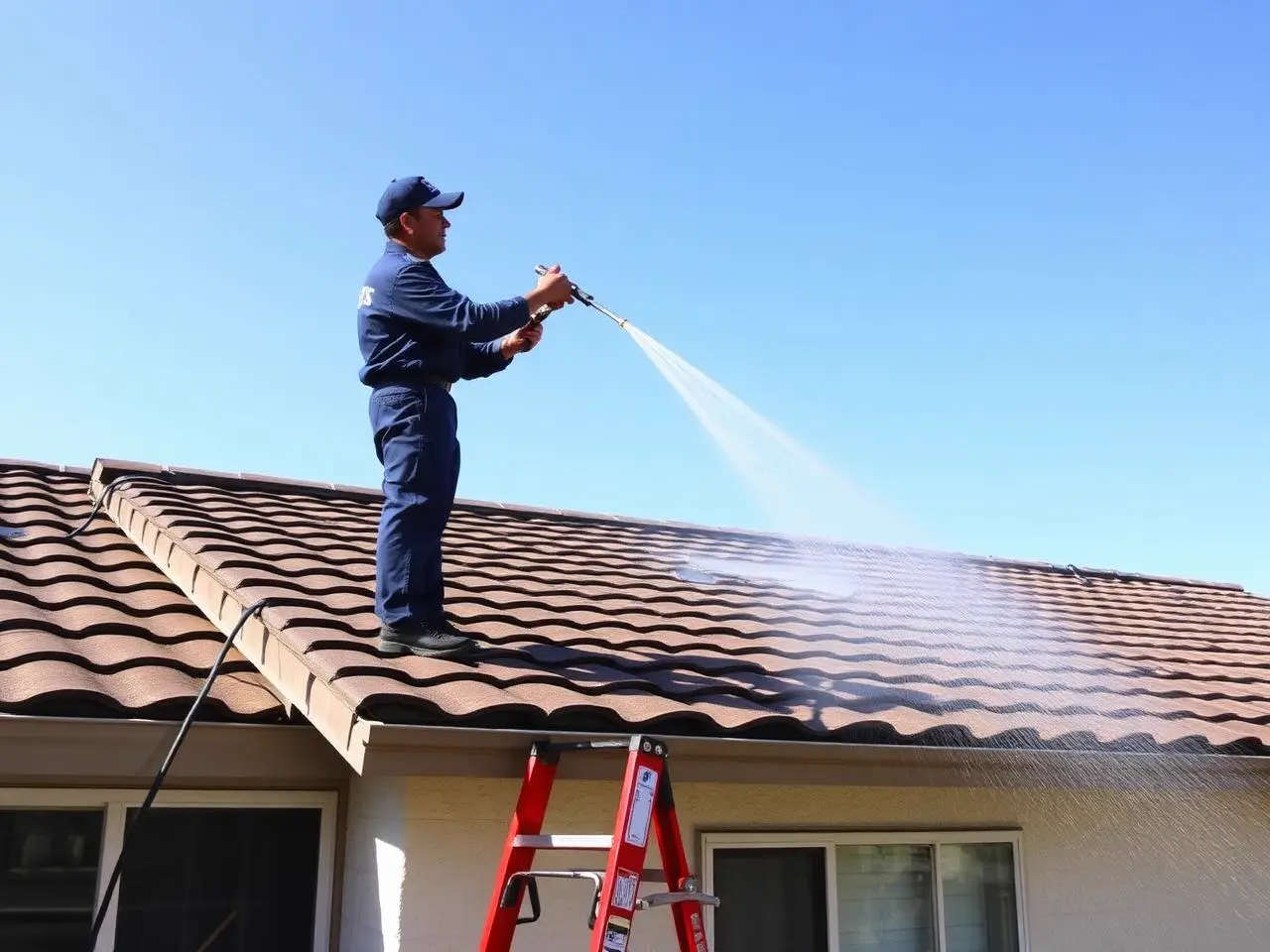
Scraping moss off a roof by hand is a common shortcut among lower-cost operators, but it also tears the granule surface underneath, since moss rhizoids grip into that layer as they grow. Exterior Prime professionals instead apply a stronger detergent mix and extend the dwell time to 25 to 30 minutes, giving the chemical enough time to break the moss's grip before any rinsing begins.
The rinse itself still stays under 100 PSI, moving from ridge to eave so loosened moss clumps wash down into the gutter system rather than being blasted sideways across clean shingle. A second light pass over the worst-affected sections is common on Lathrop jobs with dense growth.
Preventing moss regrowth on Lathrop roofs
Trimming back overhanging branches after a Lathrop moss removal typically doubles the time before regrowth compared with leaving the shade unchanged.
Moss needs sustained shade and moisture to establish, so a Woodfield homeowner who trims back a canopy after a cleaning visit often sees 30 to 36 months before moss returns, compared with 15 to 18 months on an untouched shaded roof. We note shade conditions in the final report so homeowners know which sections are most likely to need repeat attention.
Zinc or copper strips installed along the ridge cap are another option some Lathrop homeowners add after a cleaning, since rainwater carrying trace metal ions across the roof discourages new moss growth for several years, though this is a separate installation rather than part of the cleaning visit itself.
Does Lathrop's Central Valley shade pattern make moss worse?
Hardpan soil, well water irrigation and mature shade trees across Woodfield and Stonebridge all keep moss-prone Lathrop roof sections wetter longer.
Lathrop sits on the Central Valley floor in San Joaquin County, where hardpan soil beneath many older Historic Lathrop and Woodfield lots keeps yard irrigation, often drawn from well water on the oldest properties, from draining away quickly. That extra ground moisture raises humidity right at roof level on shaded north-facing pitches near ZIP 95330's mature tree canopy.
Exterior Prime professionals see moss establish fastest on Stonebridge and Woodfield ridgelines shaded by decades-old trees planted along the original tract layout, since the delta breeze that reaches Lathrop most afternoons is not enough to dry out a heavily shaded pitch the way it dries an open, sun-exposed River Islands rooftop.