Why moss thrives on certain Manteca roof pitches and not others
North-facing pitches shaded by mature trees near Mayors Park stay damp for hours after Tule fog mornings, giving moss the moisture window it needs to establish.
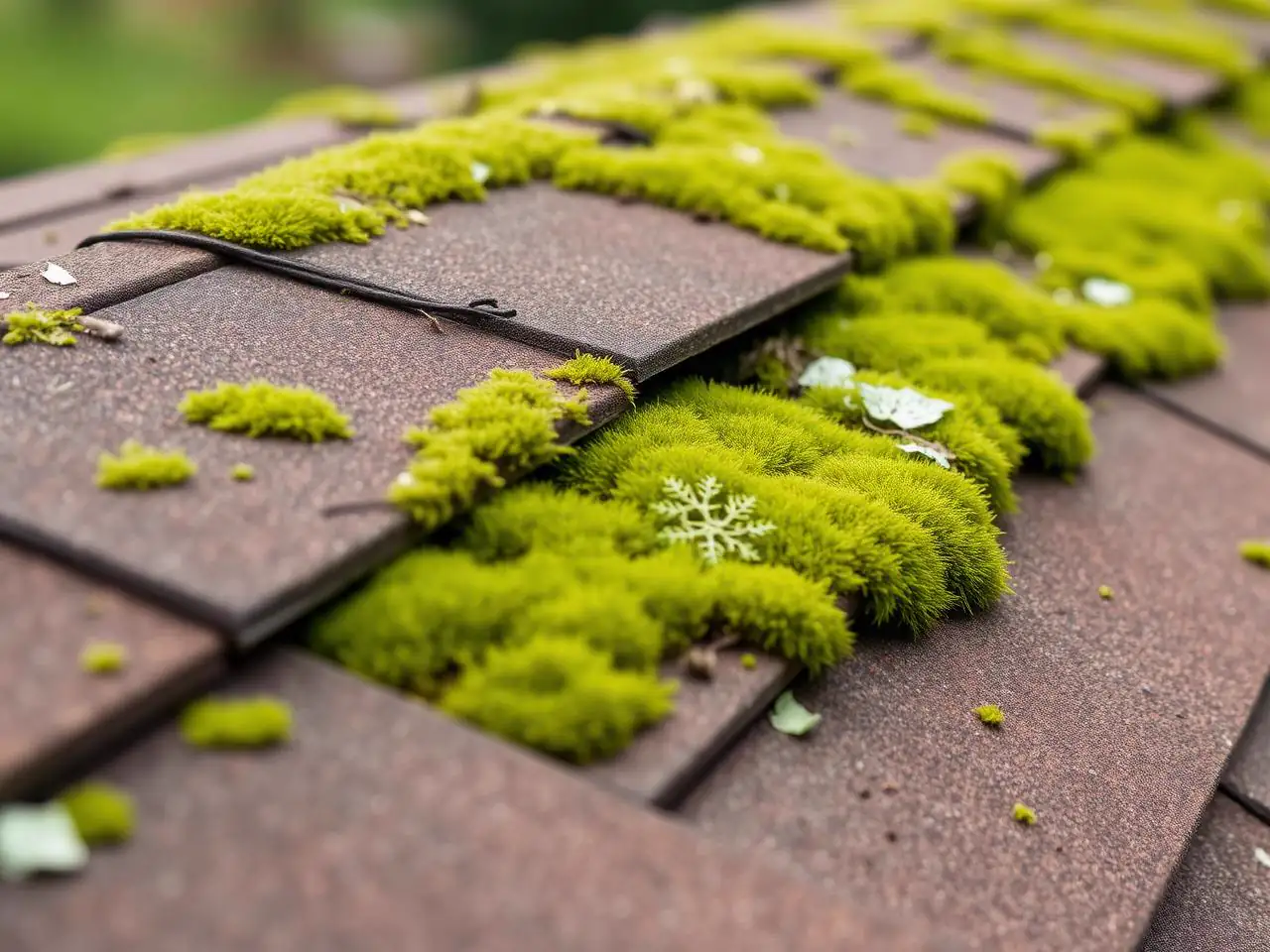
Moss needs sustained moisture and reduced light to germinate and spread, conditions that Manteca's winter fog delivers reliably to shaded valleys and north-facing slopes from November through February. A roof pitch that dries by 9 a.m. rarely develops significant moss, while one shaded by a neighbor's oak or sitting in a permanent north-facing shadow can stay damp until early afternoon on the foggiest days.
Older Mayors Park and Powers Tract lots with decades-old shade trees see this pattern most often, since the tree canopy both blocks sun and drops organic debris that gives moss spores something to root into alongside the shingle or tile surface itself. Newer Woodward Park construction with younger, smaller trees sees noticeably less moss for now, though that's likely to shift as landscaping matures over the next decade.
Once established, moss holds moisture against the roof surface even after the fog clears, which is part of why moss-affected areas often show earlier granule wear or tile lifting than the rest of the same roof.
Why scraping moss off a Manteca roof causes more damage than it fixes
Physically scraping moss pulls shingle granules and can crack or lift tile edges, leaving the roof more vulnerable than before the moss was there.
It's a common DIY instinct on a Manteca roof to get up with a stiff brush or putty knife and scrape visible moss clumps off by hand, but moss roots into the shingle mat itself, not just the surface, so scraping tears away granules and sometimes fiberglass mat along with the moss. That damage doesn't grow back, and it accelerates leaks in that exact spot within a season or two, sometimes within 12 months on an already-worn roof.
On tile roofs, moss growing in the overlap between pieces can actually help hold moisture that, combined with scraping pressure, cracks or shifts tile that was otherwise intact. A cracked tile from a moss-scraping attempt often costs more to repair than the moss removal would have cost in the first place.
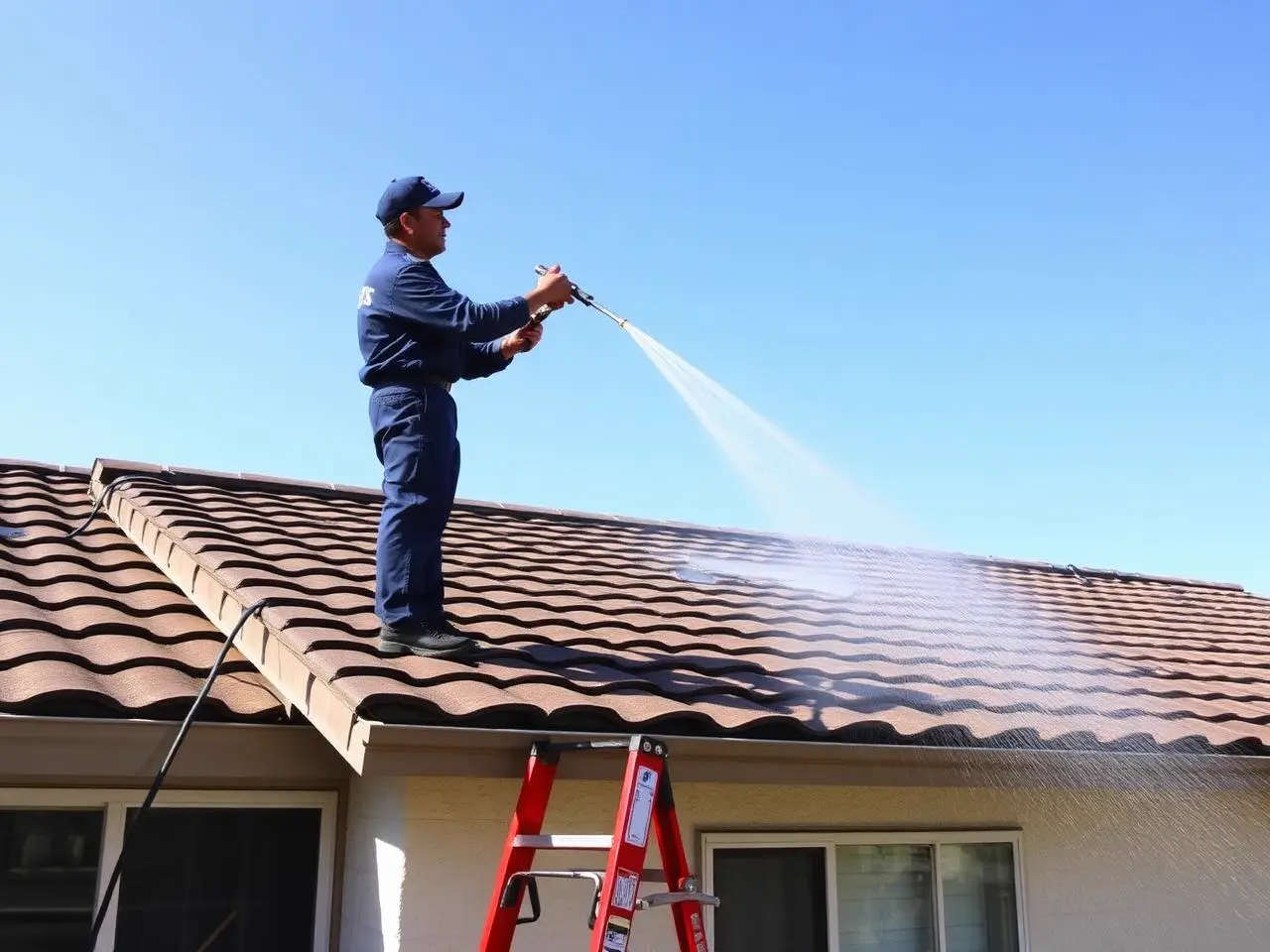
Soft washing avoids all of that by killing the moss chemically first, so the dead growth rinses away with minimal force rather than needing to be pried or scraped loose while still alive and rooted.
Roof moss removal cost and timeline for Manteca properties
Moss removal adds a $0.05 per square foot surcharge to standard soft-wash rates, and thick mats sometimes need a light follow-up rinse about two weeks later.
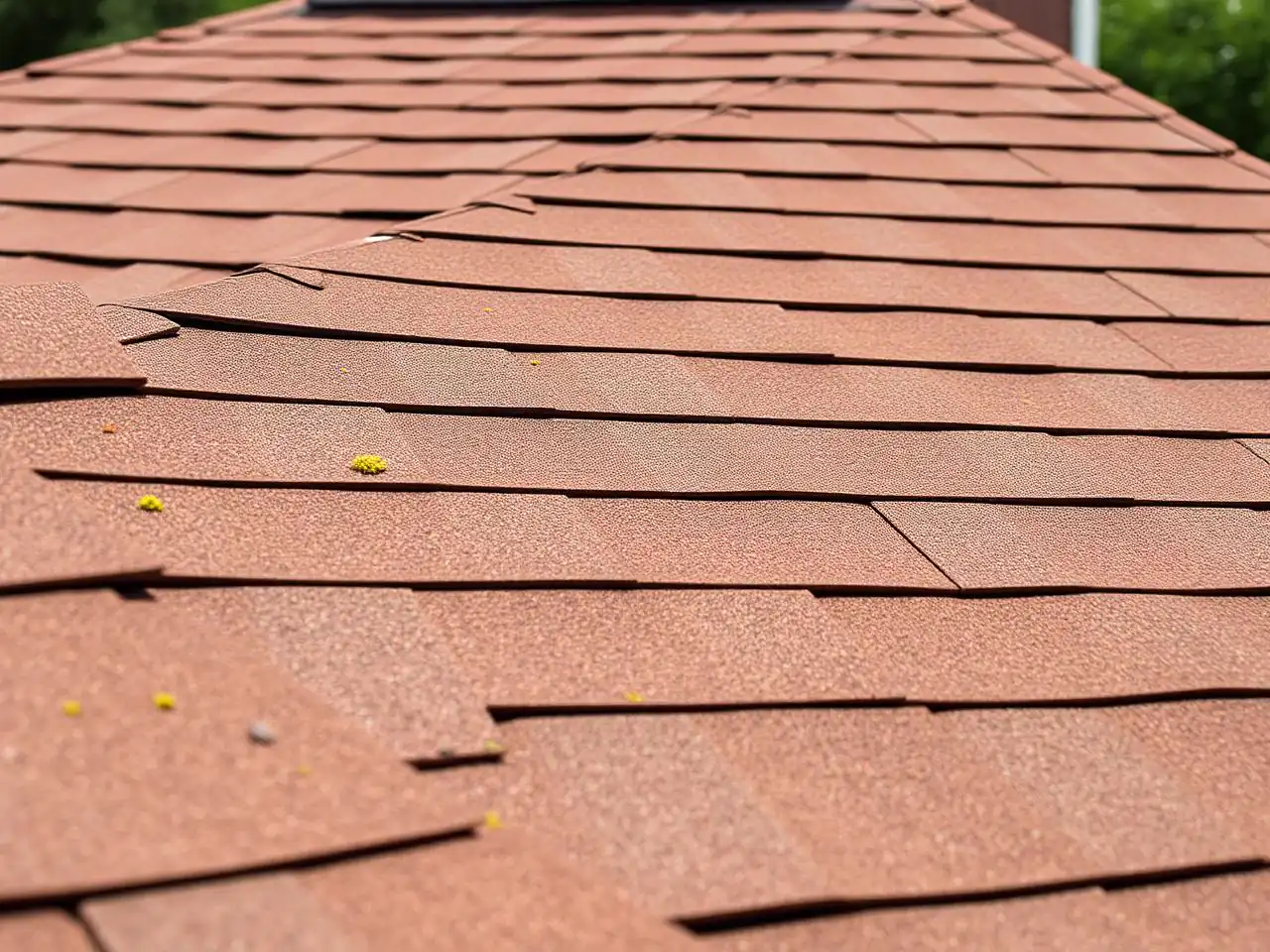
A moss-affected 1,400 sq ft shingle roof prices around $770 including the surcharge, versus the standard $700 rate for algae-only staining, reflecting the longer dwell time and heavier solution application moss requires to fully saturate. Tile roofs with moss run a similar proportional increase over the $0.55 base tile rate.
For roofs with moss mats thicker than about a quarter inch — typically found on north-facing pitches that haven't been cleaned in three or more years — a single visit kills the moss and removes the bulk of it, but a light second rinse two weeks later flushes out any remaining dead root material that continued to loosen after the first treatment.
Scheduling moss removal for late winter or early spring, once Manteca's heaviest fog weeks have passed, lets the roof dry more completely between treatment and any follow-up, which speeds up how quickly the dead moss fully clears the surface.
Is roof moss removal covered across both Manteca ZIP codes?
Yes — Exterior Prime runs moss removal on the same standing route covering 95336 and 95337, with the identical $0.05 per square foot surcharge and inspection process on every job.
Moss shows up unevenly across Manteca's roughly 20 square miles, concentrated most heavily on shaded, older lots in Mayors Park and Powers Tract where mature trees keep pitches damp long after a Tule fog morning burns off elsewhere. Exterior Prime professionals treat both the 95336 and 95337 sides of town identically: same solution, same $0.05 per square foot surcharge, same two-week follow-up policy for mats thicker than a quarter inch.
Central Valley winters bring roughly 60 to 90 days of fog-heavy mornings between November and February, and that stretch alone accounts for most of the moisture moss needs to establish a new colony on an untreated pitch. A single fog season left untreated can turn a light dusting of green into a mat thick enough to lift shingle edges by spring.
Because moss removal isn't a one-time fix if the shade and moisture conditions haven't changed, Exterior Prime professionals note during every visit whether nearby tree canopy or persistent ag dust buildup makes a given Manteca roof a repeat candidate within 12 to 18 months, so homeowners aren't surprised by regrowth.