What causes the black streaking on Manteca roofs
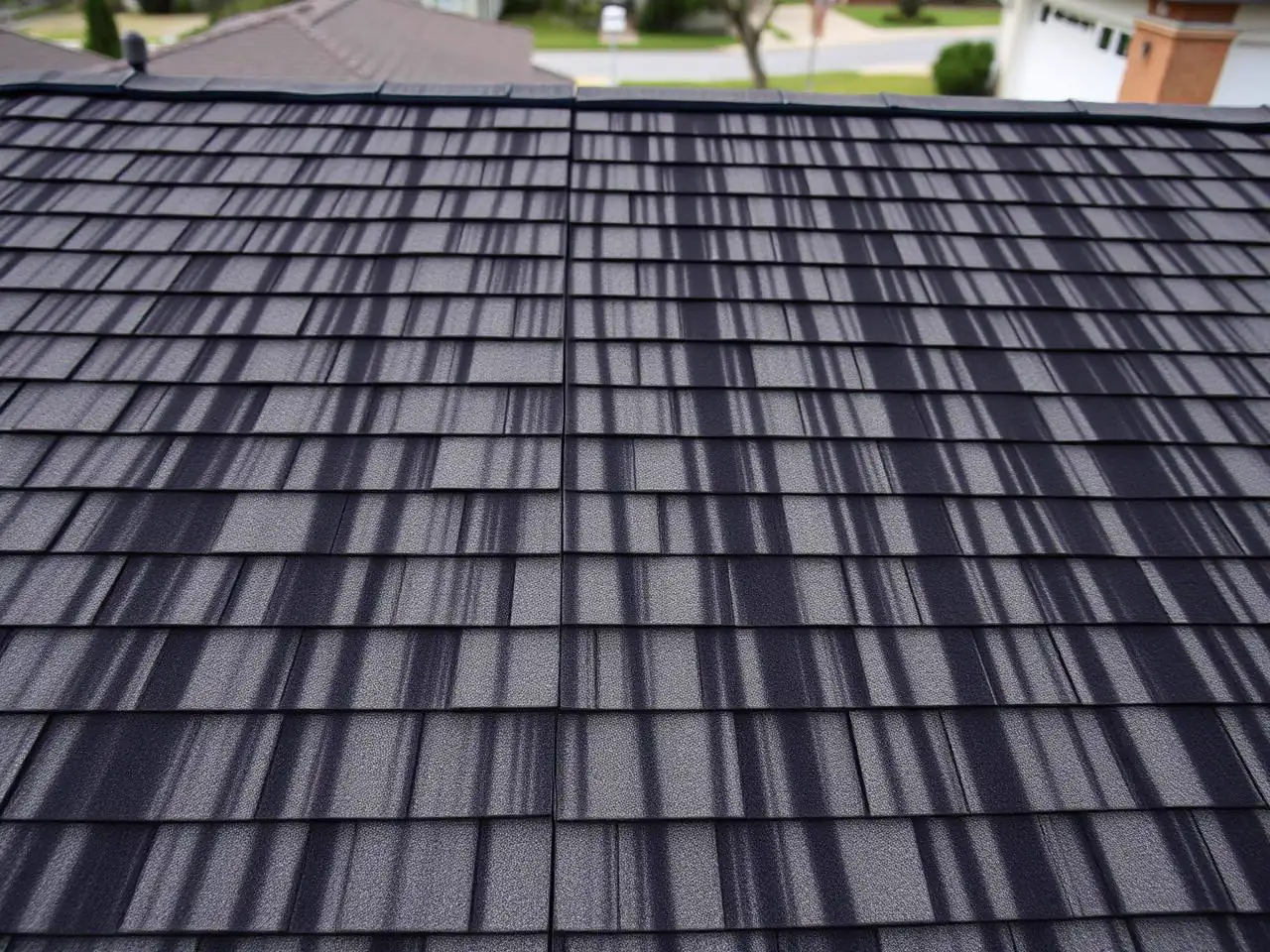
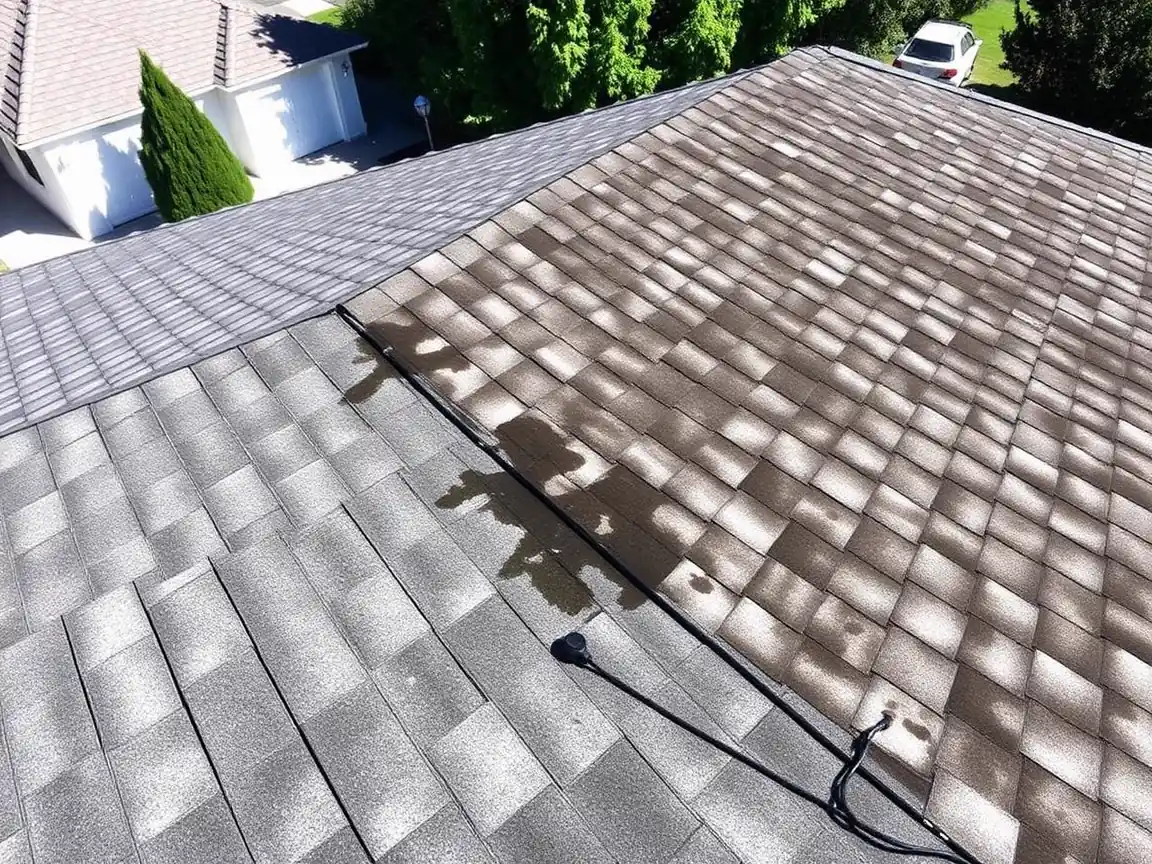
The streaking is Gloeocapsa magma algae feeding on limestone filler in shingle, spreading downhill from the ridge wherever moisture collects longest.
Gloeocapsa magma is a blue-green algae that, despite its color, produces a dark protective coating that appears black or brown-gray on a Manteca roof surface, and it specifically targets the limestone filler used in composition shingle manufacturing as a food source. That's why algae streaking is almost exclusive to shingle roofs and rarely appears the same way on tile or metal, and it shows up on an estimated 60% of untreated shingle roofs here within five years.
The algae spreads via airborne spores that land on a roof and, given enough sustained moisture, establish a colony near the ridge before spreading downhill with every rain or fog runoff event. Manteca's Tule fog mornings from November through February provide exactly the daily moisture cycle those spores need to take hold on north- and east-facing pitches.
Left alone, a single colony can visibly streak an entire roof slope within two to three fog seasons, and by the time it's noticeable from the curb on Yosemite Avenue or around Union Ranch, it's typically already established across a significant portion of that pitch.
Why algae removal works differently than moss or lichen treatment
Algae sits closer to the shingle surface than moss roots do, so it usually clears in a single soft-wash visit without the follow-up pass thicker moss sometimes needs.
Because algae grows as a surface film feeding on the shingle's limestone filler rather than rooting deep into the mat the way moss does, the soft-wash solution's dwell time is typically enough to kill and loosen the entire colony in one application. That's a meaningful difference for homeowners comparing service timelines, since moss removal sometimes requires a light follow-up rinse two weeks out while algae generally doesn't.
The solution used for algae is formulated to break the algae's protective coating and stop it from regenerating, rather than simply bleaching the visible color, which matters because a bleach-only approach can leave the organism alive under a temporarily lighter-looking film. Within a season, bleached-but-alive algae typically darkens right back to its original streak pattern.
Exterior Prime professionals apply the algae-specific solution across the entire affected pitch, not just the visibly darkest streaks, since spores are usually already present across the whole slope even where staining hasn't become visible yet. This full-pitch approach typically saves a second service call within the next 12 months.
Roof algae removal cost and results timeline in Manteca
Algae removal follows standard per-square-foot roof soft-wash rates with no separate surcharge, so a 1,000 sq ft shingle roof runs $500 flat.
Unlike moss, which adds a $0.05 per square foot surcharge for extra dwell time, algae removal is priced at the standard $0.50 per square foot shingle rate since the solution's normal dwell window is sufficient to kill the colony. A typical 1,400 sq ft roof with visible streaking runs $700, the same as an algae-free roof of the same size and material.
Results are visible immediately after the rinse, with the dark streaking gone and the shingle's original color restored across the treated pitch. Because Manteca's algae problem is largely driven by winter fog exposure, scheduling removal in early spring means the roof stays visibly clean through the drier months before the next fog season restarts the growth cycle.
Homeowners preparing to list a home near Woodward Park or Downtown Manteca for sale often schedule algae removal specifically because streaking is one of the first things a buyer notices from the curb, and it photographs poorly in listing images even when the roof itself has years of service life left.
Does roof algae removal cost more in one Manteca ZIP than the other?
No — pricing and method are identical across 95336 and 95337, since algae behaves the same way regardless of which side of Manteca a roof sits on.
Exterior Prime professionals quote roof algae removal at the same $0.50 per square foot shingle rate whether the Manteca address sits in ZIP 95336 near Union Ranch or 95337 out toward the edge of town, because Gloeocapsa magma doesn't respect ZIP boundaries — it spreads wherever Tule fog moisture and shade line up. What does vary block to block is how much tree cover and Central Valley dust exposure a given pitch has seen.
Almond orchard windbreaks common on Manteca's outer edges add a layer of fine seasonal dust that settles into shingle granule texture and gives algae spores extra surface to anchor into, which is one reason outer-edge 95337 roofs sometimes show streaking a bit sooner than interior 95336 lots with more neighboring rooftops blocking the wind.
Exterior Prime professionals have removed algae from roofs across both ZIP codes long enough to know that a full-pitch treatment, not a spot spray on the darkest streaks, is what actually keeps a Manteca roof clean through the next 12 months of fog and dust exposure.