Why does metal roofing near Escalon still need cleaning if it sheds debris well?
On an Escalon roof, metal sheds leaves and branches easily, but it still collects algae film, ag dust and mineral streaking that only a rinse and chemical treatment can remove.
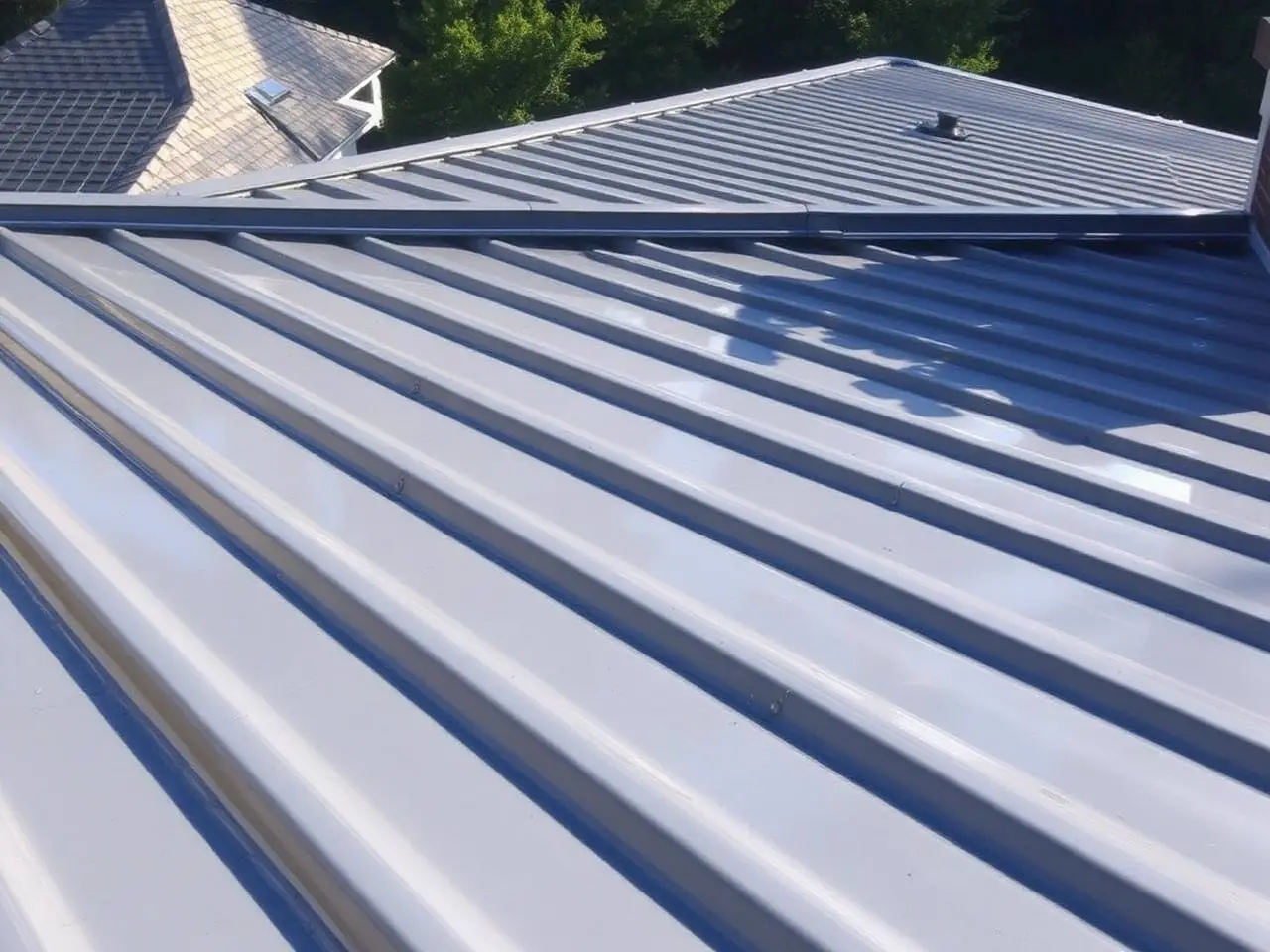
Metal's smooth, sloped surface is genuinely better than shingle or tile at shedding twigs, leaves and heavier debris that blow in from nearby orchard rows, which is one reason it's gained popularity on newer Escalon builds and detached shop structures over the last 10 years.
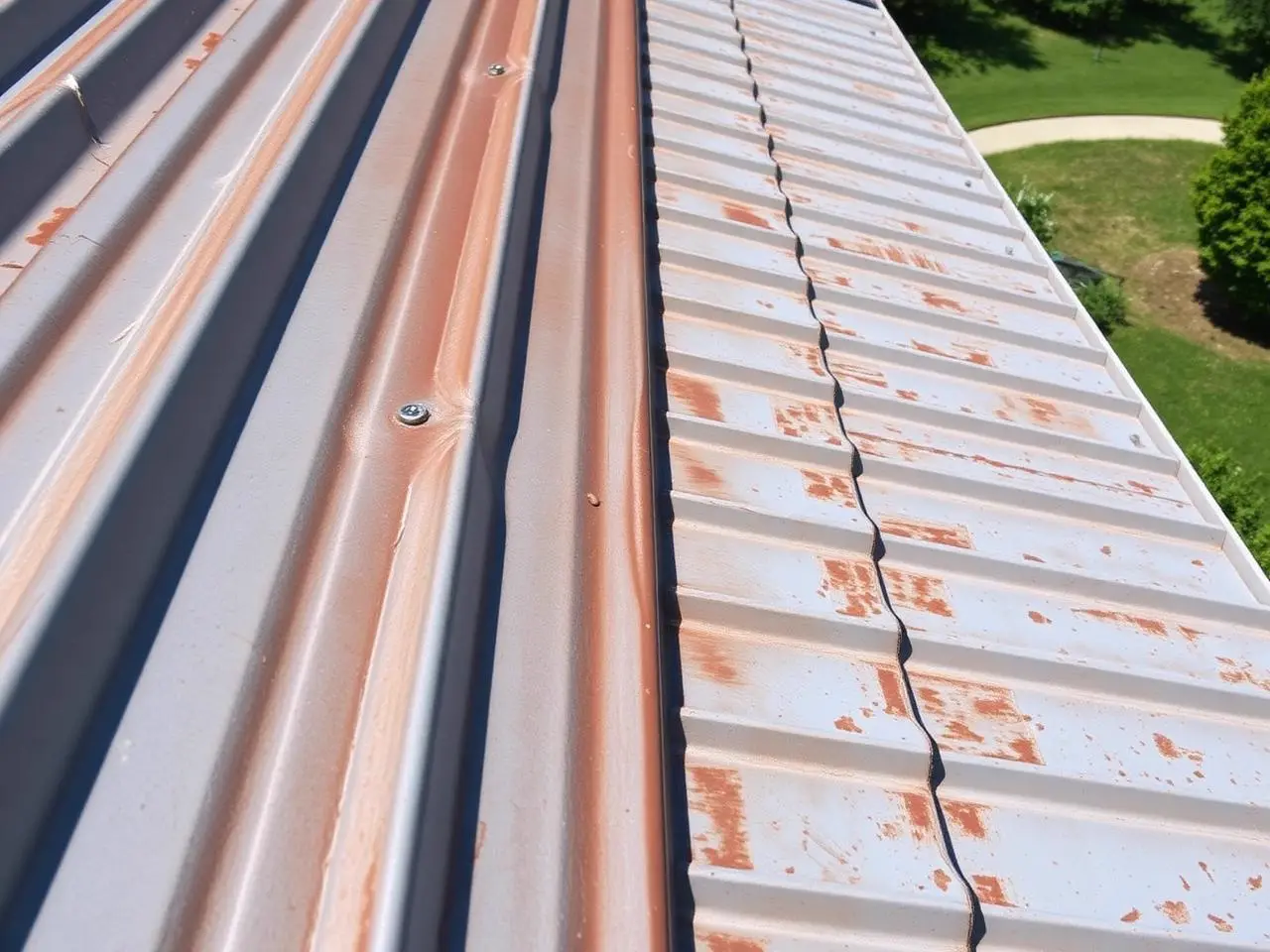
That same smoothness doesn't stop algae from forming a thin film on shaded panel sections, particularly where two roof planes meet or where a north-facing slope stays damp longer after Tule fog. It also doesn't stop fine ag dust from settling into panel seams during summer harvest activity.
Left alone, that combination dulls the panel's factory finish and can create streaking that's visible from the ground, especially on lighter-colored standing-seam panels where any darkening shows up in sharp contrast against the surrounding clean metal.
Can pressure washing damage a metal roof in Escalon?
Yes — on an Escalon roof, concentrated pressure can lift seam sealant, dent lightweight panels and strip the factory coating that protects against rust.
Standing-seam metal roofing relies on sealant at panel seams and fastener points to stay watertight, and a concentrated pressure stream can work that sealant loose over time, creating a leak point that wasn't there before the cleaning visit.
Lighter-gauge metal panels, common on some outbuilding and carport structures around Escalon's larger properties, can actually dent under a close-range high-pressure stream, which is a purely cosmetic issue but a genuinely irreversible one once it happens.
The factory coating on most modern metal roofing is what prevents rust from forming at any exposed edge or scratch, and aggressive pressure washing can wear through that coating faster than normal weathering ever would on its own.
What's different about the soft-wash process for metal roofs in Escalon?
A gentler solution concentration and shorter dwell time protect the coating while still fully addressing algae and dust buildup.
Exterior Prime professionals use a coating-safe solution formulated at a lower concentration than what's applied to shingle, since metal's factory finish is more sensitive to prolonged chemical exposure than a granule-covered asphalt surface.
Dwell time is correspondingly shorter, typically five to eight minutes rather than the ten to fifteen used on established shingle streaking, since metal's smooth surface doesn't hold algae as deeply embedded as a porous shingle or tile does.
The rinse itself follows the panel's seam direction, working from ridge to eave in a pattern that clears dust from seam channels without forcing water backward against the overlap, which is the specific motion that risks pushing water under a seam.
How often should metal roof cleaning happen for Escalon properties?
Roughly every one to two years, though open, sun-exposed metal roofs sometimes stretch longer between visible buildup.
Metal roofs generally need attention less often than shingle since algae has a harder time establishing on the smooth surface, but ag dust accumulation during Escalon's summer harvest season means most properties benefit from at least a yearly check even without visible algae streaking yet.
Properties directly downwind of active almond or walnut operations sometimes see enough dust buildup by October that an annual cleaning, scheduled after the bulk of harvest activity winds down, keeps the panel finish looking consistent year to year. That pattern shows up clearly on ZIP 95320 metal roofs near Jones Road, Dent and Escalon-Bellota across San Joaquin County, where the ridge, valley, flashing, gutter, eave, soffit, fascia and downspout line all collect ag dust within 2 to 3 weeks of harvest.
For metal roofs on shaded outbuildings or shop structures set back from the main house, algae can establish faster than on the open, sun-exposed main roof, sometimes warranting cleaning on a separate, shorter schedule from the primary residence.